Pogo: Ketchup or Mustard - Ad Analysis

AI Editor notes
Straight from the gut!!
“This is just... clever. It's so absurd. A French New Wave film about the doomed love between two corn dogs, torn apart by condiment incompatibility. Who thinks of this? It’s exactly the kind of weird, slightly dark humor that gets remembered. It feels very specific to Canada, which is probably why it works. You couldn't run this anywhere else.”
Quick Summary
This ad succeeds by taking a trivial, low-stakes consumer choice—ketchup or mustard—and elevating it into a high-drama, tragic love story. By parodying French cinema, it creates a memorable and uniquely Canadian piece of brand storytelling that makes an old, familiar product feel culturally relevant and funny.
Executive Summary
In the world of frozen snacks, it’s hard to stand out. Pogo, a Canadian market leader, faced the challenge of making its simple corn dog matter to a new generation. The brand’s “Ketchup or Mustard” spot is a sharp piece of creative that solves this problem not by talking about the product, but by wrapping it in a powerful, if ridiculous, human (or, corn dog) truth.
The Core Insight: The simple human truth at the heart of this ad is that our smallest preferences often form our strongest identities. We use trivial choices, like how we take our coffee or what condiment we prefer, as badges of honor and tribe affiliation. The ad taps into the playful debate of ketchup versus mustard, suggesting this choice isn't just about taste, but about who you are. The campaign correctly identifies that for a fun, simple product, the conversation around it is more valuable than any feature you could list.
The Execution: The ad uses a classic Setup–Turn–Payoff structure, brilliantly disguised as a parody of a French romantic film.
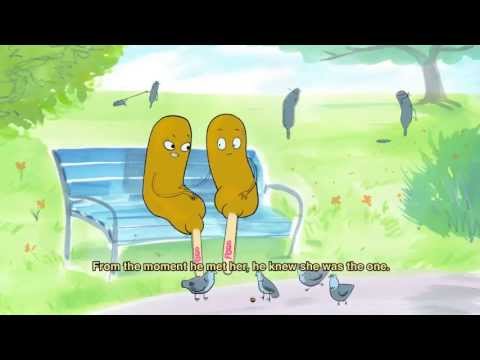
- The Setup (0:00-0:19): The first two-thirds of the ad are dedicated to building a convincing, almost cliché, love story. We see two animated corn dogs, Luc and Marie, in a series of romantic scenes, complete with a melancholic piano score and a dramatic French voiceover. They are perfect for each other; their love is pure. This lengthy setup is crucial because it commits fully to the parody, lulling the audience into the world of a serious foreign film.
- The Turn (0:20-0:26): The turn is swift and brutal. Luc comes home to find Marie on the couch, surrounded by evidence of her transgression: she's been eating a Pogo with ketchup. The music cuts out. Her blissful expression contrasts with his look of utter shock. The reveal is treated with the gravity of a serious betrayal, which is the source of the humor. The narrator’s somber line, “And if she wasn’t a ketchup dipper… he wouldn’t have changed the locks,” delivers the punchline with deadpan perfection.
- The Payoff (0:27-0:31): The final title card, “ARE YOU KETCHUP OR MUSTARD?”, reframes the entire ad. It’s not a film; it's a test of the viewer's own identity. The Pogo brand becomes the arbiter of this fundamental choice. It successfully transforms a silly condiment preference into a matter of romantic compatibility and personal identity.
The Debrief: This campaign is a solid lesson in how to make a legacy brand relevant. By ignoring product-as-hero and instead focusing on a relatable, humorous conflict surrounding the product, Pogo created an ad that's far more entertaining and shareable than a simple shot of a corn dog. The team learned that for certain products, the best strategy is to own the conversation, not just the category. Elevating a mundane product truth into a high-concept narrative generates memorability that a straightforward ad never could.
Theme Keywords
Brand Position
The fun, iconic, and quintessentially Canadian snack that's a part of your personal identity.
Brand Archetype
The Jester (with a hint of The Lover, for the parody).
Creative Game Plan
Transform the mundane choice between ketchup and mustard into an epic story of love, betrayal, and identity.
Diagnosis: Issues & Solutions
Primary Issue: Clarity of "What's Next?"
The Problem:
The ad brilliantly poses the question 'Are you Ketchup or Mustard?' but stops there. In 2013, this was a missed opportunity to immediately translate the ad's engagement into a digital action, leaving the conversation hypothetical.
The Solution:
The campaign should have included a simple, dedicated microsite or social media hashtag (#TeamKetchup, #TeamMustard) directly in the end frame. This would have provided an immediate outlet for viewers to 'vote' and see which side was winning, driving instant online interaction and extending the life of the campaign.
Secondary Issue: Emotional Connection
The Problem:
The specific parody of French New Wave cinema, while clever, is a culturally niche reference. The humor might be too dry or the style too unfamiliar for a segment of the audience, potentially limiting its broad appeal even within Canada.
The Solution:
To complement this spot, a follow-up ad could have used a different, more accessible genre parody—like an over-the-top action movie or a dramatic soap opera—to explore the same 'Ketchup vs. Mustard' conflict. This would retain the core idea while broadening its comedic reach.