Philips Carousel Commercial - Adam Berg Commercial of the Year Stink Digital - Ad Analysis

AI Editor notes
Straight from the gut!!
“This is a unicorn. It's not really an ad; it's a piece of art that Philips had the guts to fund. The confidence to not show the TV and instead build a two-minute, single-take, frozen-moment short film is off the charts. It's the kind of work that makes you want to be in the business. It’s so good it feels like it’s from another planet compared to the usual product-on-a-pedestal spots.”
Quick Summary
This ad sells the promise of a truly cinematic television not by showing the product, but by creating an unforgettable, feature-film-quality experience that *is* the product benefit. It is a masterclass in demonstrating an abstract concept—immersion—through pure creative execution, making it one of the most celebrated and effective ads of its era.
Executive Summary
Philips' 'Carousel' is not just an advertisement; it's a landmark piece of filmmaking that redefined what product demonstration could be. Released in 2009 to launch the world's first 21:9 aspect ratio television, the ad's genius lies in its decision to never show the TV. Instead, it makes the viewer feel the benefit of a cinematic screen by creating a wholly immersive, cinematic world.
The Core Insight: The team at Tribal DDB Amsterdam understood a simple human truth: true film lovers crave total immersion. [7] They don't just want to watch a movie; they want to be in it. The black bars on a standard 16:9 television are a constant reminder that you're just watching a screen. Removing them, as the 21:9 format does, removes a barrier to that immersion.
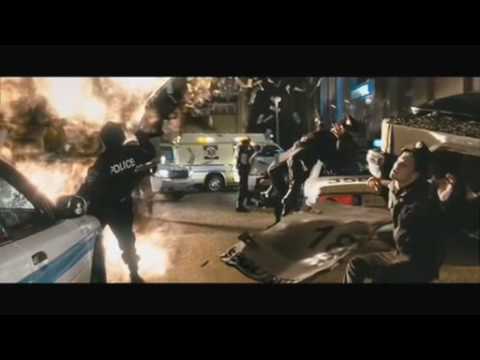
The Execution: The ad's structure is its strategy. Director Adam Berg chose to execute this as a single, continuous tracking shot through a frozen moment in time—a complex, violent shootout between police and clown-masked robbers. [1, 4] This 'frozen moment' technique serves two purposes. First, it's an incredible technical hook that grabs the viewer's attention and refuses to let go. The balletic movement of the camera through absolute chaos is mesmerizing. We pan past a cop mid-shout, glide by an exploding armored car, and drift through a hospital firefight where bullets hang in the air. The detail is staggering. Second, and more strategically, it forces the viewer to absorb the entire frame. Because the action is paused, our eyes are free to roam and take in the sheer scope of the 21:9 canvas. The ad is the product demo. It doesn't tell you the TV is cinematic; it puts you inside a movie. The payoff is the simple super: 'There's only one TV that can play a film like this.' The product isn't the hero; the experience it enables is.
The Debrief: The key lesson from 'Carousel' is the power of a perfectly fused product truth and creative execution. The agency didn't just get a brief for a TV; they got a brief for a TV with a unique shape. They made that shape the hero of the story. The campaign was a massive critical success, winning the prestigious Film Grand Prix at Cannes Lions in 2009. [1, 6] It proved that online video could be a primary, brand-defining medium, not just a place for cut-down TV spots. It showed that if you respect the audience's intelligence and give them something of genuine artistic value, they will not only watch but share and celebrate it.
Theme Keywords
Brand Position
The only brand that delivers the true, uncompromised cinematic experience in your home.
Brand Archetype
The Magician
Creative Game Plan
Demonstrate the immersive power of the world's first cinematic 21:9 TV by creating an ad that is, itself, a breathtakingly immersive cinematic experience.
Diagnosis: Issues & Solutions
Primary Issue: Strategic Sense
The Problem:
The ad is so artistically successful that it risks overshadowing the product it's meant to sell. For a viewer encountering it without context, it could easily be mistaken for a short film or a music video, potentially diluting the direct commercial message.
The Solution:
While changing this masterpiece would be a mistake, a modern campaign could complement it with shorter, more direct assets that explicitly connect the 'why' (the artistic film) with the 'what' (the TV's features and price point), ensuring the strategic link is unmistakable to a broader audience.
Secondary Issue: Clarity of "What's Next?"
The Problem:
The original 2009 campaign directed users to an interactive microsite, a cutting-edge call-to-action for its time. [4, 8] Viewed today as a standalone film, the path from 'awe' to 'purchase' is less defined, relying entirely on the viewer's initiative to search for the product afterwards.
The Solution:
In a contemporary media plan, this film would be the 'awareness' centerpiece. It should be followed by targeted retargeting ads that show the TV, explain the 21:9 benefit in simple terms, and provide a clear link to 'Learn More' or 'Shop Now,' guiding the inspired viewer down the funnel.
Additional Notes
Related Links
Credits
Share this Analysis
More Philips ad breakdowns
- The New Philips Shaver เครื่องโกนหนวดรุ่นใหม่จากฟิลิปส์Philips
- Philips hair straightener brush delivered in just 10 mins! 💁♀️Philips
- Philips Smart Wi-Fi LED lighting - TVC (40 sec)Philips
- THE NELSON MANDELA FOUNDATION & PHILIPS: #SHAVETOREMEMBERPhilips
- The Silent Couple | DMA ASIA ECHO SILVER 2014 | CUTAWAYY FILMSPhilips
- Philips AirFryer | Fry, Bake, Grill and Roast with upto 90% less fat | #DietOrAirfryItPhilips
- Ghar Ka Kaam, Sab Ka Kaam (Housework is Everyone's Work)Philips
- 1992: Philips Philivision TVPhilips