1992: Philips Philivision TV - Ad Analysis

AI Editor notes
Straight from the gut!!
“It's a sponsorship ad, straight out of the 1990s playbook. The logic is simple: 'Big event + famous athlete + our logo = we're important.' It's efficient, but creatively it's a bit of a dry sandwich. There's no unique idea here beyond the media buy. It doesn't tell me why the Philivision TV is better, only that the parent company paid to be the 'Worldwide Sponsor.' It's pure association, not persuasion.”
Quick Summary
This ad uses a classic, time-tested formula: equate the brand with world-class excellence by leveraging an official sponsorship. Philips positions its Philivision TV not as a piece of technology, but as the essential portal for experiencing major cultural moments like the Olympics, effectively borrowing the event's prestige and emotional weight to build brand equity.
Executive Summary
This Philips ad from 1992 is a textbook example of event sponsorship activation, a tactic as old as advertising itself. It operates on a simple, powerful premise: the belief that greatness is contagious. By aligning its Philivision television with the pinnacle of human athletic achievement—the Olympic Games—Philips aimed to transfer the values of performance, prestige, and global significance onto its product.
The Core Insight: The simple human truth at the heart of this ad is that television is more than an appliance; it's a window to shared human drama. People don't buy a TV for its circuits and cathode ray tube; they buy it for the experiences it delivers, like watching history unfold live. This ad correctly identifies that the value proposition for a TV in 1992 was about the quality of that window, especially during a globally-unifying event like the Olympics.
The Execution: The ad follows a simple AIDA (Attention, Interest, Desire, Action) structure, compressed into a lean 22 seconds.
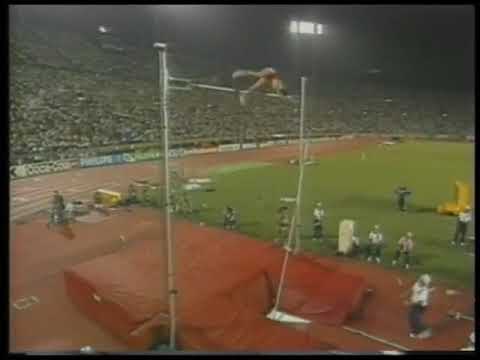
- Attention: The ad opens with the sound of clapping and a stylized graphic that instantly signals a major event, quickly revealing the iconic pole vaulter Sergei Bubka. This leverages pre-existing interest in the Olympics to hook the viewer.
- Interest: The on-screen text methodically builds the context: 'Athlete: Sergei Bubka,' 'Occasion: Barcelona Olympics.' This creates a sense of importance and specificity, grounding the ad in a real, high-stakes moment.
- Desire: The ad creates desire not by showcasing product features, but by associating the brand with the peak of the action. As Bubka soars, the voiceover declares, 'Worldwide Sponsor: Philips.' This positions Philips as the facilitator of this world-class moment. The desire isn't for a TV, but for the best possible experience of this thrilling event.
- Action: The final reveal—that this entire sequence is playing on a Philivision TV—is the payoff. The line, 'Brought alive on Philivision Colour TVs,' serves as the concluding argument and the implicit call to action. The message is clear: to truly experience moments like this, you need a Philips.
The Debrief: The team behind this ad understood the power of borrowed equity. Why spend millions creating a fictional world to demonstrate your product's quality when you can simply attach your name to a real one where excellence is already on display? The ad's strength is its directness and confidence. It doesn't over-explain. However, this reliance on sponsorship makes the creative feel generic. Without the Olympic partnership, the ad has no concept. This highlights a key strategic trade-off: sponsorship provides immense reach and positive association but can lead to creative work that lacks a distinct, ownable brand personality.
Theme Keywords
Brand Position
The official, premium window to the world's most important moments.
Brand Archetype
The Ruler: projecting leadership, authority, and setting the standard through its official 'Worldwide Sponsor' status.
Creative Game Plan
Associate the world-class performance of an Olympic athlete with the superior viewing experience of a Philivision TV.
Diagnosis: Issues & Solutions
Primary Issue: Brand Distinctiveness
The Problem:
The ad's core idea is entirely reliant on the sponsorship deal. Strip away the Olympic context and the celebrity athlete, and there is no creative concept left. A competitor with the same sponsorship could have run an identical ad, making it strategically sound but creatively generic.
The Solution:
Connect the sponsorship to a tangible product truth. For example, if Philivision had superior color reproduction, the ad could have focused on the vibrant colors of the Olympic flags with the line: 'See the pride of every nation in true-to-life color. Philivision by Philips.'
Secondary Issue: Emotional Connection
The Problem:
The emotion in the ad is entirely borrowed from the sporting event itself. The brand doesn't create a new emotional moment; it simply puts a frame around one that already exists. It shows the event, but not the human experience of watching it.
The Solution:
Instead of only showing the athlete, intercut the vault with shots of a family reacting with awe and excitement while watching it on their Philivision TV. This would connect the grand, global event to a personal, relatable moment of shared joy, making the brand's role more emotionally resonant.
Additional Notes
Related Links
Credits
Share this Analysis
More Philips ad breakdowns
- The New Philips Shaver เครื่องโกนหนวดรุ่นใหม่จากฟิลิปส์Philips
- Philips hair straightener brush delivered in just 10 mins! 💁♀️Philips
- Philips Smart Wi-Fi LED lighting - TVC (40 sec)Philips
- THE NELSON MANDELA FOUNDATION & PHILIPS: #SHAVETOREMEMBERPhilips
- The Silent Couple | DMA ASIA ECHO SILVER 2014 | CUTAWAYY FILMSPhilips
- Philips AirFryer | Fry, Bake, Grill and Roast with upto 90% less fat | #DietOrAirfryItPhilips
- Ghar Ka Kaam, Sab Ka Kaam (Housework is Everyone's Work)Philips
- Philips Carousel Commercial - Adam Berg Commercial of the Year Stink DigitalPhilips