Peyush Bansal Talks About The Eyewear Innovation At Lenskart | #Shorts | #Lenskart - Ad Analysis

AI Editor notes
Straight from the gut!!
“This feels less like an ad and more like a founder's unfiltered product reveal for his LinkedIn followers. Using Peyush is a smart play for credibility in India, but the execution is incredibly basic. The product idea is clever, but the low-fi, 'talk-to-camera' presentation is forgettable and lacks the creative punch to break through a cluttered social feed.”
Quick Summary
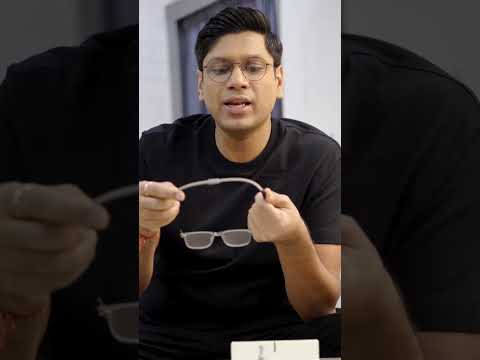
This is a lean, founder-led product demonstration designed for social media. It uses the CEO's credibility as a shortcut to explain a tangible product innovation—eyeglass arms that convert into a secure magnetic strap—to drive awareness and direct sales for the new 'Switch Grip' feature.
Executive Summary
This Lenskart #Shorts is a prime example of founder-led, direct-to-consumer marketing that prioritizes function over form. It’s not an “ad” in the traditional sense; it’s a piece of social proof delivered by the brand's most credible spokesperson: founder and CEO Peyush Bansal. Its entire strategy hinges on his authority and the tangible novelty of the product itself.
The core insight is simple: consumers with active lifestyles fear their glasses will slip or fall, but they reject clunky, unfashionable solutions like Croakies. They want a seamless, integrated feature that provides security without sacrificing style. The 'Switch Grip' is presented as the perfect answer to this unmet need.
The execution follows a classic Product Demo format, optimized for a short-form, vertical video environment. It follows the Hook-Demonstrate-Payoff structure perfectly. The Hook is immediate: Peyush Bansal, a familiar face in the Indian business and startup scene, holding the product and promising an “innovation.” This leverages his personal brand to command attention. The Demonstration is the heart of the ad (0:02-0:21). Bansal manually slides out the temple extensions and fastens them behind his head. The close-up shots are crucial, showing the mechanism clearly. This isn't a slick, stylized product film; it's a raw, authentic 'how-to.' He then layers on a Bonus Feature (0:21-0:26) by showing the magnetic sunglass clip-on, adding another layer of value and versatility. The Payoff is Bansal's confident look while wearing the full setup, a silent endorsement of the product's coolness and utility. The explicit call to action is left to the video description, keeping the film itself clean and focused on the demo. [12]
The key debrief for the team is that this approach is highly effective for a specific goal: launching a functional product to a warm audience. Using the founder builds instant trust and cuts through the noise of typical marketing claims. However, this strategy has a ceiling. While it drives understanding and likely conversions from existing followers, its low production value and lack of an emotional or narrative hook limit its ability to capture the attention of a colder, broader audience. It’s a solid piece of direct marketing, but not a scalable brand-building asset.
Theme Keywords
Brand Position
The most innovative and accessible eyewear brand, driven by technology.
Brand Archetype
The Creator
Creative Game Plan
Leverage the founder's public persona as a product expert to deliver a credible, no-frills demonstration of a tangible product innovation.
Diagnosis: Issues & Solutions
Primary Issue: Emotional Connection
The Problem:
The ad is entirely clinical. It demonstrates a feature in a sterile environment but fails to show the 'why.' We don't see the relief of a biker whose glasses stay on, or the convenience for a dancer. It shows the solution but not the problem it solves in a real-world, relatable context.
The Solution:
Intercut Peyush Bansal's demo with quick, dynamic user-generated-style clips. Show a runner, a headbanger at a concert, or someone simply leaning over without their glasses slipping. Connect the feature to the feeling of freedom it enables.
Secondary Issue: Strategic Sense
The Problem:
While authentic, the #Shorts format feels contained to an organic social media strategy. Its low-fi execution might not perform as well in a paid media context where it has to compete with higher production value ads. It feels more like a post than a campaign.
The Solution:
Develop a polished 15-second version for paid placement. Use faster cuts, more dynamic music, and graphic text overlays highlighting 'Switch Grip' and 'Magnetic Clip-On' to create a more thumb-stopping asset built for a broader audience.
Additional Notes
Credits
Share this Analysis
More Lenskart ad breakdowns
- AIR FLEX WhiteLenskart
- The all-new Lenskart Air Float Pop CollectionLenskart
- Lenskart Air Flex | Ultralight, Super Flexible, Unbreakable Specs | #Shorts | #LenskartLenskart
- Lenskart Airflex | #FlexAppeal ft Kings United | Unbreakable SpecsLenskart
- Lenskart Airflex | Ultra-light, Super Flexible Glasses ft Alaya FLenskart
- No More Tired Eyes | Lenskart BLU Screen GlassesLenskart
- Try 1000+ Frames With AR Technology | Peyush Bansal & Karan Johar | LenskartLenskart
- Lenskart First Frame Free TVCLenskart