Patamilka - Milka's marmot, 20 years later. - Ad Analysis

AI Editor notes
Straight from the gut!!
“This is a seriously clever move. Instead of a boring 'we make spread now' ad, they dug into their brand archives and found gold. The twist, revealing the fantasy factory is just a story the marmot is telling in a supermarket, is perfect. It's warm, funny, and respects that we're all in on the joke. It's how a confident, beloved brand should enter a new fight.”
Quick Summary
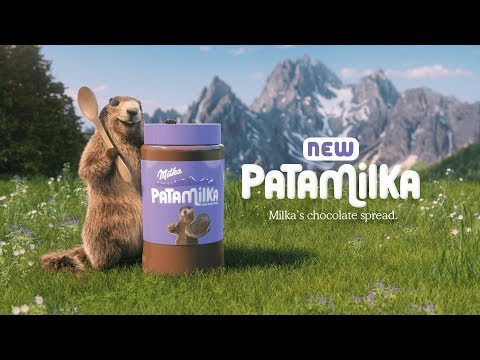
Milka brilliantly weaponizes nostalgia, recreating its iconic 1990s 'Marmot' commercial to launch 'Patamilka,' a new chocolate spread. By inverting a famous cultural punchline about disbelief, the ad uses self-aware humor to charm its way into a market dominated by Nutella, establishing immediate brand personality for its new product.
Executive Summary
In launching its 'Patamilka' chocolate spread, Milka faced the monumental task of competing with Nutella, a brand that doesn't just own market share, but cultural ritual. Instead of a direct attack, Milka and its agency Buzzman opted for a far more clever strategy: deploying a beloved brand asset, the Milka Marmot, as a Trojan horse of charm and nostalgia. The resulting ad is a masterclass in leveraging heritage to build instant relevance for a new product.
The core insight is that people are more receptive to a new product from a trusted brand if it feels familiar. The ad taps into a specific cultural memory in France: a 1990s Milka commercial where a marmot was seen wrapping chocolate in foil, leading to the catchphrase "Et la marmotte, elle met le chocolat dans le papier d'alu..." which became slang for "Yeah, right." [2, 5] This 2019 ad doesn't just bring the marmot back; it knowingly plays with the very idiom it created.
The execution follows a classic Setup-Turn-Payoff structure. The Setup (0:00-0:19) meticulously recreates the idyllic, magical world of the original ad—a whimsical Alpine factory powered by cows and staffed by a charming family. [1] This builds a world of wholesome, tender quality, perfectly in line with Milka's core brand identity. The Turn (0:20-0:25) is the ad's moment of brilliance. It abruptly shatters the fantasy, revealing the entire sequence was just a story being told by the marmot to his friends in a modern supermarket. The unimpressed, deadpan reaction from his audience—"Mais bien sûr" ("Well, of course")— brilliantly inverts the original ad's punchline. [4] The Payoff (0:26-0:30) lands the joke and the product. By adopting the line "Mais bien sûr" as its own, Milka shows it's in on the joke. It acknowledges the fantasy of advertising while simultaneously reinforcing the product's quality as a matter of fact.
The debrief for the marketing team is clear: brand heritage is a powerful asset that can be modernized with self-aware humor. By respecting the audience's intelligence and referencing a shared cultural moment, Milka created an introduction for Patamilka that was far more memorable and endearing than a simple product demonstration could ever be. It chose to win on personality, a wise move for any challenger.
Theme Keywords
Brand Position
The tender, charming chocolate spread from a brand you've always trusted.
Brand Archetype
Innocent
Creative Game Plan
We will revive the iconic Milka marmot to launch our new spread, turning a 20-year-old cultural catchphrase for disbelief on its head with a charming, self-aware story.
Diagnosis: Issues & Solutions
Primary Issue: Strategic Sense
The Problem:
The ad's greatest strength—its reliance on a 20-year-old French cultural reference—is also its biggest strategic limitation. The joke and nostalgic power are potent in France but would be completely lost on audiences in other markets, making the creative difficult to scale globally without significant re-working.
The Solution:
For international expansion, develop a new creative concept that leans on the universal Milka assets (Alpine setting, tenderness, the cow) rather than the market-specific marmot lore. The core idea of a charming, mythical origin could remain, but the punchline would need to be re-imagined.
Secondary Issue: Clarity of "What's Next?"
The Problem:
The ad succeeds in making you like the brand and the product idea, but it does little to communicate *why* someone should choose it over the competition. It relies entirely on brand affinity without offering a single product-based reason to believe (e.g., more milk, less sugar, better taste).
The Solution:
Complement the TV spot with digital and in-store assets that provide a clear reason to switch. A simple message like 'Made with real Alpine milk' on point-of-sale displays would bridge the gap between the emotional appeal of the ad and a rational product choice.