Paris, London, Milan, Le Mans. HONDA - Ad Analysis

AI Editor notes
Straight from the gut!!
“So, this is a case study, not really an ad for people. It's incredibly smart, almost too smart for its own good. It feels like an awards submission video made to impress other marketers. I get the strategy, and it’s solid, but does a normal person watch this and get fired up to buy a Honda? It feels more like the brand is giving itself a standing ovation for hijacking a trend it didn't even start. [4]”
Quick Summary
This campaign is a brilliant act of cultural judo. Instead of fighting the fact that its brand was being co-opted as a fashion trend, Honda embraced the 'Bikercore' hype to cleverly redirect a young, style-conscious audience from the jacket back to the actual motorcycle, masterfully bridging the gap between its heritage and modern relevance. [5, 6]
Executive Summary
Honda's 'Paris, London, Milan, Le Mans' is less a traditional commercial and more a triumphant case study in real-time brand management. It’s a confident, swaggering piece of work that understands a fundamental truth of modern branding: you don’t always control the conversation, but you can steer it. The campaign seized upon a genuine cultural phenomenon—the rise of the 'Bikercore' aesthetic, where vintage Honda racing jackets became high-fashion items—and used it to solve a core business problem: a disconnect with a younger, style-driven audience. [5, 7]
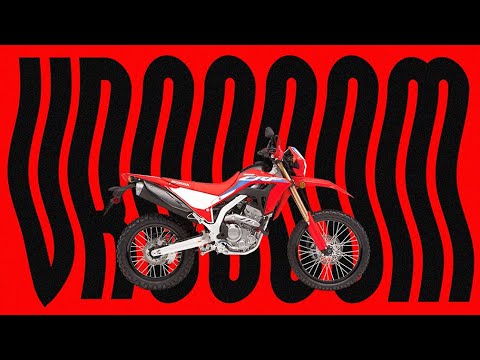
The execution follows a clear Problem-Setup-Solution structure, presented as a documentary-style narrative. The 'Setup' quickly and effectively establishes the cultural context using a barrage of runway clips, celebrity photos, and user-generated content. It proves the premise: Honda is a hot fashion brand. [8] The 'Turn' is a sharp pivot signaled by the text, 'Now, let's talk about our product.' This is the moment the ad reveals its hand. The 'Solution' is the campaign itself: a series of striking diptychs that visually connect the coveted jackets with the motorcycles that birthed the aesthetic. [12] The clever taglines—'Fashion house. With a garage.' or 'You like the gear? You'll love the gear.'—are direct, witty, and perfectly capture the campaign's thesis. By deploying this as a guerilla campaign during Paris Fashion Week and executing a social media stunt of following only fashion icons, Honda didn't just participate in the culture; it claimed ownership of it. [10]
What makes the work so effective is its authenticity. Honda had a legitimate claim to this trend. The brand wasn't manufacturing a connection; it was simply illuminating one that already existed. This allows them to speak to two disparate audiences simultaneously. For the fashion crowd, it says, 'You love the aesthetic? We are the authentic source.' For their loyal motorcycle base, it says, 'Look, we're so cool even the fashion world wants a piece of us.' The final part of the video, which shows the impressive engagement metrics and a simulated conversation between the two 'fandoms,' serves as the victory lap, proving the strategy's success in bridging these two worlds. It's a smart, surgically precise campaign that demonstrates a deep understanding of how brands build relevance today.
Theme Keywords
Brand Position
The authentic origin of the biker aesthetic, bridging high-performance engineering and high-fashion credibility.
Brand Archetype
The Creator
Creative Game Plan
Use the cultural heat around our vintage jackets to build a bridge that leads a new, young audience from the fashion they love back to the motorcycles we build.
Diagnosis: Issues & Solutions
Primary Issue: Emotional Connection
The Problem:
The piece functions as a self-congratulatory case study aimed at advertising professionals. By revealing all the strategic thinking and metrics, it prioritizes proving its own cleverness over creating a genuine emotional connection with a consumer.
The Solution:
Create a consumer-facing edit. Remove all the strategic explanation text and performance metrics. End on a powerful, singular image: one of the fashion models from the posters actually getting on a Honda motorcycle, smiling, and riding off into the streets of Paris. Transition the feeling of 'looking cool' into the feeling of 'being free'.
Secondary Issue: Clarity of "What's Next?"
The Problem:
While the ad proves it drove website traffic, it doesn't provide an explicit, easy next step for the viewer who has just been convinced. The viewer is left to their own devices to find the products or social channels.
The Solution:
The final frame should be simpler and more direct. After the Honda logo, add the specific, relevant social handle (e.g., @hondamotofr) and a clean URL. Guide the newly intrigued audience directly to the place where they can explore the 'real gear'.