Oncosalud - Tu lucha, mi lucha. - Ad Analysis

AI Editor notes
Straight from the gut!!
“This one hits hard. It's rare to see a healthcare ad that feels this authentic and earned. The 'your fight, my fight' line is a solid strategic anchor. But it sets a brutally high bar. My first question to the CMO would be: can your patient experience truly live up to this beautiful film? Because if not, this powerful promise could easily become a liability.”
Quick Summary
This ad masterfully reframes the terrifying, isolating experience of cancer treatment into a story of partnership. It repositions the doctor from a clinical expert into a deeply invested ally in the patient's personal fight for their future, making the Oncosalud brand synonymous with compassionate, human-centric care rather than just medical procedures.
Executive Summary
This Oncosalud commercial is a strong example of how to tackle a difficult subject with grace and strategic intelligence. In a category defined by fear and clinical complexity, the ad chooses to focus on a single, powerful human truth: the fight against cancer isn't just for survival, it's for the future moments you live for. The agency understood that the real value proposition isn't just the treatment, but the life that treatment enables. The core insight is that for a patient, success is measured in future milestones, and for a truly great doctor, their fight is one and the same.
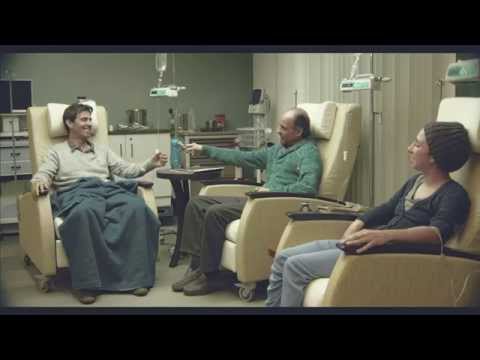
The execution uses a classic Setup-Turn-Payoff structure to deliver its emotional payload. The Setup establishes the patient's motivation—to walk his daughter down the aisle—and the grueling reality of his treatment. We see the clinical procedures, the hair loss, the fatigue. The critical Turn is how the ad frames the doctor's role. He isn't just administering care; he is a partner in the struggle. We see him reviewing scans with intensity, offering a comforting gesture with a hat, and even playing chess with the patient. This montage transforms the doctor-patient dynamic from a clinical transaction to a human partnership. The narrative is a parallel journey of two people fighting the same battle. The Payoff is the brilliant twist. When the doctor announces the 'bride' has arrived, the audience expects a grown woman. The reveal of his young daughter re-contextualizes his initial wish—it wasn't about a specific wedding, but about being present for her entire future. This makes the tagline, 'Your fight, my fight,' land with immense emotional and strategic force. It's not just a slogan; it's the theme of the entire story we just witnessed.
The debrief for the team is clear: emotional storytelling, when anchored in a genuine human insight, can elevate a brand beyond its functional benefits. Oncosalud is no longer just a place for cancer treatment; it's positioned as a partner for life's most important moments. The risk, however, is that this ad writes a check that the real-world service has to cash. The promise of such deep, personal investment is the brand's new benchmark, and every real-world patient interaction will now be measured against it.
Theme Keywords
Brand Position
Oncosalud is your dedicated, human partner in the fight for your future.
Brand Archetype
The Caregiver
Creative Game Plan
We will show that our doctors are as emotionally invested in your fight for life as you are.
Diagnosis: Issues & Solutions
Primary Issue: Strategic Sense
The Problem:
The ad creates an exceptionally high expectation of personal, empathetic partnership. However, public records and news reports indicate Oncosalud has faced a significant number of customer complaints and regulatory fines, suggesting a potential gap between the brand's marketing promise and its operational reality. [7, 9]
The Solution:
The brand must aggressively invest in patient services and operational improvements to ensure the customer experience consistently delivers on the powerful promise of 'Your fight, my fight.' The ad is the promise; the service is the proof.
Secondary Issue: Emotional Connection
The Problem:
The narrative, while powerful, centers on a male patient and a male doctor. This perspective, while universally relatable to a degree, misses an opportunity to reflect the experiences of female patients, who are often mothers fighting for their children.
The Solution:
Future campaigns in this series should feature diverse stories, such as a mother's journey or a female doctor's perspective, to broaden the emotional aperture and ensure more of the audience sees their own potential struggle reflected.