Mile-high madness with Richard Simmons! #AirNZSafetyVideo - Ad Analysis

AI Editor notes
Straight from the gut!!
“This is pure, unadulterated joy. It's ridiculous, over-the-top, and I can't look away. Why does this work? Because flying is often stressful and boring. This injects fun into a sterile environment and respects the audience by entertaining them instead of lecturing. It's a masterstroke of turning a compliance-driven cost center—the safety video—into a powerful marketing asset that generated millions in free publicity. [10]”
Quick Summary
Air New Zealand transformed a mandatory, ignored safety briefing into a globally viral piece of brand entertainment by weaponizing the flamboyant, nostalgic energy of Richard Simmons. It made critical safety information impossible to ignore and cemented the airline's identity as the fun, unconventional challenger brand in a category defined by conformity.
Executive Summary
In 2011, Air New Zealand didn't just create a safety video; they created a cultural phenomenon that redefined what airline marketing could be. The 'Fit to Fly' campaign is a masterclass in transforming a mundane, mandatory communication into a powerful piece of brand building. By moving beyond the sterile, instructional format typical of the industry, Air New Zealand created a piece of pure entertainment that audiences chose to watch and share, generating millions of views and invaluable earned media. [6, 9]
The Core Insight: The simple human truth driving this campaign is that people are conditioned to ignore airline safety briefings. They are repetitive, dry, and perceived as low-stakes. To make critical information stick, and to make the brand memorable, you have to shatter expectations and deliver the message in a format that is impossible to tune out. The insight isn't just about safety; it's about the entire air travel experience—often seen as a chore. By injecting humor and fun into the most boring part of the flight, Air New Zealand signals that the entire journey with them will be different.
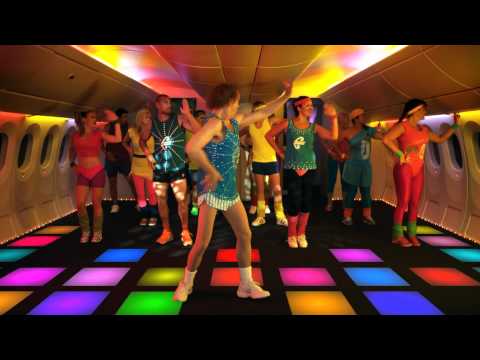
The Execution: The video uses a classic Setup-Turn-Payoff structure to maximize its impact. It opens with a perfectly standard setup (0:00-0:07): two professional flight attendants begin a typical briefing. This lulls the frequent flyer into a state of familiar boredom. The 'Turn' (0:08) is abrupt and brilliant—a psychedelic wipe transitions to the full-blown 80s aerobics party led by Richard Simmons. The choice of Simmons is key; his larger-than-life, campy, and energetic persona is the engine of the entire concept. The 'Payoff' is the remainder of the video, where every safety procedure is translated into an aerobics move. Stowing luggage becomes a 'stretch and slide,' and fastening a seatbelt is a 'grab, click, pull' dance move. The use of Yazz’s 'The Only Way Is Up' provides a relentlessly optimistic soundtrack. [9] The creative format is fundamentally humorous, but it's a joke with a serious purpose. The repetition, catchy music, and visual absurdity work to drill the safety information into the viewer's brain far more effectively than any standard demonstration could.
The Debrief: The key lesson from 'Fit to Fly' is that no brand touchpoint is too small or too functional to be an opportunity for creative brand expression. By identifying a moment of customer boredom and meeting it with unexpected joy, Air New Zealand created immense brand value. It proved that a challenger brand can outsmart, rather than outspend, its larger competitors by taking creative risks. This video didn't just inform passengers; it delighted them, turning them into brand advocates before the plane even left the gate.
Theme Keywords
Brand Position
The airline that makes every part of flying surprisingly enjoyable.
Brand Archetype
Jester
Creative Game Plan
Make legally-required safety instructions unforgettable by turning them into an over-the-top 80s aerobics routine led by a pop culture icon.
Diagnosis: Issues & Solutions
Primary Issue: Strategic Sense
The Problem:
The biggest strategic risk is that the entertainment value completely eclipses the video's primary safety function. For regulators or in a real-world emergency, if the core message was lost amid the sequins and dancing, the campaign could be deemed irresponsible, however effective as marketing.
The Solution:
To mitigate this, ensure all key safety points are verbally stated with extreme clarity and repeated, as Simmons does. The on-screen text and clear demonstrations (despite the dancing) are crucial backstops that ensure the message is delivered, balancing the entertainment with the non-negotiable duty of care.
Secondary Issue: Emotional Connection
The Problem:
Richard Simmons' brand of flamboyant energy is polarizing. While beloved by many, it could alienate a segment of the audience, such as conservative business travelers, who might perceive the humor as unprofessional or silly rather than charming.
The Solution:
The inclusion of the straight-faced flight attendants at the beginning and end helps frame the entire piece as a deliberate, fun departure from the norm, rather than the norm itself. This bookending reassures passengers that the airline's underlying professionalism remains intact.
Additional Notes
Related Links
Credits
Share this Analysis
More Air New Zealand ad breakdowns
- Middle Child Day? Yes, it's a thing.Air New Zealand
- Air New Zealand presents "The Great Christmas Chase"Air New Zealand
- Let the Magic Find You This Christmas #AirNZXmasAir New Zealand
- Your extraordinary adventure awaitsAir New Zealand
- An Unexpected Briefing #AirNZSafetyVideoAir New Zealand
- Air New Zealand: International Women's Day 2026 – Led by WomenAir New Zealand
- Coolest Vacation Flights | Travel to Hills & Mountains with IndiGo | IndiGo 6EIndiGo
- There's an air about India | The sound of a new IndiaAir India