Lil' Ol' Granny - Granny Got Pants SS19 (feat. sloggi) - Ad Analysis

AI Editor notes
Straight from the gut!!
“This is a full-on cultural assault, and it's a lot to take in. A parody music video is a high-risk, high-reward play. It's definitely memorable and the 'dancing granny' is a great hook. But does the spectacle almost drown out the brand? I'm left wondering if people will remember 'that funny granny pants video' more than they'll remember Sloggi. It's fun, but it feels like it's trying very hard to be viral.”
Quick Summary
By turning the pejorative 'granny pants' into a badge of honor, Sloggi hijacks 90s hip-hop culture to declare war on the uncomfortable norms of the lingerie category. Using a viral 'dancing granny,' the brand creates a loud, unapologetic anthem for comfort, positioning itself as the champion for women who refuse to sacrifice feeling good just to look a certain way.
Executive Summary
Sloggi's 'Granny Got Pants' isn't just an ad; it's a declaration of independence for the underwear drawer. At its heart, this campaign is a direct and humorous assault on the long-held cultural belief that lingerie must be sexy first and comfortable second. The brand identifies a powerful tension: many women prefer the feel of full-coverage underwear but have been conditioned to see it as a symbol of being undesirable or 'letting oneself go.' Sloggi's strategy is to flip this narrative on its head, transforming the 'granny pant' from a punchline into a symbol of defiant self-confidence.
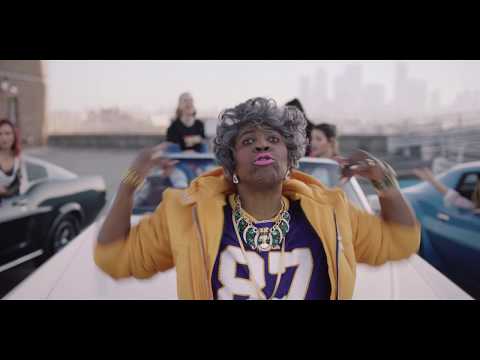
The execution is a full-scale music video parody, leveraging the framework of Sir Mix-A-Lot's iconic 'Baby Got Back.' The setup is brilliant in its simplicity: two young, judgmental women mock our protagonist, Colette Zacca, for her choice of underwear. This establishes the conflict immediately. The 'turn' happens when Zacca, the viral 'Dancing Granny,' presses play on her boombox and becomes 'Lil' Ol' Granny,' a hip-hop queen who turns their judgment into her anthem. The payoff is a joyous, rebellious celebration of comfort, featuring a diverse cast of women dancing with abandon. The lyrics are cleverly rewritten to champion Sloggi's cause: "I'm sick of magazines saying G-string's still a thing." The entire production—from the blinged-out 'OG' necklace to the classic cars—perfectly mimics the aspirational swagger of 90s hip-hop videos, ironically applying it to the humble cotton brief. The brand is integrated effectively, appearing on the cassette tape and the product's waistband early on, culminating in a car leaving 'sloggi' tire marks on the pavement.
The key takeaway for any brand team is the power of reclaiming a narrative. Sloggi didn't run away from the 'granny pant' label; they ran directly at it, embraced it, and turned it into their greatest strength. [7] The campaign demonstrates that by understanding and even exaggerating a perceived weakness, a challenger brand can create an incredibly distinctive and ownable position. It proves that you don't need a traditionally 'sexy' product to create aspirational advertising; you just need a powerful, relatable human truth. The success of this ad lies in its realization that for a modern audience, confidence is the new sexy, and nothing is more confident than being comfortable.
Theme Keywords
Brand Position
Sloggi is the champion of unapologetic comfort.
Brand Archetype
The Jester/Rebel
Creative Game Plan
Reclaim the 'granny pant' by transforming it from a symbol of shame into an emblem of empowerment through a confident, hilarious hip-hop anthem.
Diagnosis: Issues & Solutions
Primary Issue: Strategic Sense
The Problem:
The ad's entertainment value is so high that it risks 'vampire creativity'—where the audience remembers the ad but not the brand. The parody is executed so well that the memory structure might become 'the funny granny pants video' rather than 'the Sloggi granny pants video'.
The Solution:
Future iterations or supporting content should more explicitly link the 'Granny Got Pants' attitude back to the specific product benefits and the Sloggi name, perhaps through shorter cutdowns that focus on the brand name reveal or behind-the-scenes content that discusses why Sloggi initiated the project.
Secondary Issue: Clarity of "What's Next?"
The Problem:
The campaign excels at building top-of-funnel awareness and brand affinity but offers a weak bridge to conversion. The final tagline, 'Uncomfortable? Don't Be.', is a clever philosophical prompt but doesn't tell an interested viewer what to do next.
The Solution:
Incorporate a simple, direct call-to-action on the end card. Something like 'Shop the Collection at sloggi.com' would provide a clear path for engaged viewers to move from entertainment to commerce without diluting the ad's rebellious spirit.