Lidl: Xmas - Ad Analysis

AI Editor notes
Straight from the gut!!
“This is textbook challenger brand behavior, and it's fantastic. They knew everyone looked down on them, so they set a perfect trap. Invite people to a posh dinner, feed them your stuff, and then film their jaws dropping when you reveal it’s all from Lidl. It’s a giant, satisfying ‘told you so’ to the whole country and makes the premium grocers look like they're just selling expensive packaging. Smart, sharp, and brutally effective.”
Quick Summary
Lidl expertly weaponized the public's prejudice against its own brand. By staging a blind taste test in a premium setting, they forced a direct comparison between their product quality and the customers' low expectations. The resulting genuine shock from real people was more persuasive than any traditional claim about quality, fundamentally altering the brand's perception from a cheap discounter to a smart, high-quality choice.
Executive Summary
In 2014, Lidl was a known quantity in the UK: a German discounter with low prices and a matching perception of quality. For the all-important Christmas trading season, the brand faced a significant barrier—convincing shoppers, who are often willing to spend more for the special occasion, that Lidl was a worthy destination for their festive feast. The resulting '#LidlSurprises' campaign, particularly this Christmas execution, wasn't just an ad; it was a Trojan Horse designed to breach the fortress of consumer prejudice.
The core insight is brilliantly simple: people are brand snobs, especially with food. The assumption is that price is a direct proxy for quality. Lidl and its agency, TBWA\London, understood that telling people their food was good would be dismissed as cheap talk. They needed to show it, and the most powerful way to do that was to let people experience the product free from the bias of its brand name.
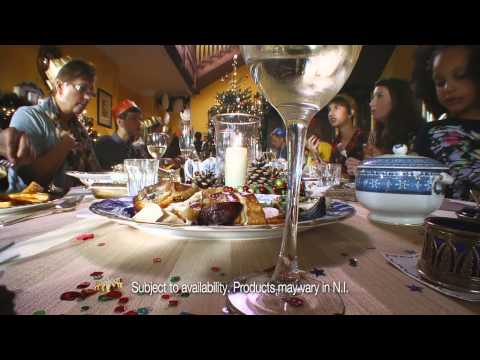
The execution follows a classic Setup-Turn-Payoff structure, executed like a piece of reality television. The Setup is meticulous. A grand Hertfordshire manor, elegant decorations, and a beautifully presented multi-course meal featuring lobster and a magnificent turkey. Everything about the visual language screams 'premium,' priming the audience and the guests to expect a host like Marks & Spencer or Waitrose. The casting of real people, not actors, grounds the event in authenticity. Their genuine enjoyment and praise for the food build the foundation for the reveal. The Turn is a single, pivotal question from a guest: "I want to know where all this food's from." This crystallizes the audience's own curiosity and triggers speculation among the diners, who confidently name the UK's most premium supermarkets. This moment is crucial; it's the public articulation of the very prejudice Lidl aims to dismantle. The Payoff is the reveal, delivered not by a narrator but through the guests' own discovery inside Christmas cards. The reactions—shock, laughter, and disbelief—are the entire message. The final shot of the Lidl logo on the card, paired with the #LidlSurprises hashtag, isn't just a sign-off; it's the punchline and the new brand promise rolled into one.
The debrief from this campaign is a lesson in challenger brand strategy. Lidl didn't try to out-Christmas its competitors with bigger budgets or more sentimental stories. Instead, it used its perceived weakness—its low-price reputation—as its greatest strength. By creating an experience where the product was the hero and the brand was the surprise, it generated authentic, credible testimonials that no amount of traditional advertising could buy. It was a confident, assertive move that repositioned Lidl not as cheap, but as smart.
Theme Keywords
Brand Position
The surprisingly smart choice for high-quality food without the premium price tag.
Brand Archetype
The Jester/Everyman
Creative Game Plan
Prove that Lidl's quality is indistinguishable from premium competitors by tricking the public in an authentic, filmed taste-test experiment.
Diagnosis: Issues & Solutions
Primary Issue: Strategic Sense
The Problem:
The campaign's core 'surprise' mechanic, while brilliant, has a limited shelf life. Once the public becomes aware of the #LidlSurprises concept, the authenticity of the surprise diminishes, and the format risks becoming a predictable gimmick.
The Solution:
Evolve the campaign from proving quality via surprise to explaining the source of that quality. Transition the narrative to 'Here's WHY it's so good for the price,' focusing on supplier relationships, sourcing standards, and award-wins to build a more durable quality perception beyond the initial shock.
Secondary Issue: Emotional Connection
The Problem:
The ad is highly effective at creating surprise and intrigue, but it's less focused on building the warm, emotional connection often associated with Christmas advertising. The feeling is more 'clever' than 'caring'.
The Solution:
In subsequent years, leverage the established quality credentials to tell more human, emotionally resonant stories. Having earned the right to be in the conversation, the brand could then focus on the role its food plays in bringing families together, shifting from a product-proof narrative to a brand-love narrative.
Additional Notes
Related Links
Credits
Share this Analysis
More Lidl ad breakdowns
- UEFA Women's EURO 2025 | Wir sind dabei!Lidl
- Sån är Lidl - Directors Cut | Lidl SverigeLidl
- Be Super Ready For Summer With LidlLidl
- Freeway on the Freeway 2024Lidl
- Lidl Presents: A Magical Christmas | TV Advert 2024 | Lidl GBLidl
- Lidl - Fruit ninjasLidl
- Lidl: The Little PubLidl
- Lidl – Micromarket 20s The Vego HugLidl