Kya Hota Hai Mard | Bobby Deol Raises A Question | Beardo X Bobby - Ad Analysis

AI Editor notes
Straight from the gut!!
“This is heavy. It's so serious and philosophical, you'd think they were selling stoicism, not beard oil. Bobby Deol is great, the vibe is immaculate, but what's the point? It lists a dozen contradictions about being a man and then just... ends. It nails the confusion but offers zero answers, not even a hint of one. I'm left thinking, 'Okay, I'm confused... and now I'm supposed to buy a face wash?'”
Quick Summary
Beardo leverages celebrity Bobby Deol to create a brand manifesto that taps directly into the cultural conversation around modern masculinity. By articulating the contradictory pressures men face, the ad positions Beardo not as a simple grooming product, but as a brand that understands the complex identity of the contemporary Indian man, aiming to build deep brand affinity rather than drive immediate sales.
Executive Summary
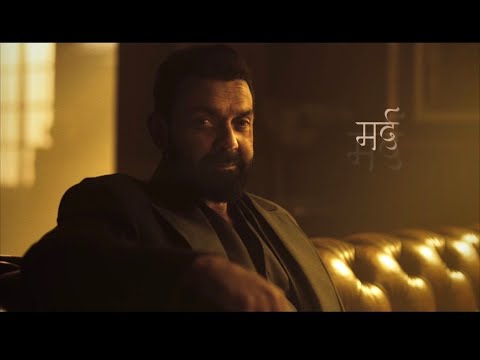
Beardo's 'Kya Hota Hai Mard' is less of an advertisement and more of a cultural statement, a 62-second film that attempts to elevate the brand from a seller of grooming products to a participant in the complex dialogue on modern masculinity. Featuring a resurgent Bobby Deol, the ad employs a 'Lifestyle/Aspirational' creative style, but its core is a poetic, almost philosophical monologue.
The core insight is powerful: the contemporary man is navigating a minefield of contradictory societal expectations. He is told to be strong but gentle, ambitious but humble, a provider but also emotionally available. This insight is the entire foundation of the ad, and Beardo's strategy is simply to articulate this conflict out loud, positioning itself as an empathetic observer. The choice of Bobby Deol is clever, leveraging his recent career comeback and on-screen intensity to give the words a sense of lived-in gravitas.
The execution follows a simple narrative structure: a central question followed by a series of escalating paradoxes, leading back to the original question. It opens with the hook: 'What does it mean to be a man?' The ad then builds its case by listing contradictions ('Be a warrior, but one that doesn't fight'), with each line delivered over moody, cinematic visuals of masculine symbols like a lion statue, a katana, and a vintage motorcycle. The warm, sepia-toned cinematography and somber score create an atmosphere of serious introspection. The ad intentionally offers no resolution. The payoff isn't an answer; it's the Beardo logo appearing after the conflict is laid bare. This positions the brand not as the solution, but as a companion in the struggle—a badge for the man who is defining himself.
The debrief for the team would be largely positive. They created a visually stunning, memorable, and conversation-starting piece of creative that is highly distinct in a crowded market. [9, 11] The ad successfully reframes Beardo as a brand with a point of view. However, the critical feedback would center on the complete detachment from the product category. While brand manifestos don't require a hard sell, the link between grappling with existential questions of masculinity and using beard oil is left entirely to the viewer's imagination. The ad builds a powerful feeling but fails to connect it, even subtly, to the act of grooming, risking the message becoming untethered from the brand's actual business.
Theme Keywords
Brand Position
The grooming brand for men who define masculinity on their own terms.
Brand Archetype
The Rebel/Outlaw
Creative Game Plan
Articulate the internal conflict of the modern Indian man through a powerful celebrity manifesto.
Diagnosis: Issues & Solutions
Primary Issue: Strategic Sense
The Problem:
The ad operates on such a high philosophical plane that it almost completely detaches from the product category it represents. There is no tangible link, however subtle, between the act of grooming and the intellectual exercise of defining masculinity, which risks making the ad feel pretentious or irrelevant to the core business.
The Solution:
Integrate the product category organically into the narrative. For instance, show Deol thoughtfully grooming his beard during his contemplative monologue. This would ground the abstract philosophy in a tangible, brand-relevant ritual without resorting to a hard sell.
Secondary Issue: Emotional Connection
The Problem:
The ad successfully evokes a sense of shared confusion and frustration but leaves the audience there, offering no sense of empowerment or a positive path forward. By ending with the same question it starts with, it validates the problem without providing a sense of solidarity or resolution.
The Solution:
Add a concluding, empowering statement. After the final question, a line like, 'The world doesn't have the answer. You do. Beardo.' would have shifted the tone from shared confusion to individual empowerment, better aligning with a brand that champions self-definition.
Additional Notes
Related Links
Credits
Share this Analysis
More Beardo ad breakdowns
- Redefining Grooming For Modern Man | Evolution Theory | Hrithik Roshan | BeardoBeardo
- Time To Wake Up | Bobby Explains "Kya Hota Hai Mard" | Beardo X Bobby DeolBeardo
- This Rakhi, Choose a Gift That Stays | The Man CompanyThe Man Company
- Smell Like a Footballman | Old Spice NFL CollectionOld Spice
- Promoting positive role models off the court | Dove Men+CareDove Men+Care
- NIVEA MEN & LIVERPOOL FC | ‘Never Alone’NIVEA MEN
- The Duke Cannon Un-NIL DealDuke Cannon Supply Co.
- Welcome to the ClubDollar Shave Club