KING | Title Reveal | Shah Rukh Khan | Siddharth Anand | It’s Showtime | 2026 - Ad Analysis

AI Editor notes
Straight from the gut!!
“So, SRK is doing his *John Wick* now? The salt-and-pepper hair, the hyper-stylized violence, the whole 'I'm a bad man' monologue... it's all there. It looks incredibly slick, but is it original? It feels less like a new character and more like a collection of cool-guy action tropes. They're selling an aesthetic, a vibe. It'll absolutely work for the fans, but I'm not sure if it's building a unique world or just borrowing one.”
Quick Summary
This teaser's job is to sell a character and a mood, not a plot. It leverages Shah Rukh Khan's massive star power to introduce a new, darker, and more violent persona. The campaign promises a high-octane action 'experience' that feels distinct from his previous roles, clearly aiming to capture a younger, global audience accustomed to slick action franchises like *John Wick*.
Executive Summary
This title reveal for 'King' isn't selling a story; it's launching a brand—the brand of Shah Rukh Khan as a modern, ruthless anti-hero. The strategy is to leverage a globally recognized aesthetic to signal a specific kind of product: a high-end, violent action 'experience.' The core insight is that in a market saturated with noble heroes, audiences crave charismatic figures who operate by their own dark code. The thrill isn't just in the action, but in the unapologetic style of a character who, as the voiceover states, is not merely fear, but 'terror' itself.
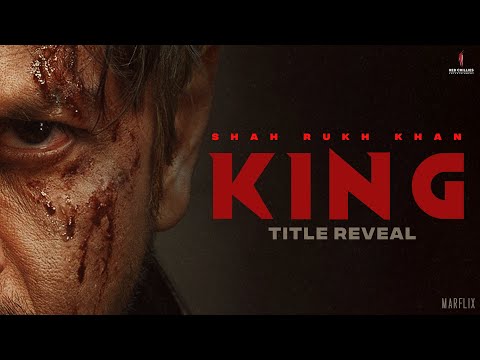
The execution follows a classic Hook-Value-Proof-Ask framework, perfectly optimized for a teaser format. The hook is immediate and visceral (0:00-0:15): a moody, atmospheric opening gives way to quick cuts of brutal violence, all anchored by Khan's gravelly voiceover admitting he doesn't remember how many people he's killed. This establishes the dark tone instantly. The value proposition (0:15-0:33) is then clarified—this is an amoral world where questions of 'good' or 'bad' are irrelevant. The on-screen text 'REMEMBER THERE IS ONLY ONE' reinforces the character's singular, dominant status. The 'proof' section (0:33-1:01) is the core of the piece, delivering the money shot: the full reveal of Khan's battered but defiant face. This is followed by a montage of him dispatching enemies with brutal efficiency, proving the film will deliver on its promise of high-production-value action. The final 'ask' (1:01-1:12) is the title card itself. The name 'KING,' dripping in blood, is the call to action: remember this brand, and be ready for 2026.
The team should debrief on the teaser's unqualified success in generating hype. It proves that for a star of this magnitude, the first job of a campaign is to signal a fresh 'experience.' By presenting Khan in a grittier, more violent light, the teaser achieves this. However, the reliance on a proven formula—the lone, stylish killer à la John Wick—is a double-edged sword. It's a strength because it's a known quantity that sells tickets globally, but it's a weakness because it risks the film feeling derivative. The key lesson is that while borrowing a successful template is an effective shortcut for a teaser, the subsequent campaign will need to establish what makes this IP unique.
Theme Keywords
Brand Position
'King' aims to be the definitive, most stylish and ruthless action-thriller experience in Indian cinema.
Brand Archetype
Ruler / Outlaw
Creative Game Plan
Re-introduce Shah Rukh Khan as the ultimate modern anti-hero, defined by unmatched style and lethal force.
Diagnosis: Issues & Solutions
Primary Issue: Emotional Connection
The Problem:
The teaser is so focused on establishing the character's 'cool' lethality that it remains emotionally cold. We see the violence but not the vulnerability or motivation, making it difficult to connect beyond a superficial appreciation for the action.
The Solution:
The next trailer must introduce a hint of the 'why.' Show a glimpse of a personal stake—a relationship to protect (reports suggest his daughter is a co-star), a past trauma, or a flicker of conflict behind the eyes—to give the audience an emotional anchor.
Secondary Issue: Strategic Sense
The Problem:
The strategy is effective but highly derivative, borrowing heavily from the visual and narrative language of Western action franchises. This risks the film being perceived as 'India's version of...' rather than a groundbreaking IP in its own right.
The Solution:
Future marketing must differentiate by highlighting what makes this world or character unique. Lean into any specific cultural elements, a unique philosophical angle, or a character dynamic that sets it apart from its global counterparts.