Karisma and Oleev urge women to beat insecurities and do what's right for them! - Ad Analysis

AI Editor notes
Straight from the gut!!
“It's a nice thought, but is it believable? The leap from 'battling societal expectations' to 'buying this specific cooking oil' feels like a stretch. It's a very common trope—borrowing gravitas from a social issue to sell a household good. It comes off as competent and well-produced, but also a bit generic. I'm not sure the message will stick to the brand.”
Quick Summary
This ad uses celebrity Karisma Kapoor to equate the daily, personal act of choosing a cooking oil with the much larger, emotional struggle of overcoming societal pressure and self-doubt. The strategy is to position Oleev not just as a product, but as a tool for female empowerment and a tangible 'right choice' in a world of conflicting advice.
Executive Summary
Oleev's campaign with Karisma Kapoor is a textbook example of purpose-driven marketing, attempting to elevate a functional product—cooking oil—into the realm of emotional and social significance. The strategy hinges on a relevant cultural insight but struggles to make the crucial link between the problem it identifies and the solution it offers.
The Core Insight here is that modern Indian women are caught in a crossfire of expectations—from society, family, and themselves—about their bodies, their health, and the choices they make. This creates a constant, low-grade 'battle' of self-doubt. The ad taps into this feeling of being judged, exemplified by the whispers of 'too fat, too skinny' and the conflicting advice to 'eat this, don't eat that.' This is a solid, relatable starting point.
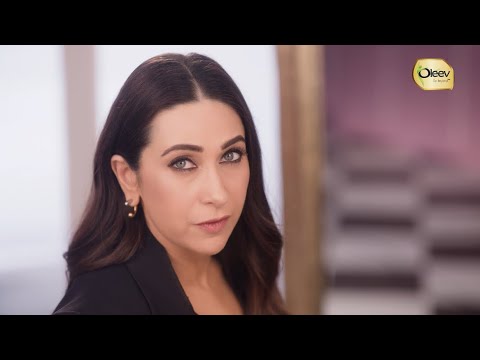
The execution follows a simple Setup-Turn-Payoff structure. The Setup (0:00-0:12) uses Karisma Kapoor looking into a mirror to establish this internal conflict. She acts as a proxy for the audience, validating their insecurities. The Turn (0:13-0:27) occurs when she reframes the narrative from a 'battle' to a 'war' you can win by making the 'right choices.' This is the strategic pivot, shifting the focus from the external problem to the individual's agency. It's meant to feel empowering. The Payoff (0:28-0:33) presents Oleev oil as the tangible manifestation of that 'right choice.' By choosing Oleev, the ad implies, you are choosing yourself, your health, and your family's well-being, thus 'winning the war.'
However, the debrief for the creative team would have to focus on the believability of that payoff. The connection is intellectual, not emotional. The ad tells us that choosing this oil is an act of empowerment, but it doesn't show it in a convincing way. A 30-second monologue, even from a trusted celebrity, is a heavy lift to connect cooking oil to overcoming deep-seated insecurities. The strategy is sound on paper, but the creative execution feels a bit hollow. It plays it safe, relying on a well-worn path of empowerment advertising without adding anything new or uniquely ownable for the Oleev brand.
Theme Keywords
Brand Position
The cooking oil that empowers women to make the right health choice for themselves and their families.
Brand Archetype
The Caregiver
Creative Game Plan
Use a trusted celebrity to link the brand to the cultural conversation around female empowerment and body positivity, positioning the product as a tool for making a confident, healthy choice.
Diagnosis: Issues & Solutions
Primary Issue: Emotional Connection
The Problem:
The ad establishes a powerful emotional problem (societal pressure, self-doubt) but fails to build a credible bridge to the product solution (cooking oil). The leap from 'winning the war against insecurity' to 'I choose Oleev' is too large and feels more like a marketing claim than an authentic emotional truth.
The Solution:
Show, don't just tell the empowerment. Instead of a direct-to-camera monologue, a mini-narrative showing Karisma confidently preparing a healthy, vibrant meal for herself first—a moment of self-care—before serving her family, would have landed the 'do what's right for you' message with more substance and authenticity.
Secondary Issue: Strategic Sense
The Problem:
The empowerment message, while positive, is highly generic and not distinctive to the brand. Dozens of brands across various categories use similar messaging, making it difficult for Oleev to own this territory.
The Solution:
Weave a unique product benefit into the empowerment narrative. The YouTube description mentions '20% less absorption.' This specific, tangible health benefit could have been the 'reason to believe' that makes choosing Oleev a uniquely smart and empowering choice, not just a generic one.
Additional Notes
Related Links
Credits
Share this Analysis
More Oleev ad breakdowns
- झांझ दे शुद्धता का विश्वास, पतंजलि कच्ची घानी सरसों का तेल।Patanjali
- #NewYear | Simply Fresh | BN GroupSimply Fresh
- Freedom - India's No. 1 Sunflower Oil | Yash & Radhika | HindiFreedom Healthy Oil
- 1988: Vegepro oilVegepro
- 1987: Postman refined groundnut oilPostman
- From 5-star chef to feeding millions of those in need | Rakho Iraade FreshSimply Fresh
- Bhojon Bahinir Kotha Mano, Indiar No.1 Jodi Aano | Fortune Mustard Oil & Fortune Soyabean OilFortune
- Freedom 30 Minute MovementFreedom Healthy Cooking Oils