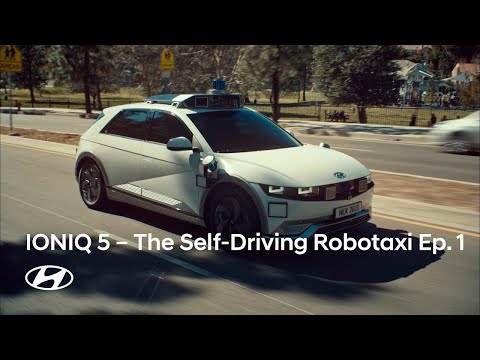
IONIQ5-based Robotaxi l Innovation Begins, from Very Human Things Ep.1 short - Ad Analysis

AI Editor notes
Straight from the gut!!
“This is a smart, gentle introduction to a scary topic. Instead of boasting about sensor arrays, they give the car a calm, reassuring voice. It's a clever way to reframe the conversation from technical prowess to thoughtful behavior. But is 'nice' enough to convince someone to get in a car with no driver? The 'human things' angle works, but it feels a little soft for a technology that demands absolute, life-or-death trust.”
Quick Summary
Hyundai is strategically positioning its autonomous vehicle technology not as cold and robotic, but as thoughtful, courteous, and safe. The core message is that the car has learned from the *best* human driving behaviors, an approach designed to build trust with a public that is inherently skeptical of driverless technology.
Executive Summary
The core challenge for any autonomous vehicle advertisement isn't selling a car; it's selling the very idea of trust in a world without drivers. Hyundai's 'Innovation Begins, from Very Human Things' campaign understands this perfectly. The core insight is that people aren't afraid of technology itself, but of cold, inhuman technology making life-or-death decisions. To counter this, Hyundai doesn't lecture about Lidar or processing power. Instead, it frames its innovation around a simple, powerful human truth: we trust people who are not just competent, but also courteous.
The execution follows a classic Problem-Solution framework, presented as a product demonstration. The implicit problem is the public's fear of unpredictable robot drivers. The solution is Hyundai's IONIQ 5 Robotaxi, which is introduced as a character—calm, friendly, and reassuring. The ad's structure is a setup, a series of proofs, and a payoff. The setup (0:00-0:12) introduces our narrator, the car itself, which states its purpose: 'I've been trained... just like a human driver.' This immediately reframes the technology. The proof section (0:13-0:34) demonstrates this claim with three vignettes that test social intelligence, not just technical skill: avoiding a reckless cyclist, yielding to an impatient driver, and pulling over for an ambulance. These aren't extreme edge cases; they are the everyday, nuanced situations that require good judgment. The visual overlays are minimal, keeping the focus on the smooth, real-world action. The payoff (0:35-0:43) delivers the campaign's thesis statement: 'Learned from the best part of humans.' This line, paired with a shot of the smiling, relaxed passengers, solidifies the emotional takeaway. It’s not about being better than humans; it’s about embodying the best of them.
The debrief for the team is clear: when introducing a disruptive technology, lead with emotional reassurance, not technical specifications. By personifying the car and demonstrating its 'humanity' through relatable acts of courtesy, the campaign effectively dismantles the primary barrier to adoption—fear. It's a smart, empathetic approach that builds a foundation of trust before asking for a ride.
Theme Keywords
Brand Position
The thoughtful, human-centric innovator in autonomous mobility.
Brand Archetype
Caregiver / Sage
Creative Game Plan
Build trust in autonomous vehicles by demonstrating that our car doesn't just follow rules, it understands and acts with human courtesy.
Diagnosis: Issues & Solutions
Primary Issue: Emotional Connection
The Problem:
While the ad successfully creates a feeling of calm, it lacks a deeper, more memorable human story. The passengers are smiling archetypes, which makes the benefit feel abstract rather than personal.
The Solution:
Center the next spot on a single, compelling human story. For example, show the robotaxi enabling a new level of independence for an elderly person or a person with disabilities, making the benefit of 'safe, human-like driving' a tangible, emotional lifeline.
Secondary Issue: Clarity of "What's Next?"
The Problem:
The ad's closing is vague, stating the service is 'from 2023' without giving viewers a concrete next step. This misses an opportunity to capture high-intent early adopters.
The Solution:
Include a specific, dedicated URL on the end card (e.g., Hyundai.com/Robotaxi) and a prompt to 'See if it's coming to your city' or 'Sign up for launch updates.' This creates a clear path for engagement beyond a generic 'Learn More' link.
Additional Notes
Related Links
Credits
Share this Analysis
More Hyundai ad breakdowns
- ELEC CITY TOWN Bus | Yakushima JapanHyundai
- Hyundai IONIQ 5 | Ultimate CampingHyundai
- The all-new NEXO Global Unveil – Clearly Committed | Main FilmHyundai
- Hyundai Mobility Adventure | Jump into the Epic Journey (Trailer)Hyundai
- Best of Both Worlds | SANTA FE Hybrid | HyundaiHyundai
- El reflejo de un mundo mejor - HEVolución HíbridaHyundai
- Hyundai INSTER. Small car. Big energy.Hyundai
- Hyundai IONIQ 5 | 5 Min ChallengeHyundai