Hide & Seek - Ad Analysis

AI Editor notes
Straight from the gut!!
“This is a punch to the gut. The sound design is the real star here—it's incredibly difficult to listen to, which is precisely the point. Twisting a game everyone has fond memories of into something this dark is a smart, jarring move. It’s almost too effective; you want to look away. The pivot to the bright, safe refuge at the end is a critical release valve, offering hope and, more importantly, a clear role for the viewer's donation.”
Quick Summary
By twisting the innocent childhood game of 'Hide & Seek' into an unsettling metaphor for a child's desperate attempt to survive domestic abuse, the ad makes an invisible, behind-closed-doors horror feel immediate and tangible. The brutal audio-only narrative of the violence, contrasted with the visual of the boy simply counting, is a devastatingly effective way to force the audience to confront the issue from its most vulnerable victim's perspective.
Executive Summary
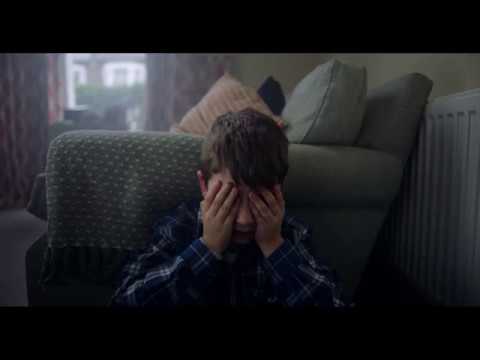
This campaign from Refuge and BBH London is a masterclass in narrative subversion. It takes a universal childhood experience, 'Hide & Seek,' and weaponizes it to expose the hidden terror of domestic abuse. The ad doesn't show a single act of violence; it forces you to hear it, and by doing so, makes the viewer an unwilling participant in the child's nightmare. The decision to tell the story primarily through sound design is the campaign's smartest creative choice. While we see a young boy counting with his eyes covered, the off-screen soundscape tells the real story: thuds, shattering glass, and escalating shouts. This sensory mismatch creates a powerful psychological tension. We are put directly into the child’s headspace, where he uses the ritual of a game to block out a reality that is too terrifying to face.
The execution follows a classic Setup-Turn-Payoff structure. The Setup (0:00-0:32) establishes the 'game' of hide-and-seek, but the audio cues immediately signal that something is wrong. The boy isn't playing; he's coping. The quick cuts between him hiding in various places—behind a sofa, under a table, in a laundry basket—imply this is a grim, repeated routine, not a one-off event. The Turn (0:32-0:36) is a hard cut to black with a stark statistic: "90% of domestic abuse in a family home happens in the presence of children." This moment reframes everything we've just witnessed, transforming our unease into a horrifying certainty. It’s the intellectual anchor for the emotional storm. The Payoff (0:36-1:01) provides the crucial emotional release and the solution. The scene shifts to a bright, warm, and safe environment. The mother finds her son, but this time, it is just a game. This is the 'after' picture—the peace and safety that Refuge provides. The on-screen text clarifies the mission and the partnership with Picturehouse, leading to a direct call to action. [1, 2, 4]
The team should learn that the most powerful way to tell a story about violence is often to show its impact rather than the act itself. By focusing on the child's perspective, the ad avoids gratuitous imagery and instead creates a deeper, more disturbing psychological horror. It bypasses intellectual understanding and goes straight for an empathetic, visceral reaction. This makes the final message—that there is a safe place, a 'refuge'—not just a brand promise, but an urgent necessity that the viewer now feels compelled to support.
Theme Keywords
Brand Position
Refuge is the safe harbour that turns a child's terrifying reality back into a game.
Brand Archetype
Caregiver
Creative Game Plan
Reframe the universal childhood game of hide-and-seek as a terrifying, real-life survival tactic to make the invisible horror of domestic abuse impossible to ignore.
Diagnosis: Issues & Solutions
Primary Issue: Emotional Connection
The Problem:
The primary risk is emotional burnout. The first 30 seconds are so intense and anxiety-inducing that there's a danger of viewers disengaging or turning away before the crucial message of hope and the call-to-action are delivered.
The Solution:
The structure is likely optimal as the shock is the strategy. However, for shorter social cutdowns, they could experiment with a version that opens with the moment of relief before flashing back to the tension, ensuring the 'solution' is seen even by viewers with short attention spans.
Secondary Issue: Strategic Sense
The Problem:
The partnership with Picturehouse is logistically brilliant but could feel slightly disconnected from the creative itself. It's mentioned on-screen, but the link isn't woven into the narrative. [1]
The Solution:
A subtle audio cue, like the sound of a cinema projector starting up as the scene transitions to the safe refuge, could have metaphorically linked the idea of 'escape' in a cinema with the 'escape' provided by Refuge, tightening the bond between the partner and the mission.