Get FitForFood with Joel McHale and Fitbit - Ad Analysis

AI Editor notes
Straight from the gut!!
“This is a solid B+ idea. Using Joel McHale is perfect casting—he's the ideal avatar for the cynical consumer who's over the whole 'new year, new you' thing by February 1st. The 'lazy fit' montage is funny and relatable. The pivot to the earnest 'Feeding America' cause is a bit abrupt, but the core concept—'burn calories, give calories'—is clean and effective. It's a user-retention play, not a customer-acquisition play.”
Quick Summary
Fitbit cleverly hijacks the inevitable failure of selfish New Year's resolutions by offering a selfless reason to keep moving. The campaign uses Joel McHale's cynical humor to connect with viewers who are tired of empty fitness promises, then pivots to a simple, powerful charitable hook: your burned calories can feed someone in need. It's a smart brand play that shifts the conversation from personal vanity to communal value.
Executive Summary
This Fitbit ad is a clever piece of strategic communication that understands its audience's mindset at a specific time of year. It’s built on a sharp insight and executed with a two-act structure that moves the viewer from relatable cynicism to attainable altruism.
The Core Insight: The simple human truth at the center of this ad is that motivation for self-improvement is fragile, especially when it’s just for yourself. New Year's resolutions are often abandoned because the 'why' is selfish and abstract. However, people are more likely to stick to a goal if it benefits someone else. The campaign gives users an external, altruistic purpose to continue a personal, internal journey.
The Execution: The ad uses a classic Setup-Turn-Payoff structure.
-
The Setup (0:00-0:38): The ad establishes its target by showing Joel McHale as the embodiment of resolution fatigue. He watches a generic fitness commercial with disdain, immediately aligning with anyone tired of chipper, unrealistic #fitspo content. The subsequent 'lazy fit' montage is the comedic heart of the ad. By showing 'gorge fit' and 'federal offense fit,' the ad acknowledges the downward spiral in a humorous, non-judgmental way. This builds rapport by saying, 'We get it, you've given up.'
-
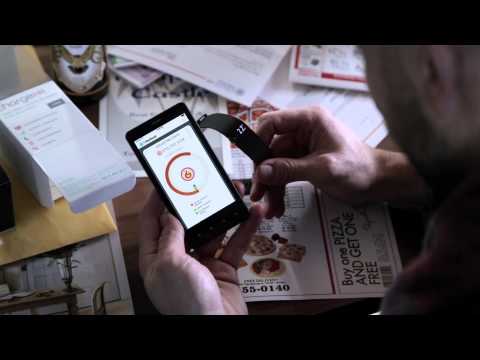
The Turn (0:39-0:48): The narrative pivots sharply when McHale opens a stolen package containing a Fitbit. The music and tone shift from comedic to serious. A narrator explicitly states the problem: people abandon their resolutions. This moment acts as a bridge, taking the comedic problem from the setup and reframing it as a real, widespread issue.
-
The Payoff (0:49-1:39): The ad delivers its solution: the FitForFood program. The clear, simple mechanic—'burn calories, give calories'—is presented as the new, better motivation. The use of stock footage showing genuinely active people provides a visual contrast to McHale's earlier sloth. The ultimate payoff comes when McHale himself reappears, now transformed into an active participant. He hasn't become a fitness saint—he's still eating a donut—but his activity now has a purpose, justifying the reward. His line, 'This is for America,' perfectly ties the personal reward to the charitable act.
The Debrief: The key takeaway is the power of reframing. The campaign didn't try to sell a new feature or a better battery; it changed the meaning of the data the product was already collecting. By turning 'calories burned' from a vanity metric into a currency for social good, Fitbit gave users a compelling reason to re-engage with the device and the brand. It demonstrates that for a market leader, the most effective marketing isn't always about selling the product, but about enriching the experience of owning it.
Theme Keywords
Brand Position
Fitbit is the accessible, motivating partner that connects your personal fitness goals to a larger, positive community impact.
Brand Archetype
Everyman
Creative Game Plan
Re-engage users whose New Year's resolutions are failing by using a cynical spokesperson to introduce a selfless, charitable reason to keep exercising.
Diagnosis: Issues & Solutions
Primary Issue: Emotional Connection
The Problem:
The ad's greatest strength, its tonal shift from comedy to earnestness, is also a point of friction. The use of generic stock footage of smiling, active people feels disconnected from the specific, cinematic world established with Joel McHale, slightly cheapening the emotional payoff.
The Solution:
Integrate the 'giving' narrative more seamlessly. Instead of cutting to stock footage, show the real-world impact of the donations or have McHale interact with people who represent the cause, bridging his cynical world with the positive outcome more directly.
Secondary Issue: Strategic Sense
The Problem:
The campaign is almost exclusively aimed at existing Fitbit users. There is very little in the ad that works to persuade a non-user to buy a Fitbit over a competitor, as it assumes the audience already has the device needed to participate.
The Solution:
Add a brief, 2-second scene or graphic that visually explains *how* the Fitbit app makes joining the cause effortless. This would subtly message the product's ease-of-use to potential new customers without disrupting the primary brand message.