From Our Founder: We’ve got nothing to hide! - Ad Analysis

AI Editor notes
Straight from the gut!!
“Founder-led, direct-to-camera... it's a familiar playbook for a challenger brand. The '70 additives' fact is a solid, memorable hook. The execution is clean. But that 'motherfucker' at the end? It feels a little try-hard, like a desperate attempt to add personality and go viral. It risks distracting from the core message of quality and transparency, which was already working.”
Quick Summary
This ad weaponizes transparency. By using its own founder to bluntly call out the 70+ undisclosed 'gross' additives in competing wines, Archer Roose positions itself as the honest, clean alternative for a generation of consumers who read labels and distrust big corporations. The entire strategy hinges on a single, powerful idea: we'll tell you exactly what's in our can because we have nothing to hide.
Executive Summary
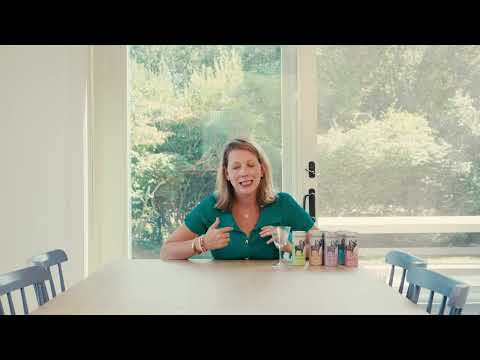
In the crowded and often stuffy wine market, Archer Roose attempts to carve out a niche by taking a page from the modern direct-to-consumer playbook: radical transparency. This ad isn't selling aspiration in a sun-drenched vineyard; it's selling information on a can. The strategy is to create a clear enemy—the opaque, additive-filled 'Big Wine' industry—and position Archer Roose as the consumer's honest, trustworthy champion. By putting co-founder Marian Leitner-Waldman front and center, the brand aims for an authenticity that larger, faceless corporations struggle to replicate. [3]
The execution follows a simple and effective Problem-Solution-Proof narrative. The setup (0:06-0:22) establishes the 'Problem' with a startling fact: 'Most mass-distributed wines have over 70 different additives.' This is designed to create immediate concern and distrust in what consumers are currently drinking. The ad names specific 'gross' ingredients like artificial coloring and animal byproducts, making the threat feel tangible. The turn (0:24-0:34) introduces the 'Solution': Archer Roose's 'low-intervention winemaking.' Marian frames this as a personal choice ('I care a lot about what I put in my body'), creating an immediate connection with the target audience of health-conscious millennials. The payoff, or 'Proof' (0:37-0:46), is the product itself. She holds the can to the camera, showing the ingredient list as the ultimate evidence of their transparency. This act transforms the packaging from a simple container into a proof point and a symbol of the brand's ethos. The final, edgy sign-off is an attempt to inject a memorable dose of personality, ensuring the brand is perceived as modern and unstuffy, a clear departure from traditional wine marketing. [13]
The debrief for the team would be that this approach works well for a challenger brand. It successfully creates a clear, rational reason to choose Archer Roose over its competitors. The use of a founder as a spokesperson builds a layer of trust that paid actors often can't achieve. [1] However, the strategy's strength is also its weakness. It's highly rational and may not forge the deep emotional connection that creates long-term brand loyalty. While transparency is a powerful reason-to-believe, the brand must eventually build a story that goes beyond just the ingredient list to truly own a space in the consumer's heart, not just their head.
Theme Keywords
Brand Position
The honest, premium canned wine for discerning drinkers who demand transparency.
Brand Archetype
The Sage (revealing the truth) with a Jester edge.
Creative Game Plan
Expose the hidden, 'gross' truth about mass-market wine to position Archer Roose as the radically transparent and therefore superior choice.
Diagnosis: Issues & Solutions
Primary Issue: Emotional Connection
The Problem:
The ad is a strong rational argument but lacks a genuine emotional core. We're told Marian cares, but we don't feel it. It's a business pitch, not a personal mission.
The Solution:
Show, don't just tell. Instead of just sitting at a table, briefly cut to a shot of Marian in a vineyard or with her family, connecting the 'why' behind her mission to something more personal and relatable than a list of ingredients.
Secondary Issue: Clarity of "What's Next?"
The Problem:
The call to action is passive and assumes the viewer can already access the product. It tells you to 'look at the can' but gives no clear instruction on how to acquire one.
The Solution:
End with a more direct and actionable CTA. A simple card with 'Find us in stores and online at ArcherRoose.com' would provide a clear next step for interested consumers to convert.
Additional Notes
Related Links
Credits
Share this Analysis
More Archer Roose Wines ad breakdowns
- About Archer Roose WinesArcher Roose Wines
- How to Cook with Wine 👩🍳🍷 | Talking Wine with Elizabeth Banks | Archer Roose WinesArcher Roose Wines
- Enjoy Our Subtle Notes of Grape 🍇 🎹 | Talking Wine with Elizabeth Banks | Archer Roose WinesArcher Roose Wines
- Elizabeth Presents Our New Commercial | Talking Wine with Elizabeth Banks | Archer Roose WinesArcher Roose Wines
- Try it. It’s very good tasting. | Talking Wine with Elizabeth Banks | Archer Roose WinesArcher Roose
- Elizabeth Banks Tries Luxury Wine in a Can | Archer RooseArcher Roose
- 14 Hands Cans - Wineski14 Hands Winery