European Maccabi Games 2015 - Tennis (ENG) - Ad Analysis

AI Editor notes
Straight from the gut!!
“This is clever. It takes the enormous historical weight of holding the 'Jewish Olympics' at Hitler's 1936 stadium and makes it feel... light. [2, 5] Instead of a somber history lesson, they went with an inside joke. Using 'Mazel tov' as the disruptive punchline is a smart, disarming way to say 'we're still here, and we're celebrating.' It feels authentic and aimed squarely at a modern, confident Jewish audience.”
Quick Summary
This ad's effectiveness comes from subverting expectations twice. First, it uses humor to turn a tense tennis match into a joyous, communal celebration. Second, and more importantly, it reclaims a historically charged space—the Berlin Olympic Park—with unapologetic Jewish pride, transforming a potential site of painful memory into one of modern, confident celebration. [2, 4, 6]
Executive Summary
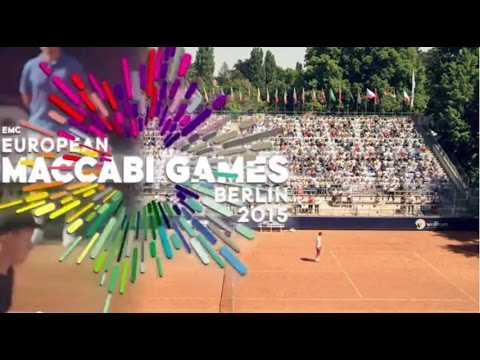
This 2015 spot for the European Maccabi Games in Berlin is a textbook example of how to handle an incredibly sensitive topic with wit and confidence. The challenge was immense: how do you promote the first-ever 'Jewish Olympics' to be held in Germany, at the very Olympic Park built by the Nazis for the 1936 games where Jews were banned? [2, 4, 5] A somber, historical approach would have been predictable and potentially alienating. Instead, M&C Saatchi Berlin chose a path of humorous subversion.
The core insight is that modern Jewish identity, particularly in Germany, is not solely defined by past tragedy but by present-day vibrancy and confidence. [9] The ad rejects the idea that a Jewish event in Berlin must be mournful. It chooses to be loud, disruptive, and joyous. This speaks to a generational shift, where the act of celebrating in such a historically charged location is the ultimate statement of resilience. [2]
The execution follows a classic Setup-Turn-Payoff structure. The setup is a familiar, high-stakes tennis match, establishing a universal context of sports etiquette where silence is demanded. The turn is the unexpected, comical noise, which initially seems like a simple gag about a disruptive fan. The payoff, however, delivers the strategic message. The reveal that the 'umpire' is just a spectator, and his disruptive call is the celebratory Hebrew phrase 'Mazel tov,' reframes the entire scene. It's not about disrespecting the game; it's about a community bringing its own rules and culture to the forefront. The entire crowd joining in transforms the moment from an individual act of disruption into a powerful, collective celebration. The final super, 'The Jewish Games Are Coming,' lands perfectly, linking the scene's spirit to the event itself.
The debrief for any team watching this is about the power of tone. When faced with a difficult historical context, humor and confidence can be more powerful than reverence. The ad succeeded because it spoke to its intended audience—primarily European Jews—in an authentic voice. [9] It didn't try to explain the historical significance to outsiders; it trusted its audience to understand the profound subtext of shouting 'Mazel tov' in the Berlin Olympic Park. [4] It's a lesson in knowing your audience and not being afraid to use an inside joke as the foundation for your creative.
Theme Keywords
Brand Position
The only global sporting event where Jewish identity and history are the main event.
Brand Archetype
The Jester (with undertones of The Hero)
Creative Game Plan
Subvert the solemnity of German-Jewish history with an act of joyous, unapologetic, and humorous cultural expression.
Diagnosis: Issues & Solutions
Primary Issue: Strategic Sense
The Problem:
The ad's greatest strength—its cultural specificity—is also its primary limitation. The humor and emotional payoff are almost entirely dependent on understanding the historical context and the meaning of 'Mazel tov.' For a general German or global audience without this knowledge, the ad could be perceived as simply confusing or odd, potentially limiting its broader impact as a tool for outreach to non-Jewish communities.
The Solution:
To broaden the appeal without losing the core idea, a companion piece of content could have been created for a wider audience. This could have been a short 'making-of' or a brief explanation of the campaign's theme: 'Why a little Mazel Tov in Berlin means a lot,' explicitly connecting the celebratory tone to the historic location for those outside the target demographic.
Secondary Issue: Clarity of "What's Next?"
The Problem:
While the ad provides the event dates and location, the call to action is purely informational ('Come along to...'). It doesn't create urgency or provide a simple, direct path for engagement, such as a clear website URL on screen for the final five seconds or a prompt to 'Get tickets now.'
The Solution:
The final call-to-action screen should have been simplified to feature the event name and a prominent, easy-to-read URL (like EMG2015.de). Adding a simple, direct verb like 'Book Tickets' or 'Join Us' would have provided a clearer next step for interested viewers.