Eliud Kipchoge | Ready to Run NYC | Nike - Ad Analysis

AI Editor notes
Straight from the gut!!
“This is classic, confident Nike. The strategy to use Kipchoge, a literal god of running, to compliment the hustle of regular people is a clever inversion of the typical celebrity endorsement. It feels less like an ad and more like a cultural observation. It’s a smart, self-assured piece of work that makes the brand feel bigger than just its products.”
Quick Summary
This ad isn't about selling shoes; it's about selling an identity. Nike brilliantly redefines the word 'runner' not as an elite athlete, but as a characteristic of every New Yorker who navigates the city's chaotic energy. It uses the world's greatest marathoner, Eliud Kipchoge, not to intimidate but to anoint the everyday citizen with the spirit of a champion, making the brand's core purpose feel universal.
Executive Summary
Nike’s 'Ready to Run NYC' is a masterclass in reframing. Instead of persuading non-runners to adopt a new behavior, the ad cleverly redefines 'running' to encompass a behavior they already exhibit: the daily, high-octane hustle of New York City life. The core insight is that the relentless forward motion required to survive and thrive in NYC is its own kind of marathon, deserving of the same respect afforded to elite athletes. This isn't about getting you to buy running shoes; it's about getting you to see the runner you already are—and by extension, to see Nike as the brand that understands your spirit.
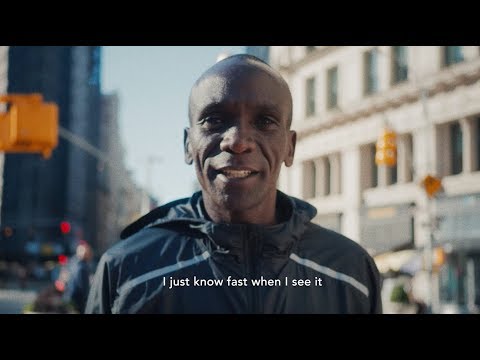
The execution follows a clean and powerful narrative arc. It opens with a direct challenge—the Setup—'So you think you're not a runner?' This question is immediately juxtaposed with visuals of the everyday 'running' New Yorkers do: catching trains, sprinting through traffic, and navigating crowded sidewalks. The authority to validate this redefinition comes from the ad's brilliant Turn: Eliud Kipchoge, the fastest marathoner in history. His role is not to preach, but to observe with admiration. The pivotal line, 'Even I wouldn't do that,' after a woman dodges a cab, flips the script. The ultimate runner is humbled by the everyday person's athleticism. This moment of validation from the highest authority makes the Payoff—'If you're in New York... you're a runner'—feel earned and powerful. The final line, 'Let's run this city,' transforms from a simple tagline into an empowering mantra for millions.
The key lesson from this campaign is the power of strategic inclusion. Rather than creating an aspirational gap between the celebrity and the consumer, Nike uses the celebrity to close it. The brand expands its tent, welcoming in a massive demographic that may have never identified with its core marketing. By focusing on a shared spirit rather than a shared activity, Nike reinforces its position not just as a seller of athletic gear, but as a champion of the athletic mindset in all its forms.
Theme Keywords
Brand Position
Nike is the brand that champions the athlete within everyone.
Brand Archetype
Hero
Creative Game Plan
Validate the athletic spirit of everyday New Yorkers by having the world's most elite runner celebrate their daily hustle.
Diagnosis: Issues & Solutions
Primary Issue: Emotional Connection
The Problem:
The ad is a beautiful, cinematic ode to the city's collective energy, but it observes its subjects from a distance. By featuring a montage of many anonymous people, it risks feeling like a grand statement rather than a personal story, potentially limiting the depth of the emotional connection for a viewer who doesn't already identify strongly as a New Yorker.
The Solution:
Anchor the montage with a micro-narrative of a single, relatable character. Follow them through their hectic morning 'run'—the near-missed train, the coffee spill, the sprint to a meeting—so the audience has a personal story to invest in before the ad reveals the universal truth that connects them to everyone else.
Secondary Issue: Clarity of "What's Next?"
The Problem:
The ad does a superb job of creating an empowering feeling but provides no immediate channel for that inspiration. The viewer is left with the thought, 'I am a runner,' but no clear next step within the Nike ecosystem.
The Solution:
A simple, non-intrusive end card with a targeted call to action like, 'Your city is your track. Map it with the Nike Run Club app,' would have seamlessly bridged the gap between brand inspiration and brand engagement.