COKE ZERO AUDITIONS: ZERO PROPS, ZERO SCRIPTS, ZERO SUGAR. #CokeZero - Ad Analysis

AI Editor notes
Straight from the gut!!
“This is a smart, high-concept play. It's the kind of work that makes other ad people nod with respect. It feels like a confident move from a market leader—they're so sure you know what Coke tastes like, they don't even have to show it. The risk is that it's too clever, but the final reveal of the billboards makes the whole concept land. It's a solid flex.”
Quick Summary
This campaign's core strategy is to make the absence of the product its greatest asset. By having actors convincingly mime the experience of drinking a Coke Zero, the ad cleverly equates 'zero props' and 'zero script' with 'zero sugar,' proving the taste is so powerful and recognizable it can be felt without ever being seen. The reveal—that the auditions *are* the ad—transforms a simple creative exercise into a confident, public statement about the product's core benefit.
Executive Summary
Coca-Cola has built its empire on making its product an icon of feeling—happiness, togetherness, refreshment. With Coke Zero, however, it faces a classic challenger's dilemma, even as a market leader: overcoming the consumer skepticism that 'zero sugar' inherently means 'compromised taste.' The 'Coke Zero Auditions' campaign, conceived by Ogilvy India, is a sophisticated and confident rebuttal to that skepticism. It doesn't just tell you the taste is real; it proves it by removing the product entirely and letting human imagination fill the void. The core insight is simple yet powerful: the sensation of drinking a Coke is so universally understood that it can be convincingly conjured from thin air. The campaign leverages this shared cultural knowledge, turning a method acting exercise into its central creative vehicle. [3, 4] This is an ad built on trust—trust that the actors can sell the feeling, and trust that the audience is smart enough to connect the dots between 'zero props' and 'zero sugar.'
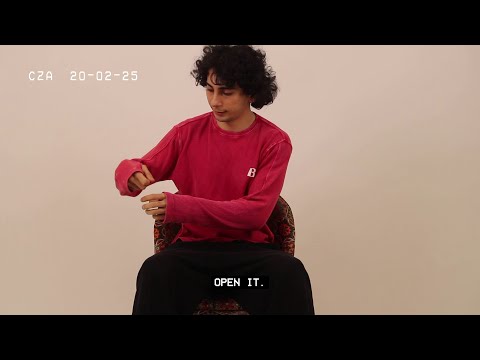
The execution follows a clever Setup-Turn-Payoff structure. The Setup (0:00-0:35) perfectly mimics the raw, unpolished aesthetic of a casting call. We see aspiring actors going through the mundane motions—profiles, hand shots, introductions. This documentary-style approach grounds the film in a believable reality, making the audience feel like they're getting a genuine peek behind the curtain. The Turn (0:36-1:12) arrives as the director's prompts shift from generic to narrative, culminating in the key instruction: 'You're holding an ice cold Coke Zero Sugar.' Here, the ad pivots from being about casting to being about the product experience itself. We watch as actors, using only their senses and memory, perform the act of opening and tasting the drink. Their convincing expressions of refreshment and satisfaction become the sole evidence of the product's quality. The Payoff (1:13-1:55) is the brilliant reveal. Text on screen clarifies that the auditions weren't for the campaign—they were the campaign. The film then cuts to massive digital billboards in a bustling Indian city, displaying the very audition tapes we just watched. This masterstroke elevates the concept from a clever internal exercise to a bold, public declaration of confidence. The imagined has become real.
The debrief for the team is clear: in a saturated market, a brand's most powerful asset can be its own name. By deconstructing its advertising down to 'zero,' Coke Zero created a campaign that is minimalist in execution but maximal in impact. [1, 5] It demonstrates that you don't always need to shout your message with glossy product shots and overt claims. Sometimes, a confident whisper, built on a universally understood truth, is far more compelling.
Theme Keywords
Brand Position
The only zero-sugar cola that delivers the full, authentic Coca-Cola taste experience.
Brand Archetype
The Magician: It creates a full sensory experience out of nothing.
Creative Game Plan
Prove Coke Zero's great taste is so undeniable, we can make a compelling ad without ever showing the product.
Diagnosis: Issues & Solutions
Primary Issue: Emotional Connection
The Problem:
The ad's primary appeal is intellectual. Viewers appreciate the cleverness of the concept, but it doesn't forge a strong emotional bond. It's an ad you respect more than one you love, which is a slight departure for a brand like Coca-Cola that typically trades in feelings of happiness and nostalgia.
The Solution:
After the main reveal, a final sequence could have shown the actors seeing themselves on the giant billboards for the first time. Capturing their genuine surprise and joy would have added a much-needed layer of human emotion, connecting the intellectual 'aha!' moment with a heartfelt payoff.
Secondary Issue: Clarity of "What's Next?"
The Problem:
The campaign is entirely focused on top-of-funnel awareness and does little to guide the viewer toward trial. It successfully makes you think about the product's taste but stops short of explicitly encouraging you to experience it for yourself.
The Solution:
A simple on-screen text overlay or QR code in the final frames with a message like 'Taste it to believe it' or 'Get the real feeling' could have provided a subtle nudge, bridging the gap between brand perception and consumer action without undermining the minimalist creative.
Additional Notes
Related Links
Credits
Share this Analysis
More Coca-Cola Zero Sugar ad breakdowns
- Make jump scares taste great, #JustAddCokeZero 🥤Coca-Cola Zero Sugar
- Make proposals taste great, #JustAddCokeZeroCoca-Cola Zero Sugar
- Unstoppable Duo | Mountain Dew 2025 | Featuring Hrithik Roshan & Salman KhanMountain Dew
- Who will you Share A Coke with?Coca-Cola
- Kıpır Kıpır Bir Coca-Cola?Coca-Cola
- Pilav Show! - #TadınıÇıkarCoca-Cola
- Celebre a amizade | Coca-ColaCoca-Cola
- Coca-Cola X Diljit Dosanjh - Khud ko Jaga!Coca-Cola