Coca-Cola: Anthem - Ad Analysis

AI Editor notes
Straight from the gut!!
“This is peak 'big brand, big feelings' advertising. It’s a well-executed, if predictable, Olympic anthem. The strategy to localize the global '#ThatsGold' idea around the Chinese cultural value of collective support is smart. But at over two minutes, it feels a bit long and overstuffed with stories. You can almost feel the checklist of vignettes they had to include. It's effective, but it's not breaking any new ground.”
Quick Summary
Coca-Cola repositions the meaning of 'gold' away from the Olympic medal itself and towards the emotional, shared moments of human connection with supporters—family, friends, and coaches—that make achievement possible. The brand frames itself not as a drink for winners, but as the catalyst for celebrating the relationships that are the real prize.
Executive Summary
Coca-Cola’s ‘Anthem’ for the 2016 Rio Olympics is a masterclass in localizing a global campaign platform. While the worldwide tagline was '#ThatsGold,' McCann Worldgroup China astutely recognized that the concept needed a specific cultural lens to resonate. The result is a film that shifts the focus from individual victory to the collective effort and emotional support network that Chinese culture highly values. It’s less about the medal and more about the moments of connection that give the medal its meaning. [2, 6]
The core insight is simple but powerful: achievement is never a solo act. The real reward, the true 'gold,' isn't the hardware but the shared pride, the tears of joy from a parent, the encouraging nod from a mentor, and the unwavering belief of friends. This is a common theme in sports advertising, but Coke gives it a uniquely broad and humanistic scope, moving beyond just athletes to include artists like Lang Lang, entrepreneurs, and even a pair of friends on a difficult motorcycle journey. This widens the definition of 'achievement' to be something everyone can relate to, not just elite Olympians.
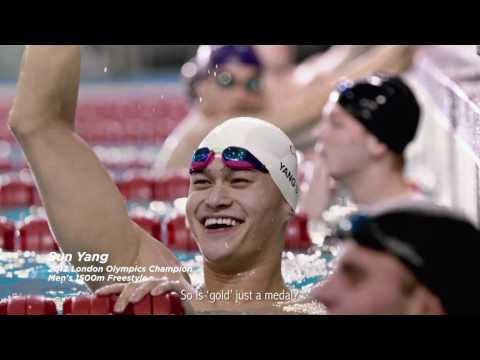
The execution follows a classic Setup-Turn-Payoff structure. The Setup (0:00-0:18) establishes the lonely, grueling work required to pursue a dream. We see the sweat, the strain, and the solitary focus. The Turn (0:19-0:52) introduces the support system. The film pivots to reveal that no one is truly alone. A coach's guidance, a teacher's wisdom, a friend's helping hand—these are the invisible forces behind the effort. The story of Lang Lang and his teacher is a particularly effective anchor here, grounding the abstract idea of support in a real, personal narrative. [4, 12] The Payoff (0:53-2:01) redefines 'gold.' The voiceover explicitly asks the question: 'So is 'gold' just a medal? Or is it something even more precious?' The subsequent montage answers by showing moments of shared celebration, tears, and hugs, culminating in people connecting over a Coca-Cola. The product is positioned as the facilitator of these golden moments of togetherness, the reward for the collective journey.
The debrief for the team would be that emotional, human-centric storytelling still works, especially for a market leader like Coke. When you can’t win on product features, you win on brand meaning. The decision to make the abstract concept of 'gold' tangible through multiple, relatable human stories was the right one. However, the film's two-minute runtime and the sheer number of vignettes risk emotional fatigue. While inclusive, it might have been even more powerful to go deeper into one or two stories instead of skimming across so many.
Theme Keywords
Brand Position
Coca-Cola is the catalyst for celebrating the shared joy and authentic human connections that are the real reward for any achievement.
Brand Archetype
The Everyman
Creative Game Plan
Redefine Olympic 'gold' from an individual medal to the priceless emotional moments of connection shared with the people who supported the journey.
Diagnosis: Issues & Solutions
Primary Issue: Emotional Connection
The Problem:
The ad's greatest strength—its breadth of stories—is also a potential weakness. By featuring so many different narrative threads, it struggles to create a deep, lasting connection to any single one, risking a feeling of a beautifully shot but generic montage.
The Solution:
For future campaigns, consider a 'hero and hub' model: create one powerful, in-depth film about a single story (the hero), supported by shorter vignettes about other characters for digital platforms (the hub). This allows for both depth and breadth.
Secondary Issue: Strategic Sense
The Problem:
The product integration feels like an afterthought. For nearly 1 minute and 40 seconds, the ad is a powerful emotional story about human connection, but the Coca-Cola bottles only appear in the final celebratory montage, making the link feel slightly forced.
The Solution:
Weave the product more naturally into the 'Turn' phase of the narrative. Show a coach and athlete sharing a Coke during a break, or friends refreshing with one mid-journey. This would position the brand as part of the process, not just the prize at the end.
Additional Notes
Related Links
Credits
Share this Analysis
More Coca-Cola ad breakdowns
- COCA-COLA | O ANO DA VIRADACoca-Cola
- Who will you Share A Coke with?Coca-Cola
- The Lost Voices | Football World Cup FandomCoca-Cola
- McVeggie + Coke Zero @ Just ₹149!Coca-Cola
- Coca-Cola | It's Magic When the World Comes Together | Paris 2024 | Global Coca-Cola
- Kıpır Kıpır Bir Coca-Cola?Coca-Cola
- Pilav Show! - #TadınıÇıkarCoca-Cola
- Coca-Cola: Te tocó nacer acáCoca-Cola