Chhota Kaam? | Urban Company - Ad Analysis

AI Editor notes
Straight from the gut!!
“This is smart, brave, and incredibly effective work. It takes a real cultural tension and handles it with so much grace and humanity. It doesn't feel like an ad, it feels like a short film with a point. It's the kind of advertising that makes you respect the brand, not just consider it.”
Quick Summary
This ad isn't selling a service; it's selling respect. By tackling the deep-seated Indian cultural bias against 'small work,' Urban Company elevates its brand from a simple home-service aggregator to a mission-driven platform that stands for the dignity of its professionals. The entire strategy is to justify the 'Company' and 'Professional' in their name, building a powerful emotional moat that unorganized competitors cannot cross.
Executive Summary
Urban Company's 'Chhota Kaam?' is a confident, mature piece of brand building from a market leader. Instead of focusing on product features or discounts, it takes on a much larger and more difficult task: shifting cultural perceptions. The ad is built around a powerful core insight—in India, many forms of manual labor are socially devalued as 'chhota kaam' (small work), creating a 'respect gap' between blue-collar workers and white-collar customers. Urban Company identifies this as not just a social issue, but a business problem. To justify their premium price and the term 'professional', they must first establish the dignity of the profession itself. [2, 4]
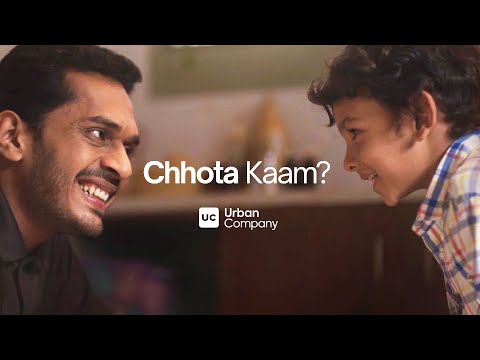
The execution follows a classic Setup-Turn-Payoff structure. The Setup is a warm, slice-of-life interaction between a curious child and a friendly Urban Company professional. It feels authentic and disarming. The Turn is the film's emotional core: the child innocently parrots a common prejudice he learned from a teacher—that cleaning bathrooms is what you do when you fail at school. This moment is deliberately uncomfortable, making the audience, the mother, and the professional confront the bias head-on. The Payoff is delivered not with anger, but with profound wisdom. The professional reframes the argument entirely. He teaches the child that excellence, not the nature of the work, is what matters. "If you become a doctor, be the best doctor. If you clean a bathroom, clean it better than anyone else." This simple, powerful line is the thesis of the entire campaign. It resolves the tension and perfectly articulates the brand's philosophy. The final voiceover, "It is our thinking that makes work big or small," lands the message with quiet authority.
The debrief for the team is clear: when you are the market leader, your job is to lead the conversation. This ad does not compete on price or speed; it competes on values. By tackling the 'respect gap,' Urban Company is building a brand that customers can feel good about supporting. It tells its employees that their work is valued and tells its customers that the premium they pay is for a higher standard of not just skill, but also of human dignity. [5, 9]
Theme Keywords
Brand Position
The only home services platform that guarantees skilled, trained, and respected professionals.
Brand Archetype
The Sage & The Everyman
Creative Game Plan
Challenge the cultural prejudice against manual labor to prove that professionalism is defined by pride and skill, not the job title.
Diagnosis: Issues & Solutions
Primary Issue: Strategic Sense
The Problem:
The campaign is one of three films in a 'Chhota-Verse' series. [1] While this specific film is powerful, its connection to a broader series isn't immediately obvious, potentially limiting the cumulative impact for viewers who only see this one execution.
The Solution:
Introduce a subtle series identifier, like a simple end-card title: 'Dignity of Labour: Film 1 of 3'. This would encourage viewers to seek out the other films and understand the full breadth of the brand's commitment to this issue, amplifying the message.
Secondary Issue: Clarity of "What's Next?"
The Problem:
The ad does an exceptional job of building emotional capital but does little to direct that goodwill toward a tangible brand interaction. The link in the YouTube description is a passive tool that most viewers will ignore.
The Solution:
A non-intrusive end-card could simply state 'Learn about the training behind our professionals' with a QR code or clean URL. This respects the ad's tone while offering engaged viewers a clear path to learn more, converting emotional buy-in into brand exploration.
Additional Notes
Related Links
Credits
Share this Analysis
More Urban Company ad breakdowns
- Chhoti Baat? | Urban CompanyUrban Company
- AC hai ya Pankha? | Foamjet AC Servicing | Urban CompanyUrban Company
- Regular Cleaning vs Shine Waali Cleaning | Professional Cleaning | Urban CompanyUrban Company
- Chhoti Soch? | Urban CompanyUrban Company
- Mrs Saini Ka Bathroom Kitna Shiny | Professional Cleaning | Urban CompanyUrban Company
- Professional Cleaning | Tamil | Puthandu | Urban CompanyUrban Company
- Safety | Hindi | Salon for Men | Urban CompanyUrban Company
- Now on Roll On | Urban CompanyUrban Company