CHALLENGE THE FASTLANE Sony Ericsson ; Challenge XPERIA NEO - Ad Analysis

AI Editor notes
Straight from the gut!!
“Five minutes? This is a solid 90-second concept bloated into a short film. The 'skate blindfolded with our phone' idea is clever, but the execution drags on with a generic skate crew I have no reason to care about. It's trying desperately hard to capture the 'authentic' YouTube stunt video vibe of the early 2010s but feels more like a corporate team's idea of what's cool than the real thing.”
Quick Summary
To cut through a crowded 2011 smartphone market, Sony Ericsson staged a high-stakes product demo to prove its 'Reality Display' was so true-to-life you could literally trust it with your life. By framing it as an authentic, documentary-style skate challenge, the brand aimed to convince skeptical young consumers that its screen technology wasn't just a marketing claim, but a tangible, performance-driven advantage.
Executive Summary
In 2011, the smartphone war was in full swing, and being a 'challenger' brand like Sony Ericsson required a different approach. You couldn't out-market Apple or Samsung on sheer volume, so you had to be clever. This 'Challenge the Fastlane' film is a direct product of that strategic thinking. The core insight is sharp: young, tech-literate consumers are deeply skeptical of marketing jargon like 'brilliant screen.' To them, seeing is believing. So, the ad bypasses jargon and goes straight to a high-stakes demonstration.
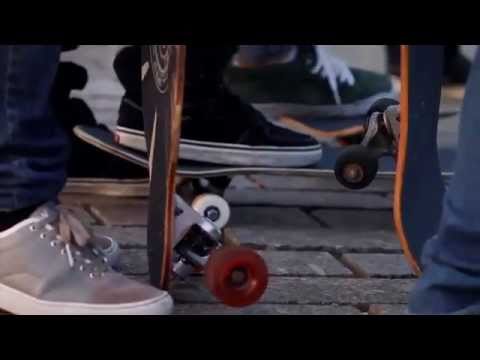
The creative execution follows a simple Problem-Solution-Proof structure, framed as a documentary-style stunt. The implied problem is that phone screens are just pale imitations of the real world. The solution is the Sony Ericsson Xperia Neo, armed with its 'Reality Display'. The proof is the entire five-minute film: a group of skaters attempting to navigate the world 'blindfolded', using only the phone's screen mounted in a cardboard headset as their eyes. This setup is a smart way to transform a technical feature into a tangible benefit. The choice of skateboarding, a culture built on skill, risk, and authenticity, is a deliberate attempt to align the brand with those same values. The 'behind-the-scenes' feel, with the crew building the rig and showing the failed attempts, is meant to lend an air of unscripted credibility.
However, the film's greatest strength—its commitment to the 'real' stunt—is also its biggest weakness. The narrative is sacrificed for the sake of the demonstration. At five minutes, it's far too long. The initial intrigue of the concept wears thin as we watch repetitive scenes of skating without any real character development or story progression. We're watching a product demo, and it feels like it. The team should learn that a strong concept needs disciplined editing. A powerful 90-second version of this would have been far more effective and shareable, leaving viewers wanting more rather than checking how much time is left.
Theme Keywords
Brand Position
The smartphone for creators and adventurers who demand technical excellence and an uncompromised visual experience.
Brand Archetype
Explorer
Creative Game Plan
Visually prove the Xperia Neo's 'Reality Display' is so accurate and lifelike that you can trust it to navigate the physical world.
Diagnosis: Issues & Solutions
Primary Issue: Strategic Sense
The Problem:
The five-minute runtime is the single biggest flaw. It mistakes length for depth, turning a clever concept into a tedious endurance test for the viewer and crippling its potential for viral sharing.
The Solution:
This should have been a modular campaign: a tight, action-packed 60-second hero ad for broad discovery, with the longer 5-minute 'making-of' version living on the campaign microsite for those who wanted to dive deeper.
Secondary Issue: Emotional Connection
The Problem:
The ad focuses entirely on the stunt, treating the skaters as interchangeable props. There's no character to root for, which makes the stakes feel low and the final success emotionally hollow.
The Solution:
Focus on one primary skater. Give us a 15-second setup of who he is and why he's taking on this personal challenge. This would transform the viewer from an observer of a product demo into a fan rooting for a person to succeed.
Additional Notes
Related Links
Credits
Share this Analysis
More Sony Ericsson ad breakdowns
- SONY Xperia | alien visit mov hdSony Ericsson
- SONY Xperia play mov hdSony Ericsson
- Product Testing Institute - ModelsSony Ericsson
- Shake your citySony Ericsson
- Amazon brings Nokia 6 to fans across IndiaNokia
- Google Pixel 10 | SoonGoogle Pixel
- iPhone 16 Ceramic Shield | Trust Issues | AppleApple
- OnePlus 7 Series | Go Beyond Speed | Amazon SpecialsOnePlus