Barbie | You Can Be Anything - International Women's Day 2025 | India | AD - Ad Analysis

AI Editor notes
Straight from the gut!!
“Smart, effective, and beautifully executed. This is how you do brand purpose right. It takes a global strategy and makes it feel intensely local and personal by using real Indian role models. It’s not just selling a doll; it's selling a modern, aspirational vision for Indian girls that parents can readily buy into. It’s polished, emotional, and very convincing.”
Quick Summary
This ad's power comes from flawlessly executing a simple, universal truth: the dreams we rehearse as children can become our reality. By taking Barbie's global 'You can be anything' mantra and grounding it with real, respected Indian women achievers, it transforms the doll from a simple toy into a tool for ambition. It directly tells modern Indian parents that buying a Barbie is an investment in their daughter's potential, effectively future-proofing the brand.
Executive Summary
This ad is a confident and heartfelt argument for the power of play. At its core, it's built on a simple human insight: the games children play are not just frivolous pastimes; they are the first draft of their future. Barbie positions itself not as a toy, but as the pen with which that draft is written.
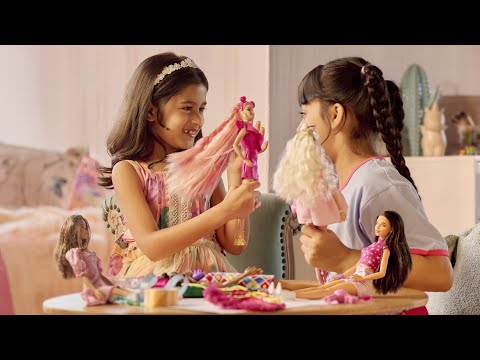
The execution is a structured, repetitive, and effective montage. It introduces us to five young girls, each lost in a world of imaginative play with their Barbie dolls. One girl imagines her doll as a cricket star, another as a chef, a firefighter, a pop singer, and a fashion designer. The ad uses elegant visual transitions to connect these childhood scenes to the present-day reality of five actual Indian women who have conquered those very fields. Harmanpreet Kaur, the captain of the Indian Women's Cricket Team, narrates how she knew boundaries were meant to be broken. Chef Beena Noronha recalls how food was always art. Firefighter Meghna Sakpal talks about believing a girl could be the hero. Singer Neeti Mohan and designer Anamika Khanna echo similar sentiments, linking their childhood creativity directly to their adult professions.
The proof is in the structure. The consistent 'then-and-now' format, repeated five times, drills the core message home. The specific shot of a girl looking through a cricket net at her doll, which then dissolves into the real Harmanpreet Kaur at the crease, is a powerful visual anchor. The use of real, respected, and diverse Indian women is the ad's smartest move. It lends immense credibility and cultural relevance to a global American brand. The payoff is the final, unified chorus of women and girls declaring they can be 'anything,' culminating in the brand's iconic tagline.
Strategically, this ad is designed to shift the purchase driver from aesthetics to aspiration. It's not about buying a doll with nice hair; it's about buying a tool that unlocks potential. This is a brilliant defensive and offensive move. It defends against long-standing criticisms of Barbie being superficial and anti-feminist. And it goes on the offense against a market of educational toys and screen time by arguing that imaginative play is just as crucial for a child's development. For the business, this means moving from being a 'want' to a 'need' in the eyes of parents, which is the holy grail for any brand in the children's category.
Brand Position
Barbie is the catalyst for a girl's limitless potential.
Brand Archetype
The Mentor. Barbie acts as a guide, providing the tools and inspiration for young girls to imagine and then become their future selves. Its personality is empowering, inspiring, and confident.
Creative Game Plan
Connect a young girl's imaginative play with Barbie to the real-world success of iconic Indian women, proving that childhood dreams are the blueprint for adult achievement.
Diagnosis: Issues & Solutions
Primary Issue: Clarity of 'What's Next?'
The Problem:
The ad does a masterful job of building brand love and purpose, but it stops there. It creates a powerful emotional moment and then lets it dissipate without giving the inspired viewer a place to go. The bridge between inspiration and engagement is missing.
The Solution:
A soft, non-intrusive call to action could have extended the campaign's life. For example, a simple end-card with 'See their stories. Barbie.com/India' or a hashtag like #MyBarbieDream. This would channel the emotion into a brand-owned platform, allowing for deeper storytelling and community building, without cheapening the message.
Secondary Issue: Strategic Sense
The Problem:
The 1 minute 46 second runtime is perfect for a brand anthem film, but it's too long and packs too many stories for most digital ad placements where attention spans are short. The five-in-one structure risks diluting the impact of each individual role model.
The Solution:
The ad should have been conceived as a hub-and-spoke campaign. This long-form anthem is the hub. It should be supported by shorter, 15-30 second 'spoke' ads, each focusing on just one woman's story (e.g., The Harmanpreet Kaur story). This would make media buying more flexible and allow for more targeted, attention-grabbing storytelling on different platforms.