Azaadi Ki Goonj – Paytm Independence Day Film 2020 - Ad Analysis

AI Editor notes
Straight from the gut!!
“This is textbook patriotic advertising, but it works because the premise is so solid. For a specific moment in time—India 2020, deep in the pandemic and with a huge push for digital self-reliance—connecting 'freedom' to 'cashless' feels authentic, not forced. It's a montage, sure, and the emotional strings are pulled exactly when you expect them to be. But by showcasing genuine, everyday use cases, it successfully elevates the brand from a simple utility to a part of the national fabric. Smart, safe, and effective.”
Quick Summary
In a brilliant act of brand-nation association, Paytm reframes 'freedom' for Independence Day 2020. It moves the concept from a grand political idea to the small, tangible moments of everyday financial self-reliance—paying rent, buying groceries, running a small business—all powered by its app. The message is simple and effective: using Paytm is participating in the progress of a modern, 'Proudly Indian' nation.
Executive Summary
Paytm's 'Azaadi Ki Goonj' is a masterclass in contextual brand building, skillfully weaving its product into the very fabric of Indian national identity. Released for Independence Day 2020, at a time when digital adoption was surging due to the pandemic, the ad moves beyond mere product features to answer a much larger, more emotional question: What does freedom mean today?
The Core Insight: The campaign is built on the simple human truth that for most people, freedom isn't a lofty, abstract political concept. It's the sum of small, everyday liberties: the ability to pursue a goal, to connect with loved ones, to run a business, to manage responsibilities without friction. The ad cleverly posits that in modern India, this everyday freedom is increasingly financial, and by extension, digital. Paytm isn't just offering a service; it's providing the tools for self-reliance.
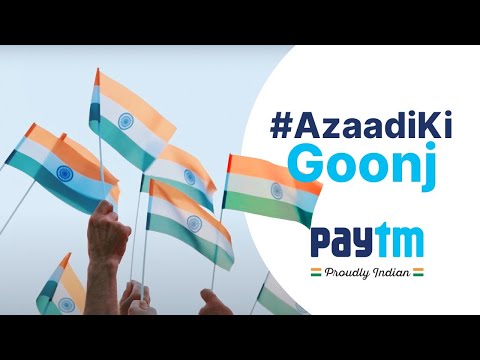
The Execution: The ad follows a classic Setup-Build-Payoff structure. It begins by setting up the theme with the waving Indian flag and the philosophical question, "What is freedom?". This immediately frames the ad within a patriotic context. The 'Build' phase consists of a lifestyle montage of short, relatable vignettes. A delivery man gets paid instantly, a young woman recharges her phone to call family, a tailor sews masks at home with a Paytm QR code ready for business, and a tenant pays his rent from his couch. Each scenario represents a small moment of empowerment, a friction point removed. Crucially, each vignette resolves with a clear shot of the Paytm app in action, explicitly making the product the hero of these small stories. The Payoff connects these individual moments of freedom to a collective national spirit. The voiceover concludes that this is the "echo of freedom" that powers an "unstoppable India." This elevates a series of simple transactions into a patriotic act, culminating in the powerful tagline, "Proudly Indian." The use of everyday people instead of celebrities enhances the ad's authenticity, making the message feel universal and attainable. [1]
The Debrief: The key takeaway is the power of linking a brand's functional benefit to a higher-order emotional value, especially one tied to a strong cultural moment. Paytm successfully shifted the conversation from the 'how' (scan a QR code) to the 'why' (to live a more free, self-reliant life). By doing so, it transformed a utility into a symbol of national progress. The campaign demonstrates that even for a tech product, the most potent marketing isn't about the technology itself, but about the human possibilities it unlocks.
Theme Keywords
Brand Position
Paytm is the financial backbone for the everyday freedoms of a modern, self-reliant India.
Brand Archetype
The Everyman
Creative Game Plan
Equate the functional benefit of seamless digital transactions with the higher emotional value of personal and national freedom.
Diagnosis: Issues & Solutions
Primary Issue: Brand Distinctiveness
The Problem:
The primary weakness is that the creative format—an emotional, patriotic montage—is a well-worn trope in Indian advertising. While executed effectively, a direct competitor like PhonePe or Google Pay could have produced a conceptually similar film without changing much of the script.
The Solution:
To make the concept more ownable, the ad could have centered on a unique Paytm feature, like the Soundbox. Imagine a narrative built around the 'voice' of the Soundbox becoming the 'voice' of a newly confident, digital India. This would have tied the patriotic message to a tangible, distinctive brand asset.
Secondary Issue: Emotional Connection
The Problem:
By showing a wide array of quick vignettes, the ad achieves breadth but sacrifices depth. The emotional connection with any single character is fleeting, which can make the overall feeling more generic and less memorable than a focused narrative.
The Solution:
Instead of seven brief stories, the ad could have told one or two more detailed stories. For example, focusing entirely on the tailor's journey of starting his mask-making business from home during the lockdown, showing his struggles and how digital payments enabled his success, would have created a more powerful and memorable emotional arc.
Additional Notes
Credits
Share this Analysis
More Paytm ad breakdowns
- How to Add Money to your Paytm Account? [Hindi]Paytm
- Paytm IPL 2021 Ad - The Salon (English)Paytm
- Achaar Paytm karna possible?Paytm
- Book 'Shubh Mangal Zyada Saavdhan' ticketsPaytm
- Book #Baaghi3 tickets on PaytmPaytm
- Household Bill Payments on PaytmPaytm
- Paytm IPL 2021 Ad - The Ice-cream (English)Paytm
- Paytm IPL 2021 Ad - The Tailor (English)Paytm