Asda’s Cashpot for schools - Ad Analysis

AI Editor notes
Straight from the gut!!
“This is a solid, charming piece of work. The 'mini-Joes' are a clever visual hook inspired by a real-world insight about kids dressing up as him. [6] It connects the brand to a good cause without being preachy. My only question: is the actual 'how-to' clear enough? The ad says 'scan,' but the process involves downloading and opting-in. [1] It relies on the viewer to connect the dots, which is always a risk.”
Quick Summary
Asda uses the charm of kids impersonating celebrity Joe Wicks to make a simple, feel-good point: using their loyalty app helps local schools, effectively turning a routine grocery shop into a small act of community support.
Executive Summary
This Asda campaign is a smart piece of strategic communication that wraps a loyalty-driving mechanic inside a charming, feel-good narrative. It’s built on a solid insight: in today’s economic climate, parents feel the pressure of endless requests for school donations. [6] Asda steps in to alleviate that pressure, positioning a routine grocery shop as an effortless way to contribute to the community.
The core insight is that people want to do good, but they are busy and financially stretched. Making philanthropy a frictionless byproduct of an existing behavior—grocery shopping—is a powerful proposition.
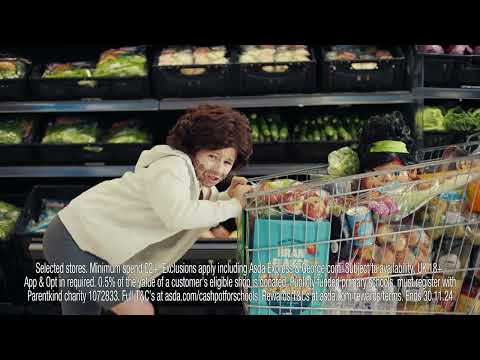
The execution uses a simple and effective structure, best described as Hook-Value-Proof-Ask. The Hook is immediate and effective: a familiar celebrity, Joe Wicks, is interrupted by a chorus of kid lookalikes. This pattern-interrupt grabs attention and sets a humorous tone. The Value is then explained by the kids themselves: scanning your app donates money to schools for essential items. This is brought to life through a series of funny visual gags, like kids bench-pressing watermelons. The Proof is in the items the kids are holding or interacting with—books, laptops, and sports equipment—which makes the abstract idea of 'donations' tangible. Finally, the Ask is simplified by Wicks to its absolute essence: “You scan, Asda donates.”
The choice of Joe Wicks as a brand ambassador is a strong fit. As a national figure associated with family health and wellness, his presence lends credibility and warmth to the initiative. The creative idea, inspired by children dressing up as him for World Book Day, feels authentic rather than a forced celebrity endorsement. [6]
The debrief for the team should be positive. They successfully launched a CSR initiative that doesn't feel like a stuffy corporate mandate. It’s playful, memorable, and built around a clear value exchange. The main lesson is that when you ask customers to do something (use a loyalty app), linking it to a selfless, community-oriented benefit can be more persuasive than a purely transactional reward. The campaign effectively moves the conversation from 'what do I get?' to 'what can we give, together?'
Theme Keywords
Brand Position
The family-friendly supermarket that provides value beyond price by making it easy to support your local community.
Brand Archetype
Caregiver
Creative Game Plan
Use the unexpected humor of children impersonating a beloved celebrity to deliver a simple, feel-good message about supporting local schools through everyday shopping.
Diagnosis: Issues & Solutions
Primary Issue: Clarity of "What's Next?"
The Problem:
The ad excels at building emotional buy-in but is vague on the practical steps. The simple 'You scan' message glosses over the fact that a user must first download the Asda Rewards app, register, and specifically opt-in to the 'Cashpot for Schools' program. [1] This creates a potential drop-off point between intent and action.
The Solution:
Incorporate a simple, 2-second animated graphic at the end showing a phone screen. The graphic could show the Asda app icon, a tap on 'Opt-In,' and then the 'scan' icon, visually clarifying the required user journey in a clean, digestible way.
Secondary Issue: Emotional Connection
The Problem:
The ad is consistently charming and humorous but stops short of landing a deeper emotional punch. By keeping the kids in the role of 'parody performers,' we get the joke but we don't see the real-world impact of the donation. The benefit remains slightly abstract.
The Solution:
A brief, 2-second shot at the very end showing real children (not in costume) in a real school environment—perhaps excitedly opening a box of new books or using a new laptop—would have grounded the campaign's premise with a moment of authentic emotional payoff.
Additional Notes
Related Links
Credits
Share this Analysis
More Asda ad breakdowns
- Take Summer Seriously, with these BBQ faves from just £2.89Asda
- Get the Asda Price Feeling this Easter with AsdaAsda
- Asda Gnome of ChristmasAsda
- BILLA - TURN TRASH INTO CASH (EN)BILLA
- SMART HOUSE – ENGLISH VERSION – REMA 1000REMA 1000
- Be Super Ready For Summer With LidlLidl
- IGA, at your service!IGA
- Tesco | Aldi Price Match | Can't Argue with ThatTesco