1988: Kawasaki Bajaj KB-100 RTZ - Ad Analysis

AI Editor notes
Straight from the gut!!
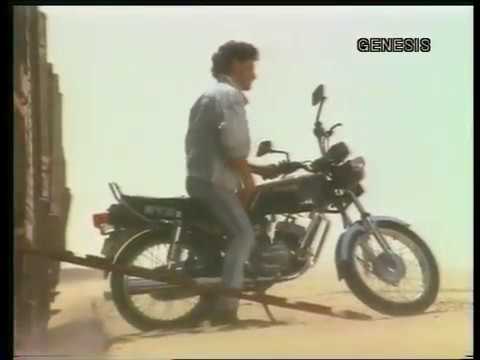
“It's a full-blown 80s Western trope-fest, and it's kind of great. A lone cowboy waits for a train, and out rolls... a Japanese-Indian motorcycle. The symbolism is thick, but it works. It's not selling specs; it's selling an attitude. You're not just buying a bike; you're buying the starring role in your own movie. For its time, this was a smart way to cut through the noise.”
Quick Summary
This ad successfully launched the Kawasaki Bajaj KB-100 RTZ by sidestepping a direct feature comparison with rivals and instead selling a powerful, aspirational identity. It used the familiar cinematic language of the American Western to position the motorcycle not as a vehicle, but as a long-awaited symbol of freedom, power, and modern masculinity for the young Indian man.
Executive Summary
The 1988 campaign for the Kawasaki Bajaj KB-100 RTZ is a textbook example of using cultural archetypes to build a brand from scratch. In a burgeoning Indian motorcycle market, where competitors like Yamaha and Suzuki were already making noise, Bajaj needed to do more than just announce a new model; it had to launch an icon. The core insight driving this ad is that for a young man in the 1980s, a motorcycle was never just about transport—it was a declaration of identity, a vehicle for freedom and aspiration.
The execution follows a classic Setup-Turn-Payoff narrative structure, borrowing heavily from the visual language of Spaghetti Westerns. The Setup establishes immediate intrigue: a lone, cowboy-esque hero waits in a vast, desolate landscape. The sound of an approaching steam train builds tension, tapping into a century of cinematic symbolism where trains signify major arrivals or dramatic confrontations. The setting feels more like Monument Valley than India, a deliberate choice to decontextualize the story and elevate it to the level of myth. The Turn is the ad's central creative idea. The train arrives, but instead of disgorging passengers or cargo, the carriage door slides open to reveal the KB-100 RTZ, presented like a treasure in a vault. The machine replaces the expected horse, brilliantly merging the old myth of the cowboy with the new myth of the modern biker. The Payoff is pure emotional release. The hero is united with his new 'steed,' and the voiceover confirms the theme of anticipation: "The new Kawasaki Bajaj KB100 RTZ. The waiting is over." The final image of the rider, arm raised in victory, and the tagline, "Ride a KB. Rule the road," crystallizes the brand promise: this motorcycle grants you power and dominion.
The key debrief from this campaign is the power of positioning through narrative. Instead of getting into a spec war with the Yamaha RX100, which was known for its raw power, this ad sold a feeling. It targeted the psyche of the buyer, not just his rational mind. The team understood that by wrapping the product in a familiar, heroic story, they could imbue it with meaning that transcended its mechanical parts. It’s a lesson in brand building: when you can’t win on features, win on feeling. The ad created a persona for the bike—rugged, independent, and heroic—making it a compelling choice for consumers looking to buy into that identity.
Theme Keywords
Brand Position
The definitive motorcycle for the modern hero who rules his own destiny.
Brand Archetype
The Hero
Creative Game Plan
Establish the KB-100 RTZ as a legendary object of desire by framing its arrival as a mythic, cinematic event.
Diagnosis: Issues & Solutions
Primary Issue: Strategic Sense
The Problem:
The ad is so committed to selling an attitude that it completely ignores any product features. The 'RTZ' in the name stood for features like the 'Return to Zero' tachometer, and the bike had other technological advancements like a 'Delta Super Tuned Engine' that set it apart. By omitting any mention of these, the ad missed an opportunity to ground the aspirational feeling with a rational reason-to-believe.
The Solution:
Incorporate a single, stylized 2-second insert shot highlighting a key feature, like the tachometer needle snapping back to zero, with a subtle sound effect. This would have added a layer of technical credibility ('the sizzle and the steak') without breaking the cinematic mood.
Secondary Issue: Emotional Connection
The Problem:
The reliance on a purely American Western archetype, while effective for standing out, risks feeling derivative and emotionally distant. The hero and setting are generic stand-ins for freedom, lacking any specific cultural anchor to the Indian audience it was intended for.
The Solution:
Subtly blend in one or two visual cues that are distinctly Indian within the Western framework. For instance, the train itself could have had Indian Railways livery, or the 'cowboy' could have had an accessory that felt more local, creating a more unique 'Indian Western' fusion that audiences could connect with on a deeper level.
Additional Notes
Credits
Share this Analysis
More Kawasaki Bajaj ad breakdowns
- Calm to Boom | Xtreme 160R | Virat Kohli | #GoBoomGoXtremeHero MotoCorp
- Bajaj Avenger – The World’s Favourite IndianBajaj Auto
- Bajaj Pulsar – The World’s Favourite IndianBajaj Auto
- Introducing Passion XTEC | Alag Style, Alag Andaaz.Hero MotoCorp
- New and Re-loaded #Xtreme160R 2022 Edition | #GoBoomGoXtremeHero MotoCorp
- Bajaj Freedom | Azaadi aage badhne kiBajaj Freedom
- Tame the fear with Xtreme 160R StealthHero MotoCorp
- Launching The All New Xpulse 200T 4V | Where Next?Hero MotoCorp