1986: Active 25 - PT Usha - Ad Analysis

AI Editor notes
Straight from the gut!!
“For 1986, this is a solid, no-nonsense piece of advertising. It's formulaic, sure: 'Celebrity works hard, celebrity uses product, you should use product.' But the formula works because the celebrity choice is perfect. P.T. Usha wasn't just a star; she was a source of national pride. The directness is its strength. There's no fluff, just a powerful, aspirational promise.”
Quick Summary
This ad is a masterclass in timing and borrowed equity. By launching in 1986 and securing P.T. Usha—India’s biggest athletic hero at the absolute peak of her fame—challenger brand Sapan Active-25 bypassed the need for a complex narrative. It created an instant, powerful, and credible association: the fuel of a champion is now available to you. The strategy wasn't just to sell a health drink; it was to sell proximity to greatness.
Executive Summary
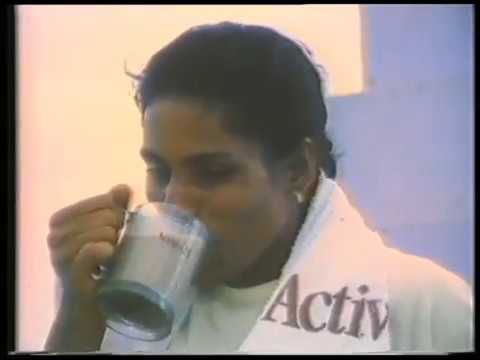
This 1986 commercial for Sapan Active-25 is a textbook example of a challenger brand using a cultural moment to muscle its way into a competitive market. Its effectiveness isn't rooted in groundbreaking creative, but in impeccable timing and a perfectly executed celebrity endorsement. The ad aired the same year P.T. Usha cemented her legendary status by winning four gold and one silver medal at the Seoul Asian Games, a feat that made her a national hero of unprecedented scale in India. The brand wasn't just selling a chocolate health drink; it was selling a piece of Usha's success.
The creative execution follows a simple and powerful Testimonial format. The core insight is that ordinary people, especially parents buying for their children, see the rigorous discipline of a top athlete as the ultimate proof of a product's efficacy. If it's good enough to power a champion like P.T. Usha, it must be effective. The narrative arc is a straightforward AIDA (Attention, Interest, Desire, Action) model. It grabs Attention immediately with visuals of the famous athlete. It builds Interest by revealing the 'secret' to her success: rigorous training and Active-25's nutrition. Desire is created by showing Usha consuming and implicitly approving of the product, making the audience want to emulate her. The implied Action is to purchase the product to achieve similar nutritional benefits.
The execution is direct and functional. The male voiceover, a staple of 1980s advertising, lends an air of authority and scientific credibility. The visuals are a simple montage of training intercut with product shots, reinforcing the cause-and-effect relationship: hard work + Active-25 = success. There's no subtext or complex storytelling. The brand name, 'Active-25,' and the key benefit, '25 essential nutrients,' are repeated to ensure they stick. This clarity was essential in an era of single-channel television, where capturing attention quickly and delivering a simple message was paramount.
The debrief for this ad would focus on the power of 'borrowed equity.' Sapan Active-25 didn't need to spend years building trust; it borrowed it from P.T. Usha. The lesson is that when a brand can authentically align itself with a figure or cultural moment that its target audience deeply admires, it can accelerate its market entry and build a powerful, albeit dependent, brand identity.
Theme Keywords
Brand Position
The professional-grade nutritional fuel for champions.
Brand Archetype
The Hero (as embodied by P.T. Usha).
Creative Game Plan
Associate our product's '25 essential nutrients' with the success of India's most celebrated athlete to gain instant credibility and market awareness.
Diagnosis: Issues & Solutions
Primary Issue: Strategic Sense
The Problem:
The brand's identity is almost entirely dependent on the celebrity endorser. This is a powerful but risky strategy known as 'vampire creativity,' where the celebrity is so famous they overshadow the brand itself. If P.T. Usha's fame waned or if she endorsed a competitor, Active-25 would have very little brand equity of its own to fall back on.
The Solution:
In a modern context, the campaign should have built a second layer of brand identity beyond the celebrity. This could involve creating an ownable brand platform (e.g., 'The Science of Active Living') that P.T. Usha could introduce, but which could live on independently of her.
Secondary Issue: Emotional Connection
The Problem:
The ad leans heavily on aspiration and admiration, which are powerful but lack a deeper emotional hook. We see P.T. Usha as a superhuman athlete, but we don't connect with her personal struggle, her journey, or the human side of her success. The tone is more clinical than heartwarming.
The Solution:
A modern version could have included a brief, authentic moment showing her fatigue or a quiet moment of reflection before a race. This would humanize the champion and create a more relatable emotional bridge between her, the viewer, and the brand's role in her journey.
Additional Notes
Related Links
- PT Usha medals and records - full list - Olympics.com✓ Validated9/10AI Source