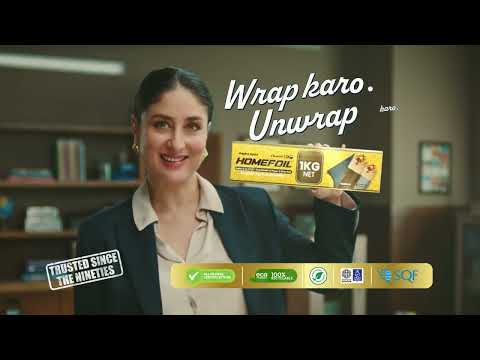
Wrap Karo. Unwrap Karo. | Fresh food ka mazaa sirf Homefoil se | India's 2-in-1 Foil - Ad Analysis

AI Editor notes
Straight from the gut!!
“So, the strategy is to make other parents think you're rich because your foil is golden? It's a clever misdirect, I'll give them that. But is 'premium-looking foil' really a problem consumers need solved? It feels like a solution in search of a problem. Using Kareena Kapoor lends it weight, but the core premise—that your food wrap signals social status at school—feels a bit thin. A solid, if slightly superficial, effort for a commoditized category.”
Quick Summary
This ad uses a classic 'bait-and-switch' narrative to introduce a premium-looking product into a low-involvement category. By casting Kareena Kapoor Khan as an authority figure who mistakes homemade food for expensive 'five-star' takeout, Homefoil effectively communicates its key value proposition: its golden 2-in-1 foil makes everyday food look and feel special while keeping it fresh, justifying a potential price premium in a crowded market.
Executive Summary
Homefoil's 'Wrap Karo. Unwrap Karo.' campaign is a textbook example of how to inject perceived value into a low-involvement, utilitarian product category. The brand operates in a space crowded with unorganized players, where purchasing decisions are often driven by price and habit rather than brand loyalty. [2] The strategic challenge is to break that inertia and create a reason for consumers to not just notice, but choose a specific brand of aluminum foil. Homefoil's answer is product innovation—a 2-in-1 foil with a golden side—and a creative execution designed to frame this innovation as a meaningful upgrade.
The core insight is clever: in a world where appearances matter, even a simple packed lunch can be an expression of care and status. The ad leverages the social dynamic of a parent-teacher meeting, a universally understood scenario ripe with potential judgment and pride. The conflict isn't about the child's behavior, but about the perceived extravagance of his lunch, a smart misdirection that immediately centers the conversation on the product.
The execution follows a simple Problem-Solution structure, but with a twist. The 'problem,' as framed by Kareena Kapoor Khan's character, is that the parents are seemingly spoiling their child with 'five-star' food. This setup effectively hooks the viewer with a relatable social dilemma. The turning point is the mother’s calm rebuttal: it's not expensive food, it's homemade food wrapped in superior packaging. This resolves the initial tension and pivots directly to the product's benefit. The payoff is Kareena's moment of realization, where her authority validates the mother's choice. This narrative structure is efficient and effective for a 30-second spot, quickly establishing a premise, reframing it, and delivering the brand message. The final product shots and tagline reinforce the new learning: Homefoil elevates the everyday. The choice of Kareena Kapoor Khan is crucial; as a mother and a symbol of modern elegance, she provides a credible voice for the initial concern and a powerful endorsement when her perspective shifts. [4, 6] Her presence ensures the ad gets noticed and lends an air of quality and trustworthiness to the brand.
Theme Keywords
Brand Position
The brand that elevates everyday homemade meals with a touch of innovative, premium care.
Brand Archetype
The Magician: Transforming the mundane (a packed lunch) into something special and impressive.
Creative Game Plan
Dramatize the premium appearance of our foil by showing an authority figure mistake homemade food for expensive restaurant fare.
Diagnosis: Issues & Solutions
Primary Issue: Emotional Connection
The Problem:
The ad is smart and clever but lacks a genuine emotional core. The interaction feels transactional and centered on social perception rather than the underlying emotion of parental care. The mother's pride is more about 'winning' the argument with the teacher than the love packed into the lunch.
The Solution:
Shift the focus from 'looking premium' to 'feeling loved.' A follow-up spot could show the child's perspective—the delight of unwrapping a special-looking lunch from mom—linking the golden foil not to status, but to the warmth and care of home-cooked food.
Secondary Issue: Strategic Sense
The Problem:
The ad leans heavily on the novelty of a golden foil. This is a strong differentiator now, but it's easily replicable. The strategy is built on a feature, not a deeper brand truth, making it vulnerable to competitors who can quickly launch a similar-looking product.
The Solution:
Build a broader brand platform around 'innovative care.' The 2-in-1 feature (paper and foil) is a more functional and defensible benefit. Future campaigns should balance the aesthetic appeal of the golden foil with the practical advantages of their product innovations to build a more durable brand position.