Winter Olympics 2014: Trailer - BBC Sport - Ad Analysis

AI Editor notes
Straight from the gut!!
“This is huge. It feels less like a sports promo and more like the trailer for a fantasy blockbuster. Using Charles Dance, at the peak of 'Game of Thrones' popularity, was a brilliant move to tap into the cultural zeitgeist. It's so confident, not showing a single second of real game footage. It’s all concept, all atmosphere. You have to respect the guts it took to sell the drama, not the sport.”
Quick Summary
By personifying nature as a formidable, god-like antagonist voiced by Charles Dance, the BBC transformed its promotion for the 2014 Winter Olympics from a simple sports trailer into a mythic battle of human resilience against the elements. This reframed the entire event, making it not just a competition between athletes, but a deeply compelling, epic struggle for humanity to conquer the unconquerable.
Executive Summary
This 2014 trailer from BBC Sport is a masterclass in reframing an event. Instead of selling the Winter Olympics as a collection of sports, it sells it as a single, epic narrative: humanity's defiance against the raw, terrifying power of nature. It’s a bold strategic choice that positions the BBC not merely as a broadcaster, but as the definitive storyteller of our time, capable of turning athletic competition into mythology.
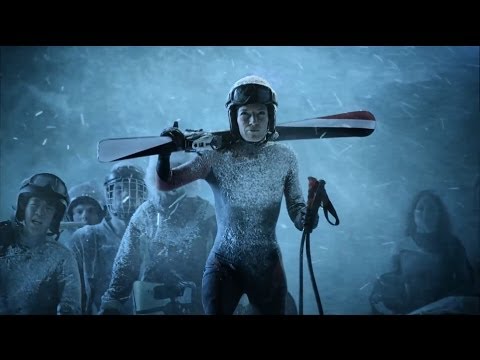
The core insight is brilliantly simple: in winter sports, the most formidable opponent isn’t the person next to you, but the mountain, the ice, and the storm. The entire creative is built on this foundation. The execution follows a classic Setup-Turn-Payoff structure. The first full minute is the Setup, dedicated to establishing Nature as an omnipotent, menacing deity. Voiced with chilling authority by Charles Dance—a piece of casting that brilliantly tapped into the 'Game of Thrones' cultural phenomenon of the era—Nature speaks of its absolute power. [13] The visuals, a stunning mix of CGI and live-action, reinforce this, presenting a landscape that is both beautiful and hostile. The athletes are nowhere to be seen, making Nature’s monologue an unopposed declaration of dominance.
The Turn happens precisely at the 0:56 mark. After establishing its might, Nature's tone shifts. It acknowledges a challenger: "But now you stand before me, devoid of all dismay." This is the critical pivot. The music begins to swell, and for the first time, we see the athletes—not in action, but standing firm, their faces set with determination against the storm. The question, "Could it be, just maybe, I'll let you have your day?" acts as a challenge thrown down, not by the athletes, but to them.
The Payoff is a minute of pure, defiant energy. The heroic music kicks in, and we see a montage of athletes conquering the very elements that were just presented as insurmountable. They ski down impossible slopes, launch into stormy skies, and skate on treacherous ice. The final on-screen text, "NATURE. WHO WILL CONQUER IT?" perfectly encapsulates the ad's central thesis. The team at agency RKCR/Y&R and director Tomek Baginski didn’t just create a trailer; they created a compelling short film with a clear protagonist (the athletes) and antagonist (Nature). [1, 10]
The key lesson from this work is the power of a singular, strong idea. By resisting the temptation to create a generic montage of sporting moments, the BBC created something far more resonant and memorable. It understood that to capture the imagination of a broad audience, it needed to sell the drama and the story, not just the competition. This ad didn't just tell people the Winter Olympics were coming; it gave them a powerful reason to care.
Theme Keywords
Brand Position
The definitive home of epic national sporting drama.
Brand Archetype
Ruler
Creative Game Plan
Personify nature as the ultimate antagonist to transform the Winter Olympics into a mythic battle of human defiance.
Diagnosis: Issues & Solutions
Primary Issue: Emotional Connection
The Problem:
While the epic scale is breathtaking, the heavy reliance on CGI and the god-like perspective risks creating a narrative that feels cold and distant. The athletes, coated in digital frost, can feel more like archetypes than real people, potentially muting the raw, personal struggle that defines sports.
The Solution:
Incorporate a few, fleeting close-ups of unfiltered human emotion—the briefest flash of fear in an athlete's eyes, the grit of a jaw clenching, a micro-expression of relief. Splicing these moments of raw humanity into the epic CGI world would have grounded the mythic narrative in relatable emotion without sacrificing its grand scale.
Secondary Issue: Strategic Sense
The Problem:
The creative is so high-concept that it almost entirely detaches from the specific location (Sochi, Russia) of the 2014 Games. While this gives it a timeless, universal quality, it misses an opportunity to build anticipation for the unique character and visual identity of the host venue.
The Solution:
Subtly integrate architectural or environmental motifs specific to the Sochi region into the CGI mountain-scape. This could have anchored the mythic conflict to a real-world place, adding a layer of authenticity and specificity to the epic narrative without disrupting the 'Man vs. Nature' theme.
Additional Notes
Related Links
Credits
Share this Analysis
More BBC Sport ad breakdowns
- Tokyo 2020 Olympics | Trailer - BBCBBC Sport
- Olympics 2016 on the BBC - The Greatest Show on Earth - BBC SportBBC Sport
- Fifa World Cup 2018 launch trailer - BBC SportBBC Sport
- UEFA Women's EURO 2025 - Names Will Be Made - Official Trailer – BBCBBC
- Mercado McCann for TyCTyC Sports
- Fox Sports: PoolFox Sports
- Honor Thy Saturday - PiñataFOX Sports
- Sky Sport: Greatest momentsSky Sports