WhatsApp ‘Scam Se Bacho’ (A warning you can dance to) - Ad Analysis

AI Editor notes
Straight from the gut!!
“This is a smart play. Instead of a boring corporate blog post about safety, they created something people might actually watch and share. The nod to 'Oye Lucky! Lucky Oye!' with Abhay Deol is a clever cultural hook for the Indian audience. It's a bit long for a standard ad, but as a piece of shareable brand content, it's solid. The strategy is clear: teach, don't just preach.”
Quick Summary
WhatsApp transforms the dry and potentially fear-inducing topic of online scams into a vibrant, memorable Bollywood-style musical. It uses a culturally relevant celebrity and an iconic song to teach users how to utilize its safety features, effectively building brand trust and user confidence without selling a single product.
Executive Summary
In a digital landscape rife with user anxiety about online fraud, WhatsApp’s ‘Scam Se Bacho’ campaign makes a clever strategic move: it chooses empowerment over fear. Instead of issuing a sterile corporate warning, the brand wraps its crucial safety message in the vibrant, high-energy spectacle of a Bollywood musical. The core insight is simple yet powerful: people are tired of being scared into vigilance; they’d rather be entertained into empowerment.
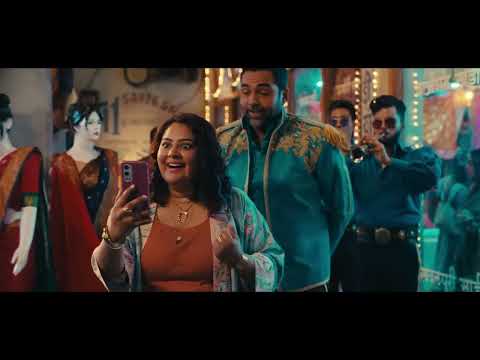
The execution follows a classic Hook-Value-Proof-Ask structure, tailored for a content-first audience. The hook (0:00-0:17) is instantaneous for its target market, using the iconic music from the film ‘Oye Lucky! Lucky Oye!’ and featuring its star, Abhay Deol. [2] This immediately establishes a nostalgic and culturally specific connection. The ad then delivers its value proposition (0:18-1:27) through the musical number, where Deol explains common scams—like fake job offers and dubious sales—while visually demonstrating WhatsApp's safety tools, such as 'Block' and the 'Meta Verified' blue tick for businesses. The proof is layered throughout the ad (1:28-2:18), showcasing a montage of different scam types (OTP, QR codes) and introducing additional features like 'Silence Unknown Callers' in new, relatable scenarios. This demonstrates that the platform's safety isn't a single feature but a multi-layered system. The final ask (2:19-2:43) is not to buy anything, but to change behavior. The tagline “Lucky Bano. #ScamSeBacho” (“Be Lucky. #BeSafeFromScams”) crystallizes the ad's message, reframing safety from a chore into a smart, proactive choice.
The key lesson from this campaign is that public service messaging can be highly effective when it doesn't feel like a lecture. By investing in high production value, celebrity endorsement, and a format rooted in cultural entertainment, WhatsApp transforms a PSA into a piece of desirable content. This makes the crucial information not only memorable but also highly shareable, allowing the message to propagate organically through the very platform it aims to protect.
Theme Keywords
Brand Position
The simple, reliable, and secure way for everyone you care about to connect.
Brand Archetype
Caregiver
Creative Game Plan
Transform a mundane but critical safety tutorial into a joyful and eminently shareable Bollywood musical.
Diagnosis: Issues & Solutions
Primary Issue: Strategic Sense
The Problem:
The ad's 2:43 runtime is optimized for long-form content on platforms like YouTube or for social sharing, but it is poorly suited for shorter, forced-view ad slots. Its educational value is back-loaded, and a truncated version would likely fail to deliver the key feature demonstrations.
The Solution:
Develop a suite of shorter, 15- and 30-second cutdowns. Each short ad should focus on a single, powerful feature (e.g., one on 'Silence Unknown Callers,' another on looking for the 'Blue Tick'), ensuring the campaign is versatile and effective across all digital media placements.
Secondary Issue: Clarity of "What's Next?"
The Problem:
The call to action is entirely behavioral, relying on the user to remember and implement the safety tips later. There is no immediate, tangible next step offered to capitalize on the viewer's engagement at the peak moment of interest.
The Solution:
Incorporate a simple, direct CTA at the end, such as an on-screen QR code or a text overlay that says, 'Go to Settings > Privacy to check your safety features now.' This would bridge the gap between awareness and immediate action.