Under Pressure? Find Postpartum Support with Baby Dove - Ad Analysis

AI Editor notes
Straight from the gut!!
“This is heavy, but it's real. Finally, a brand in the baby space is admitting that this isn't all sunshine and perfectly curated Instagram photos. The use of 'Under Pressure' is a masterstroke—it's a song everyone knows, but hearing it this way makes it completely new and devastatingly appropriate. It's a bold, almost risky move to show this much pain, but it's what makes it work. It feels less like an ad and more like a public service announcement.”
Quick Summary
Baby Dove moves beyond selling soap to sell empathy, positioning itself as an essential ally for new mothers by tackling the ugly, unspoken truth of postpartum pressure. By validating this struggle with raw visuals and a powerfully re-imagined anthem, the brand builds deep emotional equity and differentiates itself in a category that typically only shows picture-perfect parenthood.
Executive Summary
Baby Dove's '#OneRealPressure' is a textbook example of how a legacy brand can assert modern relevance by moving from product function to emotional and social function. The work abandons the sanitized, idealized portrayal of motherhood that dominates the baby care category and instead wades directly into the messy, painful, and authentic reality of the postpartum experience. This isn't just advertising; it's a cultural intervention.
The core insight is brilliantly simple and devastatingly true: the societal pressure to be a 'perfect mother' creates an isolating and damaging reality for millions of women. [8] The brand recognizes that the glossy images seen on social media are not just inaccurate, they are harmful. [11] By acknowledging this, Baby Dove positions itself not as a product that solves a problem, but as a partner that understands a struggle.
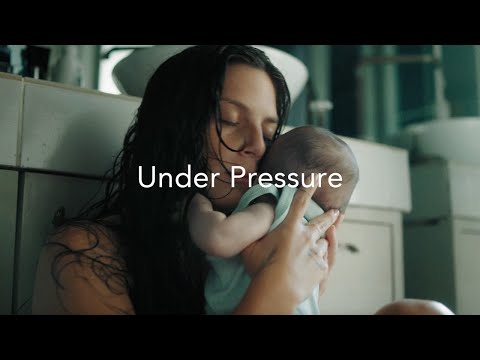
The execution uses a classic Setup-Payoff structure, framed by the haunting cover of Queen and David Bowie's 'Under Pressure.' The Setup is a montage of raw, unflinching vignettes: sleep deprivation, breastfeeding difficulties, tears, and exhaustion. These scenes are deliberately un-cinematic and feel like stolen moments from a documentary. The genius lies in pairing this raw footage with the iconic, anxiety-inducing bassline and repurposed lyrics. 'Splits a family in two' is no longer about abstract societal pressure, but the literal fracturing of a new parent's psyche. The Turn happens as the music softens and the montage includes moments of tender connection, suggesting that love and struggle coexist. The Payoff is not a product, but a statistic and a solution. First, the validation: 'Postpartum pressures affect 7 out of 10 women.' Then, the action: 'Baby Dove partners with Postpartum Support International to help more Moms cope.' [1] This sequence is crucial. The brand doesn't claim to be the solution; it facilitates access to it. The product itself makes only a fleeting, blink-and-you'll-miss-it appearance, a confident choice that demonstrates the focus is on the message, not the sale.
The debrief for any brand team watching this is clear: authenticity builds equity. In a world saturated with aspirational messaging, telling the truth can be the most powerful differentiator. Baby Dove understands that its audience doesn't need another brand telling them motherhood is beautiful; they need a brand to admit it's hard. By funding support groups and providing resources through Postpartum Support International, Baby Dove puts its money where its mouth is, transforming a marketing campaign into a tangible act of corporate social responsibility. [11] It’s a long-term play that builds a depth of brand loyalty that a simple product-benefit ad could never achieve.
Theme Keywords
Brand Position
The brand that provides care for the reality of parenthood, supporting mothers as much as babies.
Brand Archetype
The Caregiver
Creative Game Plan
Validate the unspoken struggles of new motherhood by pairing raw, authentic visuals with a universally recognized anthem of pressure, thereby positioning the brand as an empathetic ally.
Diagnosis: Issues & Solutions
Primary Issue: Strategic Sense
The Problem:
The connection between the parent-focused problem (postpartum mental health) and the product (baby care items) is entirely implicit. A less engaged viewer could miss why a baby brand is talking so intensely about moms, potentially diluting the brand link even if the social message lands.
The Solution:
The strategy is to build a halo effect—'if they care this much about moms, they must make great products for babies.' A single line of copy on the end card, such as 'To care for your baby, we start by caring for you,' could have explicitly bridged this gap without compromising the ad's integrity.
Secondary Issue: Clarity of "What's Next?"
The Problem:
The primary call-to-action is to visit partner websites for support, which is strong for the campaign's social mission. However, the secondary CTA, sharing one's own story with #OneRealPressure, might feel like a high barrier for an audience already feeling vulnerable and overwhelmed. [2]
The Solution:
Offer a lower-barrier engagement option. Alongside the 'share your story' CTA, a simpler action like 'Read stories from moms like you' or 'Find one tip that helped someone else' could increase participation by making the next step feel less daunting and more immediately rewarding.