Under Armour and US Speedskating Gear Up For the Next Chapter - Ad Analysis

AI Editor notes
Straight from the gut!!
“This feels less like an ad and more like a defense argument. It's so focused on proving the tech works—'look, dimples for drag! asymmetrical design!'—that it forgets to make you care. The CGI is slick, but the whole thing is sterile. After the 2014 Sochi suit fiasco, they clearly had to come out and show their work, but this is all brain and no heart. Who is the athlete? What's his story? We never find out.”
Quick Summary
In the wake of a disastrous 2014 Olympics where its suits were blamed for poor performances, Under Armour uses this 2018 ad to bypass emotional storytelling and instead deliver a cold, hard, technical proof point. [3] It’s a direct-to-consumer spec sheet, using slick CGI to assert its innovation and rebuild credibility with the core athletic community by focusing entirely on the product's superior science. [2]
Executive Summary
This ad from Under Armour is a calculated strategic move, born from a moment of brand crisis. Following the 2014 Sochi Olympics, where their much-hyped Mach 39 suits were widely blamed for the US Speedskating team's failure to medal, Under Armour had more to do than just sell a product; they had to rebuild trust. [3] This 2018 film for the Pyeongchang games is their public response, and it wisely chooses the path of a highly-stylized, tech-forward Product Demo over a more emotional, narrative-driven approach.
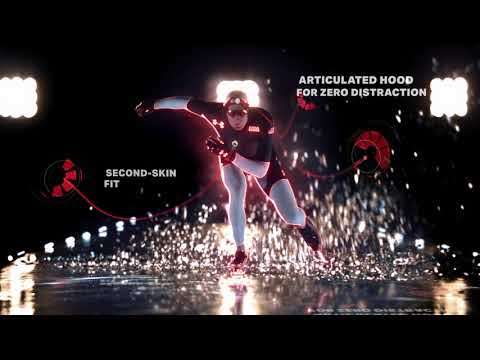
The core insight driving this work is that for the most demanding athletes and informed fans, tangible technological advantages are more compelling than abstract emotional stories. After a public failure of technology, the only way forward was to transparently showcase the new technology. The execution follows a clear Demo structure. It begins with a hook: a mysterious, elemental CGI skater made of ice, gliding on a dark rink. This establishes a sense of raw power and the fundamental nature of the sport. The 'problem' is visualized as this ice form begins to glow red at points of stress and friction. The 'solution' arrives when the ice shatters to reveal the real athlete in the Under Armour suit. From here, the ad becomes a visual spec sheet. Using clean, sharp motion graphics, it systematically calls out the suit's innovations: the 'Aeroprint' texture, the 'Asymmetrical Design,' the 'Articulated Hood.' [2] Each feature is presented as a direct answer to the challenges of the sport. The payoff is the image of the athlete, fully equipped and confident, powerfully skating towards the camera. The final logos for Under Armour and US Speedskating act as a seal of approval.
What the team should learn from this is that while a direct, feature-focused approach can be effective for addressing a specific business problem, it comes at the cost of broader emotional impact. The ad is successful in its mission to communicate innovation and restore credibility within the sport. However, its clinical, almost sterile execution prevents it from resonating on a human level. It's an ad about a suit, not about the will of the athlete inside it. It's a solid piece of technical communication that stopped short of becoming inspiring brand storytelling.
Theme Keywords
Brand Position
The relentless innovator of performance-enhancing athletic technology.
Brand Archetype
The Sage/Creator
Creative Game Plan
Visually prove our new speedskating suit is the most technologically advanced solution on the ice to rebuild our reputation for performance innovation.
Diagnosis: Issues & Solutions
Primary Issue: Emotional Connection
The Problem:
The ad is so focused on the 'what' (the technology) that it completely neglects the 'why' (the human story). The athlete is treated as a mannequin, and the audience is left admiring the engineering but feeling nothing for the person.
The Solution:
Incorporate a voiceover from the athlete, not explaining the tech, but the feeling of redemption. A line like, 'After 2014, every stitch is about trust. Now, I just skate,' would have connected the innovation to the human drama.
Secondary Issue: Strategic Sense
The Problem:
The ad feels defensive and exists in a historical vacuum for viewers unaware of the 2014 controversy. Without that context, it's just a slick but somewhat generic tech demo.
The Solution:
A simple opening title card—'In 2014, our suits failed. We spent 4 years making it right.'—would have framed the entire film as a comeback story, giving the technical details a powerful narrative purpose.
Additional Notes
Credits
Share this Analysis
More Under Armour ad breakdowns
- UnderArmour now on Amazon.in!Under Armour
- Under Armour | Rule YourselfUnder Armour
- CURRY TWO | FLASH STARRING STEPHEN CURRY & JAMIE FOXXUnder Armour
- WILL FINDS A WAY | Dwayne Johnson Under Armour CampaignUnder Armour
- Under Armour: Congratulations, It's ColdUnder Armour
- Under Armour: Cold WarUnder Armour
- UA HOVR: Welcome To Your New Running ExperienceUnder Armour
- Under Armour x BOYNEXTDOOR: Commit to JoyUnder Armour