Umeed Nahi, Yakeen Kijiye! ft. Javed Akhtar | Traya Ke Saath 3x Behtar Results - Ad Analysis

AI Editor notes
Straight from the gut!!
“This is a really smart play. In a sea of DTC brands shouting about miracle cures, Traya went for gravitas. Using Javed Akhtar's poetic delivery to frame the problem makes the brand feel wise and empathetic, not just another startup with a serum. The 'Hope vs. Belief' (Umeed vs. Yakeen) angle is a killer strategic insight. It's a bit slow and theatrical for a social feed, but for the guy who's genuinely frustrated, this pace feels respectful and serious.”
Quick Summary
This ad masterfully uses the cultural authority of Javed Akhtar's voice to pivot the consumer mindset from the flimsy 'hope' offered by ineffective hair-loss gimmicks to the concrete 'belief' offered by Traya's clinically-proven, scientific system. It's not selling a product; it's selling certainty in a category rife with disappointment. [1, 7]
Executive Summary
Traya’s “Umeed Nahi, Yakeen Kijiye” is a sophisticated piece of brand building that understands its audience’s deepest anxieties. In a market flooded with quick fixes and false promises for hair loss, the ad doesn’t just introduce a product; it performs a strategic pivot. It elevates the conversation from a desperate search for a cure to a confident choice based on scientific validation. By employing the authoritative and poetic voice of Javed Akhtar, Traya wraps its scientific claims in a cloak of cultural gravitas, a move that immediately separates it from the noise of typical direct-to-consumer advertising. [4]
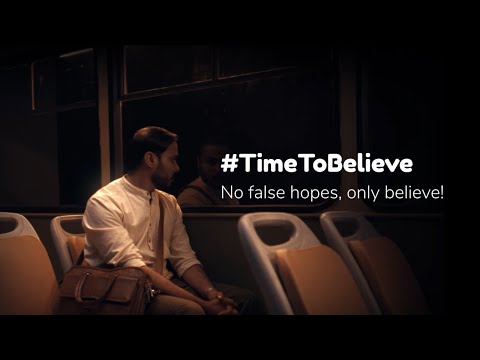
The ad's structure follows a classic Problem-Solution framework, but with a nuanced emotional arc. The Setup (0:00-0:46) is a somber, empathetic look at the cycle of hope and disappointment. We see men, isolated in stark, dramatically lit spaces, trying everything from traditional home remedies (nuskhe) to questionable online serums. Akhtar’s narration doesn’t mock them; it validates their struggle, identifying the enemy not as hair loss itself, but as the 'false hope' peddled by ineffective solutions. This frames Traya not as another hopeful option, but as the end of a painful journey.
The Turn happens precisely at 0:47 when Akhtar redefines the central emotion: “What is this hope? Hope means that maybe it will happen.” This line brilliantly deconstructs the category’s empty promise. The introduction of a doctor and clinical imagery signals a shift from the abstract world of hope to the concrete world of science. The Payoff (0:59-1:15) introduces Traya's holistic solution—a combination of Ayurveda, Dermatology, and Nutrition. This isn't just one magic ingredient; it's a comprehensive 'treatment'. The visuals reinforce this with before-and-after shots and glimpses of a modern, clean production process. The appearance of co-founder Saloni Anand adds a layer of personal commitment. The ultimate proof is the explicit mention of an independent clinical study and its registration number, turning a marketing claim into a verifiable fact. [1]
The Debrief for the marketing team is clear: in a low-trust category, the most powerful asset is credibility. Traya successfully built a 'moat' around its brand with this ad. It’s not about having the loudest claim, but the most believable one. By investing in a clinical study and leveraging a trusted cultural voice, they addressed the consumer's emotional and rational needs simultaneously. The lesson is that to disrupt a market, you must first disrupt the narrative. Traya isn't just selling hair care; it's selling the end of skepticism. [7]
Theme Keywords
Brand Position
The only hair loss solution that replaces false hope with scientifically-proven belief.
Brand Archetype
Sage
Creative Game Plan
Establish ultimate credibility by contrasting the emotional cycle of 'false hope' with the rational certainty of 'proven belief,' using a revered cultural voice to deliver the message.
Diagnosis: Issues & Solutions
Primary Issue: Clarity of "What's Next?"
The Problem:
The ad does a masterful job of building belief but is less clear about the immediate next step for the consumer. The final on-screen text directs viewers to 'Read the study,' a high-friction action, while the more accessible 'Take the FREE hair test' is relegated to the YouTube description.
The Solution:
In the final 10 seconds, add a clear on-screen graphic and a voiceover line that says, 'Start with your free hair test at Traya.health.' This provides a low-commitment, tangible first step that capitalizes on the 'Yakeen' the ad has just built.
Secondary Issue: Emotional Connection
The Problem:
The visual execution, while artistically striking, uses actors in a highly stylized and abstract setting. This can create a slight emotional distance, making the characters feel more like symbols of a problem than real people experiencing it.
The Solution:
In future iterations, consider intercutting the stylized studio shots with brief, documentary-style glimpses into the characters' actual lives—a moment of avoiding a photo, or a self-conscious glance in a shop window—to ground the emotional struggle in a more relatable reality.