THE FISH by PES // Corona x Parley - Ad Analysis

AI Editor notes
Straight from the gut!!
“It's a beautiful, sad, and masterfully crafted film. The artistry is undeniable. But as a strategist, I have to ask: is this enough? A beer company, whose products create significant packaging waste, funding an anti-pollution film feels… convenient. It's brilliant marketing and a solid CSR play, but it walks a fine line. It makes me think about plastic, for sure, but it also makes me question the brand's motives just as much.”
Quick Summary
Corona uses the masterful, unsettling artistry of stop-motion director PES to turn our plastic waste into a literal monster that haunts the natural world. It's a powerful, non-preachy way to demonstrate the tangible threat of pollution, positioning the brand not as a seller of beer, but as a credible protector of the paradise its image is built on.
Executive Summary
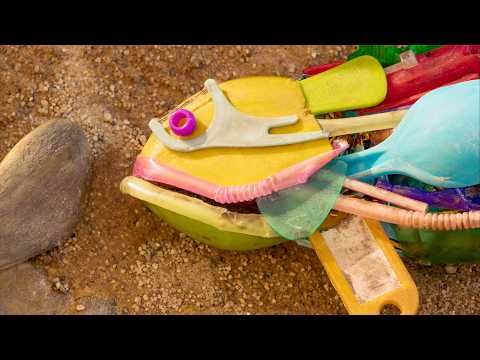
This film from Corona and Parley is a masterclass in turning a complex, ugly problem into simple, beautiful, and horrifying art. It's less of an ad and more of a fable for our time, executed by one of the best in the business, PES. The strategy here is to sidestep the preachy, finger-wagging tone that often plagues environmental campaigns. Instead of telling us plastic is bad, it shows us, transforming inanimate, discarded trash into a perversion of nature—a fish made of forks and bottle caps.
The core of the execution follows a clear Setup-Turn-Payoff structure. The Setup (0:00-0:15) establishes the grim reality. We don't start with a pristine beach; we start with a symbol of death—a turtle skeleton filled with the very plastic that likely killed it. The sound of waves creates a false sense of peace, which is immediately disrupted by the unsettling animation of the trash assembling itself. This isn't nature; it's something unnatural born from our carelessness. The Turn (0:16-0:41) introduces the conflict and consequence. The plastic 'fish' flops pathetically on the sand, a mockery of life. When a real animal, an albatross, mistakes this toxic object for food, the film delivers its gut punch. This is the moment the abstract problem of 'ocean plastic' becomes a concrete, emotional event: our waste is actively poisoning the food chain. The sound design here is critical—the dry, scraping plastic sounds stand in stark contrast to the natural world. The Payoff (0:42-0:58) brings human agency into the story. The intervention of the human hand is a pivotal moment. It's not a hand of blame, but one of responsibility and potential for correction. The simple on-screen text delivers the hard fact ('harms over 800 animal species') and then makes it personal ('Including us.'). The final branding, linking PES with Corona and Parley, closes the loop, positioning the partnership as the agent of that positive human intervention. [6, 10]
The key lesson from this campaign is the power of showing, not telling. By employing world-class artistry, Corona elevates its message from a corporate press release to a piece of shareable culture. The partnership with Parley for the Oceans is crucial; it provides the legitimacy and operational backbone that a beer company alone would lack. [7] The risk, of course, is the ever-present shadow of 'greenwashing'. An ad this powerful sets a high bar for the brand's real-world actions. But as a piece of communication designed to make you feel the weight of a problem, it is exceptionally effective.
Theme Keywords
Brand Position
Corona is the beer that owns the beach and is leading the fight to protect it.
Brand Archetype
Caregiver
Creative Game Plan
Viscerally dramatize the horror of ocean plastic by transforming our trash into a monstrous creature, positioning Corona as the hero fighting to save the paradise its brand represents.
Diagnosis: Issues & Solutions
Primary Issue: Strategic Sense
The Problem:
The ad's biggest vulnerability is the potential for 'greenwashing' accusations. An alcohol brand, whose business inherently creates millions of single-use containers (bottles and cans), telling the world to clean up plastic can be perceived as hypocritical if not backed by massive, transparent, and sustained action beyond a marketing campaign.
The Solution:
The campaign needs to be inextricably linked to, and perhaps even lead with, a tangible, quantifiable commitment from Corona itself. For example, a title card stating 'We're removing all plastic rings globally by 2025' or 'We've funded the removal of X million tons of plastic' would provide the proof that legitimizes the emotional appeal.
Secondary Issue: Clarity of "What's Next?"
The Problem:
The call-to-action, 'ProtectParadise.com', is a soft landing. It asks a viewer who has just been emotionally impacted to do more work—open a browser, type a URL, and figure out what to do next. The path from feeling to action is not as direct as it could be.
The Solution:
A more direct and lower-friction CTA could be tested, such as a simple, shareable hashtag tied to a fundraising commitment (e.g., '#ProtectParadise and we'll remove 1lb of plastic'). This would leverage the social nature of the platform to create immediate, measurable engagement.
Additional Notes
Related Links
Credits
Share this Analysis
More Corona ad breakdowns
- Introducing Corona Sunbrew 0.0% –The World’s First Non-Alcoholic Beer with Vitamin DCorona
- Choose Yellow – Yellow DoorPacifico
- INTRODUCING THE PATRICK PLUNGE from COORS LIGHTCoors Light
- The Best Things Come To The Curious | Carlsberg TV Ad Campaign | Creative Advertising Agency | Fold7Carlsberg
- Take FlightYuengling
- International Beer Day: Cheers to Bars 🍻Anheuser-Busch
- Sapporo Premium Beer | Return the FavourSapporo
- Miller - Break the Mold Campaign Advert 2025Miller Genuine Draft