The Art of Making: Third Places, featuring Shubi_dubidoo - Ad Analysis

AI Editor notes
Straight from the gut!!
“This feels like a pitch-perfect imitation of an Apple ad, filtered through a Netflix design documentary. It's beautiful, calm, and ticks all the 'authentic creator' boxes. But is it memorable? I doubt it. The link between 'a peaceful park' and 'this laptop is fast' is a bit of a stretch. It's so gentle and aspirational that it risks floating by without leaving a mark. It feels made for a very specific, already-engaged creative niche.”
Quick Summary
Lenovo is selling the outcome, not the object. By embedding the Yoga laptop into a compelling artist's story, they position it as an invisible, powerful partner for the modern creative class. The strategy is to build brand desire by showing what the technology enables—seamlessly turning real-world inspiration into digital magic—rather than just listing its features.
Executive Summary
Lenovo's 'The Art of Making' is a quiet and confident play for the hearts and minds of the creative class, a territory long-held by Apple. The core insight driving this piece is that for today's digital artist, the best tool is one that disappears, allowing for a frictionless journey from real-world inspiration to digital creation. The ad wisely chooses to showcase this not with technical jargon, but through the authentic, day-in-the-life story of a relatable creator.
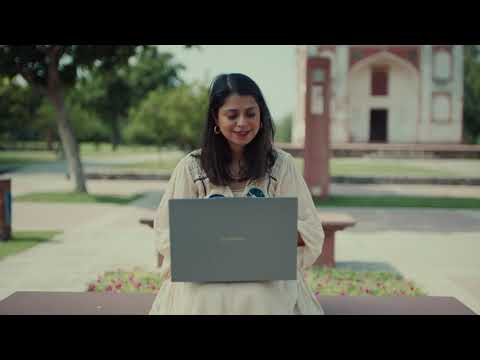
The execution follows a classic documentary-style narrative: Hook, Value, Proof, and Ask. The Hook (0:00-0:26) introduces us to Shubhangi Raheja in her 'Third Place'—a serene Delhi park—establishing her as an authentic artist with a clear purpose. The Value proposition (0:27-1:05) isn't about the laptop, but about her creative philosophy: taking the calm energy of her surroundings and injecting it into surreal 'digital street art'. This frames creativity as the hero of the story. The Proof (1:06-2:05) is where the product finally enters. The Lenovo Yoga is presented as the bridge between her idea and its execution. We see her using demanding software like Blender and After Effects, with her voice-over explicitly stating, 'No lag. No drama.' This is the product demo, cleverly disguised as a creator's testimonial. The final Ask (2:30-2:40) is entirely implicit. By showing the beautiful end result and asking, 'What new AI experiences will you unlock?', Lenovo isn't selling a machine; it's selling entry into a world of creative possibility.
The debrief for the team would be to recognize the power of this borrowed-equity strategy while also noting its limitations. The film does an excellent job of building a mood and associating Lenovo with a sophisticated, creative lifestyle. However, the execution is so smooth and frictionless that it lacks a memorable emotional peak. The claim 'it's fast' is generic. In a market where every premium laptop makes the same promise, the ad misses an opportunity to demonstrate a unique AI-powered feature that would have made the benefit more tangible and the brand more distinct. It successfully mimics the market leader's playbook but doesn't add a new chapter of its own.
Theme Keywords
Brand Position
Lenovo Yoga is the effortlessly powerful tool for creatives who bridge the physical and digital worlds.
Brand Archetype
The Creator
Creative Game Plan
Showcase how the Lenovo Yoga laptop is the seamless and powerful tool that enables a real artist to transform her real-world inspiration into magical digital art.
Diagnosis: Issues & Solutions
Primary Issue: Emotional Connection
The Problem:
The ad presents a creative journey that is too perfect. There is no moment of struggle, frustration, or creative block that the technology helps to overcome. This lack of narrative tension makes the final creation feel less earned and the artist's satisfaction less impactful for the viewer.
The Solution:
Introduce a moment of creative friction. For example, show a complex render that would typically freeze a lesser machine. Let the camera linger on her moment of doubt, then show the Lenovo powering through it, leading to a visible sense of relief and triumph. This small arc would make the technology's benefit feel more heroic and the story more relatable.
Secondary Issue: Strategic Sense
The Problem:
The ad sells the dream of being a digital artist more effectively than it sells the Lenovo laptop. The product's role is supportive rather than essential. The 'AI PC' claim is stated but not clearly demonstrated, making it feel like marketing jargon rather than a tangible benefit that sets this laptop apart from competitors like a MacBook.
The Solution:
Visually demonstrate a specific, 'magical' AI feature. Instead of just saying it's fast, show the laptop's AI instantly removing tourists from her background footage or generating pattern variations for her 3D model in seconds. This would transform the generic 'fast' claim into a concrete, memorable, and uniquely 'AI PC' advantage.
Additional Notes
Related Links
Credits
Share this Analysis
More Lenovo ad breakdowns
- Presenting Lenovo K8 Note | Exclusively on AmazonLenovo
- Lenovo YOGA Tablet 2 - Ashton Kutcher MassageLenovo
- 【2014美剧】《KILL TIME:时间刺客》:吸血鬼人类虐恋大戏Lenovo
- Damn the Odds | Bumrah x Lenovo AI PC (English) (45 secs)Lenovo
- Backing Every BusinessLenovo
- Lenovo x Intel: Creator OdysseyLenovo
- The Future of Freelance | HPHP
- Red Riding Hood - ZenBook 3 | ASUSASUS