Subway Commercial - Mustard - NHL Ottawa Senators Sponsorship - Ad Analysis

AI Editor notes
Straight from the gut!!
“I'm just confused. A guy puts mustard on his face to celebrate a Senators sponsorship? What's the connection? I guess it's supposed to be like fan 'war paint', but it feels like a random, absurdist gag. It's so weird you remember it, but I'm not sure it does anything for the brand other than making you think 'that was the weird mustard ad'. For a small, regional play, maybe that's enough.”
Quick Summary
This is a hyper-regional, low-budget ad that uses simple, bizarre slapstick humor to make a local sports sponsorship announcement memorable. It sacrifices strategic clarity for a weird, unforgettable visual gag, aiming to get a quick laugh from Ottawa hockey fans and embed the Subway brand into the local sports conversation.
Executive Summary
This Subway spot is a textbook example of regional advertising leaning on a simple, if tenuous, creative hook to announce a local partnership. The core idea is to translate the passion of a hockey fan into an absurd, food-related ritual. It’s a classic case of borrowing interest from a beloved local institution—the NHL's Ottawa Senators—to generate warmth for the Subway brand.
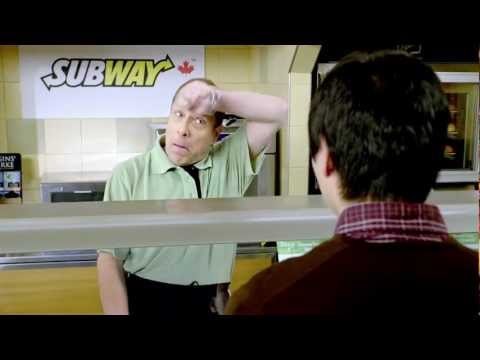
The execution uses a simple Setup-Turn-Payoff structure. The Setup (0:00-0:08) establishes a strangely tense atmosphere in an ordinary Subway. An employee makes a sandwich with an unnerving level of focus, his heavy breathing creating an uncomfortable soundscape. This builds suspense and makes the audience wonder what's happening. The Turn (0:09-0:12) arrives when the customer, who we assume is the cause of the tension, flees the scene. This subverts our expectations and shifts the focus entirely to the employee. The Payoff (0:13-0:19) is the bizarre punchline: the employee grabs a mustard bottle and squirts it all over his face like war paint. The final on-screen text, "Official Sponsor of the Ottawa Senators," provides the context, framing his weird act as an expression of intense fan excitement.
The ad's humor is derived entirely from this absurdist, slapstick moment. It’s designed to be weird enough to be memorable, especially in a local media market. However, its effectiveness is limited by the weak link between the gag and the sponsorship. Why mustard? It doesn't align with the Senators' team colors (red, black, and gold). The act feels random rather than rooted in a specific fan insight.
The team behind this should learn that while simple, low-budget humor can be effective for local announcements, the creative concept must have a clear strategic purpose. Here, the memorability of the gag likely outweighs its ability to build any meaningful brand equity. It’s a fleeting laugh that announces a fact but does little to make consumers feel differently about Subway, aside from associating it with a strange mustard-faced man.
Theme Keywords
Brand Position
The fresh, customizable, and convenient meal choice.
Brand Archetype
The Everyman
Creative Game Plan
Communicate our Ottawa Senators sponsorship by showing a Subway employee's fan passion in a surprisingly absurd and memorable way.
Diagnosis: Issues & Solutions
Primary Issue: Strategic Sense
The Problem:
The creative concept is fundamentally disconnected from the message. The use of yellow mustard for an Ottawa Senators sponsorship—a team whose colors are red, black, and gold—makes the 'fan paint' gag feel random and illogical, weakening the intended association.
The Solution:
Strengthen the creative link to the sponsored entity. Using condiments that match the team's colors (e.g., ketchup, black olives, mustard) would have made the 'war paint' idea instantly recognizable and more clever.
Secondary Issue: Clarity of "What's Next?"
The Problem:
The ad is a dead end. After delivering the punchline and sponsorship announcement, it gives the audience nothing to do. It's pure information without any activation.
The Solution:
Incorporate a simple, relevant call to action. A line like 'Fuel up at Subway on game day' or an offer like 'Show your ticket for a free cookie' would have given the awareness a commercial purpose.