Stella Artois - Hans In Luck - Ad Analysis

AI Editor notes
Straight from the gut!!
“This is a beautifully crafted film that feels more like a student passion project than a corporate ad—and that's a compliment. It's charming, visually distinct, and tells a lovely story. But does it make me want a Stella? The brand feels a bit tacked on at the beginning and end. It's high-level brand building, but the connection between the fairytale and the beer feels a bit thin. It’s memorable as a film, but maybe not as a Stella Artois ad.”
Quick Summary
This ad argues that happiness isn't a final destination or a thing you can sell, but a series of choices made in the moment. By giving away everything he has on a whimsical journey, the protagonist ends up happier than when he started, positioning Stella Artois not just as a beer, but as the reward for choosing to live a rich, present life.
Executive Summary
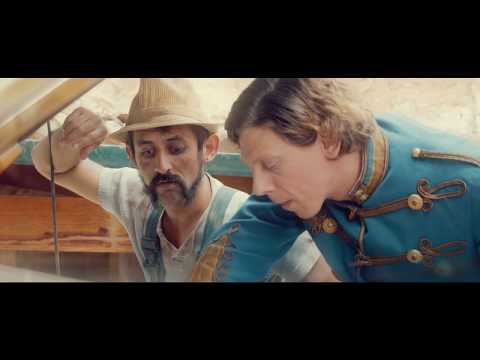
Stella Artois' 'Hans In Luck' is a masterclass in modern brand storytelling, opting for a two-and-a-half-minute cinematic fable over a 30-second hard sell. It operates on the principle that to feel premium, a brand must create culture, not just interrupt it. By adapting a classic Grimm fairytale, the ad taps into a universal narrative about the folly of chasing an idealized future at the expense of the present. The film's strength lies in its confident, patient execution. The director, Gabriel Borgetto, creates a self-contained world with a visual language reminiscent of Wes Anderson—symmetrical, nostalgic, and intentionally quirky. This stylistic choice immediately elevates the ad from a simple commercial to a piece of entertainment, aligning perfectly with Stella's long-standing strategy of associating itself with the world of film. [1]
The narrative follows a simple but effective structure. We are introduced to the protagonist, Hans, a man literally selling 'Happiness' yet devoid of it himself. The inciting incident is his first taste of Stella Artois, which acts as a catalyst, shifting his perspective from selling joy to creating it. The core of the film is a series of vignettes where Hans trades down his material possessions—his vendor box, a ring, his uniform, a sheep, and a car—each time gaining a richer human experience in return. This is the central metaphor: true value lies not in what you have, but in what you give and experience. The payoff brings the story full circle. Hans ends up back where he started, soaked in a well with nothing to his name, yet he is unequivocally happy. The final shot of a Stella Artois waiting for him frames the beer not as a catalyst for the journey, but as the fitting reward for a life lived well. It's a subtle but important distinction that positions the brand as a companion to a sophisticated mindset, rather than a magic potion.
The team should learn that in a fragmented media landscape, a long-form story that's genuinely good can be more effective than a barrage of shorter, forgettable ads. It earns the viewer's attention instead of just buying it. However, the debrief should also address the film's primary weakness: the brand integration is polite to a fault. While respecting the narrative, this light touch risks the audience remembering the charming film but forgetting the brand that sponsored it. The work successfully builds on the brand's 'premium' and 'joy of life' values, but could have tied the product more intrinsically to the acts of connection throughout the journey. [6]
Theme Keywords
Brand Position
The premium, European lager for those who choose to savor the simple, genuine moments in life.
Brand Archetype
The Innocent
Creative Game Plan
Illustrate that the real prize in life is the journey itself, positioning Stella Artois as the perfect companion for celebrating the simple, happy moments along the way.
Diagnosis: Issues & Solutions
Primary Issue: Strategic Sense
The Problem:
The brand's role is too passive. Stella Artois appears at the beginning and the end, but is absent during the core narrative where all the emotional value is built. This makes the brand feel like a sponsor of the story, rather than the hero of it, risking low brand recall despite high creative marks.
The Solution:
Integrate the product into the journey itself. Instead of Hans giving away abstract items, perhaps he shares a Stella with the sad groom or trades a case of it to the farmer. This would make the brand an active agent of connection, not just a bookend.
Secondary Issue: Clarity of "What's Next?"
The Problem:
The ad leaves the viewer with a warm feeling but no clear directive. The tagline 'Genuinely Charismatic' is a brand attribute, not a call to action. It fails to translate the film's philosophy into a tangible thought or action for the consumer.
The Solution:
Refine the end-card message to bridge the fable and the real world. A tagline like 'Choose the moment' or 'The reward for a choice well made' would give the audience a portable version of the film's core idea and connect it more directly to the choice of drinking a Stella.
Additional Notes
Related Links
Credits
Share this Analysis
More Stella Artois ad breakdowns
- Stella Artois | David & Dave: The Other DavidStella Artois
- Stella Artois | David & Dave: The CollectionStella Artois
- Choose Yellow – Yellow DoorPacifico
- INTRODUCING THE PATRICK PLUNGE from COORS LIGHTCoors Light
- The Best Things Come To The Curious | Carlsberg TV Ad Campaign | Creative Advertising Agency | Fold7Carlsberg
- Take FlightYuengling
- International Beer Day: Cheers to Bars 🍻Anheuser-Busch
- Sapporo Premium Beer | Return the FavourSapporo