Simulation 3: "Young girl, victim of a stray bullet" - Ad Analysis

AI Editor notes
Straight from the gut!!
“This is a punch to the gut. The 'simulation' framing is a smart, effective device that builds a sense of mechanical dread. It feels cold, procedural, and deeply unsettling. The sound design is chilling. Is it so shocking that it paralyzes rather than mobilizes? Perhaps for some. But for a cause this urgent, getting attention this sharp is half the battle. It's tough to watch, and that's exactly the point.”
Quick Summary
This ad bypasses desensitization by transforming an abstract statistic into a single, visceral, and unforgettable moment. By framing the horror as a cold, technical 'simulation,' it forces the viewer to confront the brutal reality of gun violence without the narrative distance of a news report, making the final, violent payoff incredibly powerful.
Executive Summary
This campaign from Control Arms is a masterclass in turning cold data into hot emotion. The core challenge for any public service announcement about a large-scale tragedy is overcoming audience desensitization. We see statistics about violence every day. The creative team at Leo Burnett Lisbon understood this and chose a strategy of deconstruction and simulation to make an old message feel new and horrifying.
The Core Insight here is that while people can ignore a statistic, they cannot ignore a story—or in this case, the visceral reenactment of a single tragic event. The insight is that the death of one child, shown unflinchingly, is more powerful than the reported deaths of thousands. The ad's power comes from its refusal to be a typical PSA with sad music and archival footage. Instead, it adopts a cold, almost sterile 'behind-the-scenes' aesthetic.
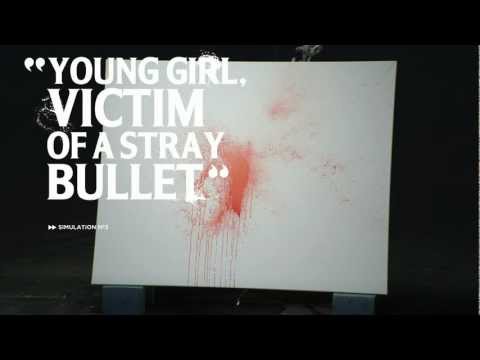
The Execution follows a simple but devastatingly effective Setup-Turn-Payoff structure. The Setup (0:00-0:20) is all procedural. We see hands loading a real gun, a Smith & Wesson .38, identified by name. We see a child mannequin being dressed and positioned. The sound is mechanical and the mood is one of clinical preparation. This builds a sense of dread and unease. What is this for? The Turn (0:21-0:33) happens when the statistics appear on screen. First, 'Every 3 minutes a child is killed by a firearm.' Then, '40% of stray bullet victims are shot while at home.' This is the crucial moment where the simulation is given its horrific context. It’s no longer just a technical test; it’s a representation of a constant, pervasive reality. The Payoff (0:34) is the gunshot. It is sudden, loud, and shocking. The explosion of red powder against the white canvas is a brutal, artistic representation of a life violently ended. The silence and high-pitched ringing that follow are just as important, forcing the audience to sit with the aftermath before the call to action, 'HELP US END THIS,' appears.
The Debrief for any team watching this is about the power of strategic restraint. By stripping away narrative melodrama and focusing on a cold, procedural build-up, the final moment of violence becomes exponentially more impactful. It proves that to create a strong emotional response, you sometimes need to start from a place of zero emotion. This ad doesn't ask for pity; it generates shock and anger, which are far more powerful motivators for a cause built on activism.
Theme Keywords
Brand Position
The unflinching, rational voice demanding global accountability for the human cost of the arms trade.
Brand Archetype
The Sage (revealing a difficult truth) with the righteous anger of The Revolutionary.
Creative Game Plan
Viscerally simulate the horrific, random death of a child by a stray bullet to shock a desensitized audience into confronting the real-world consequences of the unregulated arms trade.
Diagnosis: Issues & Solutions
Primary Issue: Emotional Connection
The Problem:
The primary risk is emotional burnout or rejection. The ad is so intense and shocking that some viewers may immediately tune it out or block it as 'too disturbing,' potentially missing the call to action entirely.
The Solution:
On the campaign landing page, immediately pivot from the shocking problem to the achievable solution. Feature stories of successful interventions or a clear, simple progress bar showing how individual actions contribute to the larger goal, turning feelings of horror into a sense of agency.
Secondary Issue: Clarity of "What's Next?"
The Problem:
While the URL is provided, the instruction 'takeaction' is somewhat generic. A viewer who is shocked and emotional needs a very low-friction, concrete next step to channel their feelings into.
The Solution:
Make the call-to-action more specific on the end card. Instead of '/takeaction,' use a URL like '/signthetreaty' or '/demandactionnow.' This frames the next step as a single, clear task rather than a vague commitment.
Additional Notes
Related Links
Credits
Share this Analysis
More Control Arms ad breakdowns
- Poverty is SexistONE Campaign
- The Most Emotional Homecoming Video Ever (Must see!!!)Newtown Action Alliance
- THE HEIST NO ONE IS TALKING ABOUT | Oxfam GBOxfam GB
- WHAT? THIS MOTEL IS BANNING VEGANS? (Full Version)PETA (People for the Ethical Treatment of Animals)
- Moms Demand Action "Lockdown"Moms Demand Action for Gun Sense in America
- ECRE (European Council on Refugees and Exiles): Bloody stairsEuropean Council on Refugees and Exiles (ECRE)