Shell: Victory Lap - Ad Analysis

AI Editor notes
Straight from the gut!!
“This is a workhorse of an ad. It’s not trying to be high art, and that’s why it works. The setup is universal—who doesn’t hate the price of gas? The payoff is a goofy, memorable dance. It’s a simple, single-minded message: our card saves you money, which feels great. The end card for wholesaler customization tells you everything: this was a national campaign template designed for local execution. Smart and efficient.”
Quick Summary
This ad succeeds by translating a small, rational benefit—saving a few cents on gas—into a big, emotional payoff. The unexpected and joyous 'victory lap' dance makes the feeling of saving money with the Shell Fuel Rewards program memorable and tangible, effectively driving viewers to the sign-up page.
Executive Summary
Shell's 'Victory Lap' is a textbook example of how to execute a simple, performance-driven advertising concept with creative flair. The ad doesn't try to reinvent the wheel; it focuses on a single, powerful idea and brings it to life in a way that is both relatable and entertaining. Its strategic foundation rests on a core insight that resonates with nearly every driver: the small act of saving money on gasoline, a routine and often begrudged expense, can feel like a significant personal win.
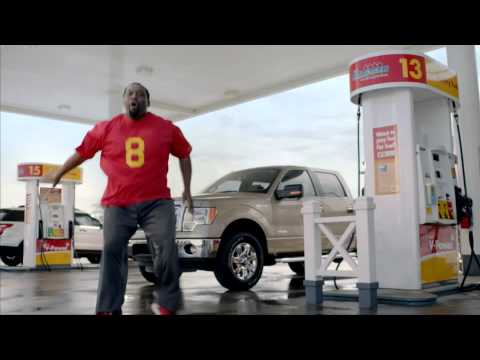
The execution follows a classic Problem-Solution structure, amplified by humor. The 'Problem' is established in the opening seconds with no dialogue needed. We see a man, looking weary, at a gas station—a familiar scene of mundane frustration. He has a large pickup truck, implying that fuel costs are a significant part of his budget. The 'Solution' is introduced when he swipes the Shell Fuel Rewards card. The visual of the price-per-gallon ticking downward on the pump is the functional proof. But the ad’s creative masterstroke is the 'Payoff.' Instead of a simple smile of satisfaction, the man erupts into a full-blown, energetic dance. This sudden burst of joy acts as the emotional proof of the card's value. It transforms an abstract saving of a few cents into a tangible feeling of pure elation. The choice of a funky, upbeat track propels the celebratory mood, making the benefit feel infectious.
The final act of the ad is ruthlessly efficient. A clear voiceover and on-screen text deliver the call to action: 'Sign up FREE at fuelrewards.com.' There's no complex brand story, no lofty purpose—just a simple, compelling offer. The team behind this ad should learn that for a performance-marketing goal, clarity and memorability trump complexity. By anchoring a rational benefit (saving money) to a memorable emotional high-point (the dance), the ad ensures its core message is not just understood, but remembered.
Theme Keywords
Brand Position
Shell is the smart, rewarding choice for fuel that makes saving money feel like a win.
Brand Archetype
Jester
Creative Game Plan
Dramatize the inner joy of saving money on gas by turning it into an over-the-top, public victory dance.
Diagnosis: Issues & Solutions
Primary Issue: Strategic Sense
The Problem:
The ad does a great job selling the *category* of fuel rewards programs but a less effective job differentiating Shell's *specific* program. The benefit shown—saving money at the pump—is the standard for all fuel loyalty cards, making Shell's offering appear interchangeable with competitors'.
The Solution:
Incorporate a quick visual or line in the voiceover that hints at a unique program feature, such as 'Save even more with rewards from dining and shopping,' to create a strategic advantage and a reason to choose Shell's program over another.
Secondary Issue: Emotional Connection
The Problem:
The emotional connection is powerful but brief and entirely contained within the humorous dance. It generates a laugh but doesn't build a deeper, lasting feeling toward the Shell brand itself.
The Solution:
A slightly longer format could have included a 1-second shot showing what the savings enable (e.g., buying his kid an ice cream inside the station), linking the reward to a more meaningful family moment and building a stronger brand association.