ShakaShaka | McDeal Starting @ ₹69 | McDonald's India N&E - Ad Analysis

AI Editor notes
Straight from the gut!!
“This is genuinely clever. It's a long-form ad that actually earns its runtime. The mockumentary format is perfectly executed, and casting Manoj Pahwa is a solid move. The joke is smart, self-aware, and lands well. Who is this for? Younger, urban Indians who get the satire. It's a risky idea, poking fun at spiritual tropes, but it's done with enough charm that it works as brand building rather than just a quick product sell.”
Quick Summary
This campaign succeeds by transforming a simple product interaction—shaking a bag of fries—into a memorable and hilarious piece of entertainment. Instead of just showing the product, it builds an entire fictional world around it, using a clever parody of Indian guru culture to make the brand feel both playful and culturally relevant.
Executive Summary
McDonald's India's 'ShakaShaka' campaign is a smart piece of advertising that understands a fundamental truth: the best way to sell a simple pleasure is to not take it too seriously. The campaign takes a minor product feature—the ability to shake piri-piri seasoning onto your fries—and inflates it into a full-blown, mock-spiritual movement. It’s an effective strategy that prioritizes entertainment and cultural connection over a direct, feature-led sales pitch.
The core insight is that there is an inherent, simple joy in the physical act of preparing the Shake Shake fries. [3] The brand recognized that this small interaction could be amplified. Instead of just saying 'Shake for great taste,' they asked, 'What if shaking was a path to enlightenment?' This shift from function to myth is the creative engine of the entire campaign. By creating the character of 'Papaji,' the ShakaShaka inventor, they give this simple act a charismatic, absurdly profound figurehead.
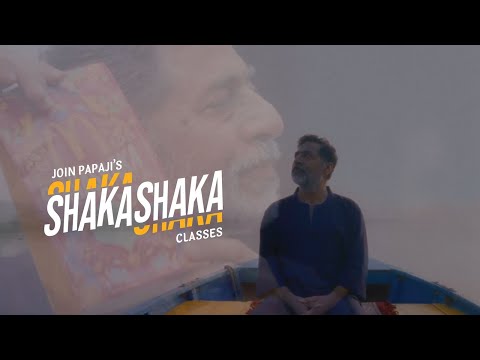
The execution uses a classic Setup-Turn-Payoff narrative structure, delivered through a mockumentary lens. The setup (0:00-0:20) establishes a serene, spiritual tone with visuals of a river ghat, lulling the viewer into expecting a tourism or wellness ad. The turn happens at 0:21 when the guru, Manoj Papneja, is revealed to be the inventor of a fast-food phenomenon. This juxtaposition of the sacred and the commercial is the ad's central joke. The payoff is the remainder of the film, which relentlessly extends this gag. We see the 'philosophy' of ShakaShaka, the devoted students, and the circular logic of the guru's authority ('Who certifies the instructors?' 'The inventor.'). The two-minute runtime is used to build out this fictional world, making the final, gentle CTA—'Join Papaji’s Shaka Shaka Classes'—feel earned and funny.
The key lesson from this campaign is that amplifying an existing consumer behavior, even a small one, can be more powerful than inventing a new message from scratch. [4] The team at DDB Mudra identified the 'playfulness' of the product and built a world around it. [3] This approach creates ownable, distinctive brand assets—in this case, a fictional guru and a 'movement'—that are far more memorable and shareable than a simple shot of fries being seasoned.
Theme Keywords
Brand Position
McDonald's as the purveyor of simple, unpretentious, and shareable fun.
Brand Archetype
The Jester
Creative Game Plan
Elevate the mundane act of seasoning fries into an absurdly profound, mock-spiritual movement led by a charismatic fictional guru.
Diagnosis: Issues & Solutions
Primary Issue: Strategic Sense
The Problem:
The ad's 2:10 runtime, while effective for building the narrative on platforms like YouTube, makes it entirely unsuitable for high-cost, short-duration ad slots like TV or pre-roll where attention is scarce. Its effectiveness is limited to an organic social media context.
The Solution:
Develop a suite of shorter assets (6s, 15s, 30s) that isolate the core gag—the guru's deadpan delivery or a quick student interaction—to adapt the campaign for broader, paid media distribution and capture attention quickly.
Secondary Issue: Clarity of "What's Next?"
The Problem:
The ad focuses so heavily on building the humorous world of 'ShakaShaka' that it completely omits the price-point or value message ('McDeal Starting @ ₹69') mentioned in the YouTube title. The call-to-action is to join a fictional class, not to buy a meal.
The Solution:
In shorter ad formats, integrate a clear price-point graphic or voiceover at the end. The CTA should pivot from the narrative 'Join the class' to a commercial 'Get the McDeal for ₹69' to connect the brand-building exercise with a concrete sales driver.
Additional Notes
Related Links
Credits
Share this Analysis
More McDonald's India (North & East) ad breakdowns
- The Ranveer Singh Meal | McDonald's India N&E | 30sMcDonald's India (North & East)
- The Ranveer Singh Meal | McDonald's India N&E | 43sMcDonald's India (North & East)
- McVeggie + Coke Zero @ Just ₹149!Coca-Cola
- KFC Howzzat- Match DayKFC
- Pizza Hut Javenge, 99 Mein Khavenge | Ad feat. Bhuvan Bam | Tastiest Pizzas Now @99 by Pizza HutPizza Hut
- KFC - 83 FilmKFC
- KFC Epic Savers 20s | KannadaKFC
- Pizza Hut's new MELTS - Crispy, Cheesy, Loaded @Rs 169Pizza Hut