SAS: We dream in foreign languages - Ad Analysis

AI Editor notes
Straight from the gut!!
“This is a beautiful piece of filmmaking. It's confident, artful, and refreshingly abstract for an airline. It completely sidesteps the category clichés of destination montages and smiling cabin crew. It feels premium and intelligent. My only question is whether it's *too* abstract for a broader audience. It absolutely lands with frequent travelers, but might leave the casual vacationer a bit puzzled. Still, it's a piece you remember.”
Quick Summary
This ad successfully elevates SAS from a simple mode of transport to a brand that understands the profound, transformative, and often surreal inner world of the true traveler. It's not selling seats or destinations; it's selling an identity and a shared passion for the magic of the journey itself, making the airline feel like a kindred spirit.
Executive Summary
SAS's 'We dream in foreign languages' is a sophisticated piece of brand building that confidently eschews airline advertising conventions. Instead of focusing on the 'what' (destinations, new planes, better food), it focuses on the 'why'—the deeply personal, often surreal feeling of travel itself. The work is built on a powerful core insight: for true travelers, the experience of immersing in a new culture is a waking dream, a state of mind where the mundane and the magical coexist. The ad argues that SAS isn't just a carrier that takes you from A to B; it's a facilitator of this transformative inner journey. [2]
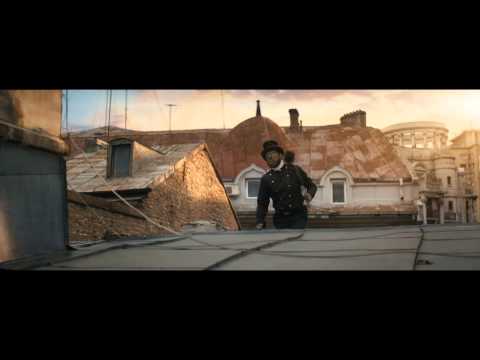
The execution uses a classic Setup-Turn-Payoff structure wrapped in a layer of magical realism. The Setup (0:00-0:08) is immediately arresting: a woman is underwater, speaking to a whale. This surreal dialogue establishes that we are in a dream, instantly separating the ad from literal-minded competitors. The Turn (0:09-0:34) expands this dream logic into a whimsical, globe-trotting adventure. She emerges from a suitcase, is given an umbrella by a Japanese bellhop for her trip to Turkey, and floats like Mary Poppins over European cityscapes and snowy mountains. This montage cleverly links disparate cultures—Japanese, Italian, Turkish—through the protagonist's fluid, dreamlike journey, reinforcing the idea of a connected world accessible through travel. The visuals are charming and impeccably art-directed, creating a consistent, storybook tone. The Payoff (0:35-0:45) is the critical link back to the brand. The woman awakens on an SAS flight, realizing the images from her dream are in the airline's magazine. This simple, elegant reveal doesn't break the magic; it claims it. The taglines, 'We dream in foreign languages' and 'We are travelers,' crystallize the message: SAS is the airline for people who identify with this experience. [10]
The debrief for the team that created this is that brand-building doesn't require showing the product relentlessly. By focusing on a universal human insight relevant to their target audience, they created something far more ownable and emotionally resonant. The risk of being too abstract pays off by treating the audience as intelligent and worldly. The key learning is that when you sell a feeling instead of a feature, you create a much stronger, more durable brand preference. This ad doesn't just show travel; it shows an understanding of the traveler's soul.
Theme Keywords
Brand Position
The airline for true travelers who find magic and meaning in the journey itself.
Brand Archetype
The Explorer
Creative Game Plan
Visualize the surreal, dreamlike inner world of a passionate traveler to prove that we understand their soul.
Diagnosis: Issues & Solutions
Primary Issue: Strategic Sense
The Problem:
The final tagline, 'We Are Travelers,' while fitting, is somewhat generic and has been used as a broad campaign theme by SAS for years. [3, 11] The preceding line, 'We dream in foreign languages,' is far more unique, poetic, and directly linked to the film's creative concept.
The Solution:
Elevate 'We dream in foreign languages' to be the primary tagline for this specific execution. It's a much more distinctive and memorable thought that perfectly encapsulates the ad's unique story and gives the broader 'We Are Travelers' platform a fresh, emotional dimension.
Secondary Issue: Clarity of "What's Next?"
The Problem:
The ad successfully inspires a feeling of wanderlust and positions SAS as a thoughtful brand, but it leaves that inspiration on the table. There is no bridge, however subtle, to guide the inspired viewer toward deepening their engagement with the brand.
The Solution:
In digital placements, add a soft call-to-action at the end, such as 'Explore the stories of our travelers' or 'Discover your next dream.' This could link to a content hub or the in-flight magazine's online portal, capturing the viewer's interest without resorting to a hard-sell 'Book Now' button that would undermine the ad's tone.
Additional Notes
Related Links
Credits
Share this Analysis
More SAS (Scandinavian Airlines) ad breakdowns
- Coolest Vacation Flights | Travel to Hills & Mountains with IndiGo | IndiGo 6EIndiGo
- There's an air about India | The sound of a new IndiaAir India
- British Airways | Your Family in the SkiesBritish Airways
- Because tiny things matter | LXmas For You | SWISSSWISS
- Air India A350 | The New Air India ExperienceAir India
- Mother Daughter Duo | Cabin Crew | Happy Mother's Day| IndiGo 6EIndiGo
- Cute Airport Moments | IndiGo 6EIndiGo
- 6E Shuffle | IndiGo x Spotify | Travel + Music | IndiGo 6EIndiGo