Reliance Digital Happiness Project | An initiative to help dreamers #MakeFriendsWithTechnology - Ad Analysis

AI Editor notes
Straight from the gut!!
“This is a classic 'big brand, big heart' play. It's a bit formulaic—find deserving people, bring in celebrities, give them stuff, film the tears. But for a market leader like Reliance, it works. The goal isn't edgy creative; it's mass-market sentiment. My only question is whether the mix of influencers feels authentic or like they're just trying to tick every demographic box. It's advertising wrapped in a CSR bow.”
Quick Summary
Reliance Digital is shifting its brand narrative from being a transactional electronics retailer to a purpose-driven national enabler. By creating a celebrity-hosted web series that helps everyday Indians achieve their dreams with technology, the company aims to forge a deep, emotional connection with a mass audience and position itself as integral to India's growth story.
Executive Summary
Reliance Digital's 'Happiness Project' is a textbook example of a market leader moving beyond product and price to compete on purpose. The campaign is built around a simple, powerful insight: in a nation full of ambition, the biggest barrier to progress is often access to the right tools. By framing technology not as a complex gadget but as a key that unlocks dreams, Reliance positions itself as an essential partner in the personal and economic growth of India. This isn't an ad for a phone; it's an ad for what a phone can do for a person, a family, or a community.
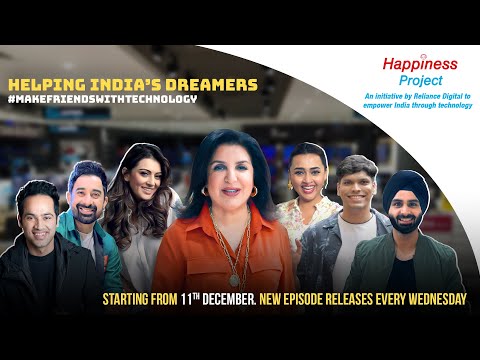
The execution as a branded content series is a smart, modern approach. Instead of a 60-second TV spot, they've created a platform for ongoing storytelling. Using the classic AIDA (Attention, Interest, Desire, Action) model, the trailer quickly grabs Attention with a recognizable celebrity, Farah Khan. It then builds Interest by introducing a diverse cast of real people with relatable struggles—from an elderly couple running a small hotel to a young man aspiring to be a hip-hop artist. Desire is cultivated by showing the emotional climax: the moment technology is provided and lives are visibly improved. The final Action is a soft one, but clear for this format: tune into the YouTube series. This structure allows the brand to be the hero without resorting to a hard sell, embedding itself within uplifting narratives.
The strategic choice to focus on widely accessible technology—like coolers, mixers, and basic computers—is clever. [16] It grounds the campaign in reality, making the brand's mission feel attainable for the '99%' of India that Farah Khan mentions. The debrief for the marketing team here is clear: purpose-driven content, when tied directly to your core product offering and executed with authenticity, can be your most effective brand-building tool. It shifts the conversation from 'what does it cost?' to 'what can it help me achieve?', building a moat of brand love that is difficult for purely price-focused competitors to cross.
Theme Keywords
Brand Position
The accessible and caring technology expert that empowers every Indian's dream.
Brand Archetype
Caregiver
Creative Game Plan
Create an emotional bond with India by producing a feel-good web series that proves technology from Reliance Digital is the key to unlocking the nation's aspirations.
Diagnosis: Issues & Solutions
Primary Issue: Emotional Connection
The Problem:
The trailer's rapid-fire montage of many faces and celebrities risks diluting the emotional power of any single story. By trying to show everyone, it doesn't give the audience enough time to connect deeply with anyone, making the emotion feel broad rather than specific and personal.
The Solution:
For future promotional assets, focus each short-form video or trailer on the complete mini-arc of a single individual. Let the audience meet them, understand their specific obstacle, and see their specific triumph, creating a much stronger, more memorable emotional hook.
Secondary Issue: Strategic Sense
The Problem:
While the focus is on everyday tech, the trailer briefly shows high-end products like Dyson stylers. [15] There's a risk of a strategic disconnect if the show equips a struggling small-town beautician with a luxury product, which could feel like tone-deaf product placement rather than a genuine solution.
The Solution:
The series itself must rigorously ensure that the technology provided is perfectly matched to the recipient's actual needs and context. The solution should feel practical and empowering, not like an extravagant gift that undermines the campaign's grassroots authenticity.