Psynex Press Release: Focusyl sent to President Vladimir Putin - Ad Analysis

AI Editor notes
Straight from the gut!!
“Is this even a real product? It feels like a prank from The Yes Men or a segment from a late-night comedy show. The deadpan delivery is what sells it, but the strategy is baffling. You're targeting people who care about Pussy Riot... with a focus supplement? The link is tenuous at best. It’s a pure attention grab that screams 'we have no media budget.' Audacious, yes. A sustainable brand strategy? Not a chance.”
Quick Summary
This is a textbook example of 'newsjacking'—a high-risk, high-reward PR stunt designed to insert an unknown brand into a major global news story. By offering its 'focus' supplement to Vladimir Putin to distract him from Pussy Riot, Psynex aimed to generate cheap, widespread awareness by borrowing the cultural heat of a political controversy, betting that the audacity of the idea would be more memorable than the product itself.
Executive Summary
This piece from Psynex Pharmaceuticals is not so much an advertisement as it is a tactical PR weapon disguised as one. Executed in 2012, its core strategy is 'newsjacking,' the act of injecting a brand into a breaking news story to capture a share of the conversation. The brand chose a globally significant and controversial event: the Russian government's imprisonment of members of the feminist punk group Pussy Riot. [3, 7] The campaign's success hinges entirely on the audience's pre-existing knowledge and emotional investment in that story.
The Core Insight here is that in a crowded market, relevance can be borrowed. Psynex, a newcomer, understood it couldn't afford to build relevance from scratch. The insight is that people are far more interested in Putin vs. Pussy Riot than they are in another focus supplement. So, the brand inserts itself not as a product, but as a satirical commentator, using its 'focus-enhancing' supplement as the punchline.
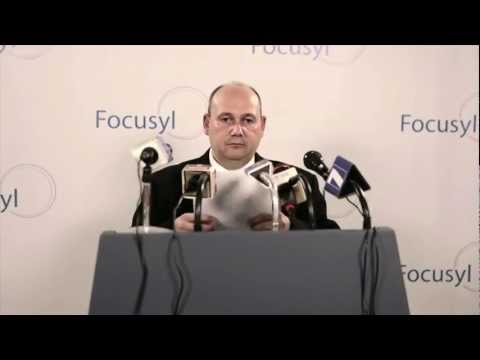
The Execution mimics the sterile aesthetic of a corporate press conference, a deliberate choice that makes the absurd message even funnier. It follows a classic Setup-Turn-Payoff structure. The Setup is the visual language of a serious announcement: a man in a suit at a podium, a corporate backdrop, and a formal tone. This creates an expectation of legitimacy. The Turn happens seconds in, when the CEO announces they have shipped their product, Focusyl, to Vladimir Putin. This is the pivot from the expected to the bizarre. The Payoff is the stated reason: to 'physiologically encourage' Putin to focus on building democracy rather than 'chasing Pussy Riot.' This punchline connects the product's function (focus) to the cultural moment, delivering the entire joke and brand proposition in a single, deadpan sentence.
The Debrief for any team looking at this is a lesson in the power and peril of earned media stunts. On one hand, Psynex generated attention for pennies. On the other, the stunt completely eclipses the brand. The conversation becomes about the audacity of the act, not the efficacy of the product. Research shows this was part of a series; another video shows them sending Focusyl to actress Kristen Stewart for her 'admitted affair.' [1] This confirms the strategy was to consistently piggyback on celebrity and political scandals. It's a tactic, not a brand-building platform. While effective for a quick hit of awareness, it does little to build trust or long-term brand equity.
Theme Keywords
Brand Position
The smart, satirical focus supplement for people in on the joke.
Brand Archetype
The Jester
Creative Game Plan
Hijack a high-profile political conflict to launch our focus supplement with a satirical PR stunt.
Diagnosis: Issues & Solutions
Primary Issue: Strategic Sense
The Problem:
The single biggest missed opportunity is the failure to bridge the gap between the joke and the consumer. The stunt is so focused on the provocative act of mailing the product to Putin that it forgets to tell the audience why *they* might need Focusyl. The brand is left as a one-note joke.
The Solution:
After the CEO's statement, a simple title card could have appeared: 'For the things you need to focus on. Find your focus at Focusyl.com.' This would have pivoted from the gag to a relatable consumer benefit and provided a clear call to action.
Secondary Issue: Emotional Connection
The Problem:
The ad generates amusement but no warmth or trust. By using a serious political issue as a marketing gimmick, the brand risks appearing cynical and trivializing, which can alienate potential customers who take the issue seriously.
The Solution:
A slightly different angle could have been to position the brand as a supporter of a cause, rather than a troll. For example, 'We sent Focusyl to President Putin. We're also donating a portion of profits to organizations that defend free speech.' This would have added a layer of sincerity to the stunt.