The Lion Loves Cinema | Red Carpet - Ad Analysis

AI Editor notes
Straight from the gut!!
“It is undeniably gorgeous and fun to watch, but what does a T-Rex and a Napoleon cavalry charge actually tell me about buying a Peugeot 408? The cinematic homage is lavish, but by leaning entirely on movie tropes, the car ends up feeling like a prop rather than the star of its own story. It builds mood, but it dodges the product truth.”
Quick Summary
Peugeot positions driving not merely as transportation, but as cinematic theater by weaving its vehicle through iconic film genres across French and Hollywood history.
Executive Summary
Peugeot's 'The Lion Loves Cinema' operates on a classic emotional premise: driving at its best is not a utilitarian chore, but an immersive story where the driver is the protagonist. In an automotive market crowded with clinical EV specifications, battery range graphs, and autonomous driving promises, Peugeot uses this spot to reclaim emotional flair, anchoring the brand to the romance of the seventh art.
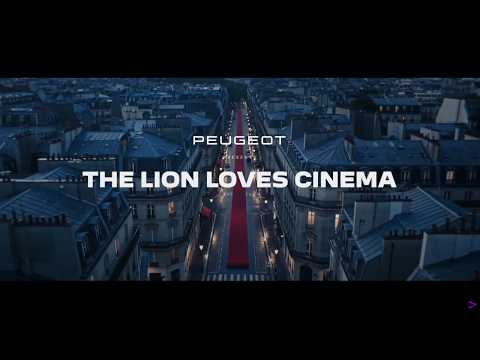
The narrative structure follows an escalation montage guided by a literal visual device: an endless red carpet rolling out beneath the Peugeot 408 across contrasting cinematic worlds. In the setup (0:00-0:15), the film opens with quiet Parisian grandeur at dawn before transitioning into high-energy French cultural touchstones, from the Moulin Rouge to the gargoyles of Notre-Dame. This grounds the car firmly in French aesthetic identity.
The turn (0:20-0:45) rapidly expands the canvas beyond conventional French romance into broad, international cinematic spectacle. The red carpet traces the white cliffs of Normandy amidst vintage Spitfire dogfights, pays tribute to Luc Besson's 'Taxi' with an airdropped cab, dances through Jacques Demy-style pastel musicals, and overtakes Napoleon's cavalry charge before colliding with a full-scale 'Jurassic Park' dinosaur pursuit. The pacing accelerates alongside Laurent Perez del Mar's orchestral score, demonstrating that the vehicle moves seamlessly between historical drama, comedy, and blockbuster action.
The payoff (0:48-1:00) brings the journey to rest at a modern gala premiere, delivering the line 'Beautiful stories are always lived in motion.' As the passenger steps onto the carpet in front of flashing paparazzi bulbs, the car is established not merely as a mode of travel, but as VIP transport for life's main events.
For creative strategists, the key takeaway is the power of an organizing visual metaphor. By turning every road into a red carpet, Peugeot provides a flexible, ownable thematic umbrella that can scale across festival sponsorships, TV broadcasts, and digital campaigns without losing its central motif.
Theme Keywords
Brand Position
The stylish French automotive brand that turns everyday driving into an emotionally charged, premium cultural experience.
Brand Archetype
The Creator / Lover with a sophisticated, bold, and expressive personality.
Creative Game Plan
Transform the open road into an unfolding red carpet that navigates iconic movie genres to establish driving as pure cinematic emotion.
Diagnosis: Issues & Solutions
Primary Issue: Strategic Sense
The Problem:
The spectacle overshadows the product. While the exterior of the 408 looks sharp in motion, key interior innovations like the digital i-Cockpit, ergonomic layout, and electrified powertrain are virtually ignored.
The Solution:
Integrate brief, seamless POV shots showing how the car's interior technology interfaces with the driving experience during the cinematic transitions.
Secondary Issue: Clarity of "What's Next?"
The Problem:
The conclusion lands purely on the brand logo without inviting the viewer to explore the film partnership hub, test-drive the model, or engage further.
The Solution:
Include a subtle, elegant on-screen prompt or digital interactive tag leading cinema enthusiasts to Peugeot's exclusive film festival content or vehicle showcase.
Additional Notes
Credits
Share this Analysis
More Peugeot ad breakdowns
- Roaring for 100 Years at Le MansPeugeot
- Peugeot 9X8 | Reveal WEC HypercarPeugeot
- Y&R - Peugeot 208 - Wacky RacesPeugeot
- PEUGEOT 208 GTi « GTi IS BACK » by BETC ParisPeugeot
- Peugeot Grip Control - Dakar (GB)Peugeot
- Kia India | The Kia Carnival Limousine | A new world of luxury & techKia
- Kia India | #TheLegendOfBadass | AnthemKia
- Soch Mein Swaraj – Celebrating the Spirit of IndependenceSwaraj Tractors