Pehle Pankha Aayega, Phir Bijli Aayegi | Adani Group | Hum Karke Dikhate Hain | Hindi - Ad Analysis

AI Editor notes
Straight from the gut!!
“This is a textbook example of high-quality corporate storytelling. The 'first the fan, then the electricity' line is a clever narrative hook that resolves beautifully. It's so emotionally potent it almost feels like a government PSA. But it walks a fine line. For anyone aware of the brand's real-world controversies, this level of polish can feel less like genuine storytelling and more like strategic reputation laundering. It's effective, but the question of authenticity lingers.”
Quick Summary
This ad successfully reframes Adani from a faceless infrastructure giant into a deliverer of dreams for rural India. It transforms a complex project—wind energy—into a simple, powerful, and emotional story of a child's unwavering faith, making the brand synonymous with hope and national progress.
Executive Summary
The core insight driving this Adani Group film is a simple but powerful human truth: for communities living without basic amenities, infrastructure is not about concrete and steel; it's the physical manifestation of hope. The ad brilliantly leverages the idea that a child's innocent, almost illogical faith in progress can be more potent than adult cynicism.
The execution follows a classic Setup-Turn-Payoff structure. The Setup establishes the problem—a rural village suffering through heat without electricity—and introduces the central narrative device. A boy named Tantu gets a cryptic line from his father: 'First comes the fan... Then the electricity.' This line, which he repeats faithfully, becomes the source of his ridicule. He is mocked by friends and even punished by his teacher. This first act effectively frames the boy as a lonely prophet, and his phrase as a seemingly foolish dream, building empathy and tension. The repetition of the line makes it incredibly sticky.
The Turn occurs just after the one-minute mark. The tone shifts from intimate struggle to communal excitement as the entire village begins running towards the horizon. The camera follows them, building a powerful sense of anticipation. This is where the ad's central conceit is revealed: the 'fan' is not the ceiling fan in the boy's home, but the giant, sweeping blade of a wind turbine. The visual reveal re-frames the boy's prophecy, turning his foolish-sounding words into a profound truth.
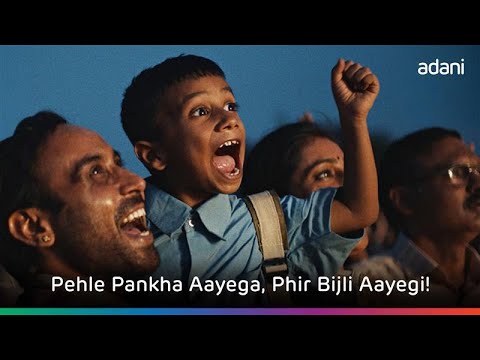
The Payoff is a moment of collective catharsis. The entire village, including the once-skeptical teacher, stands in awe before the massive Adani turbine. The boy's personal mantra becomes a triumphant public chant. When the engineer gives the command and the switch is flipped, the turbine spins to life, and the village is illuminated. The boy, held aloft on his father's shoulders, sees his faith vindicated. The concluding voiceover—'We don't just make electricity from the environment; we also light up lives and spread happiness'—explicitly connects this emotional peak to the Adani brand's purpose, sealing the message. [1]
The debrief for the team is clear: complex, industrial stories about infrastructure don't need to be technical. By translating a corporate achievement into a deeply personal human benefit, the ad makes a massive project feel relatable and essential. It proves that focusing on the 'why' (a child's dream of a cool breeze) is far more powerful than explaining the 'how' (the mechanics of wind energy).
Theme Keywords
Brand Position
Adani is the engine of India's progress, turning ambitious dreams into on-the-ground reality.
Brand Archetype
The Ruler, creating order and prosperity, with strong undertones of The Hero, overcoming obstacles for the benefit of society.
Creative Game Plan
Dramatize the arrival of electricity in a remote village as the fulfillment of a child's innocent but prophetic dream, positioning Adani as the powerful force that makes it a reality.
Diagnosis: Issues & Solutions
Primary Issue: Strategic Sense
The Problem:
The film's high-gloss, emotional storytelling is so effective it risks feeling like 'good-washing.' For audiences aware of the controversies and criticisms surrounding a large conglomerate like Adani, the ad's perfect narrative could be perceived as a disingenuous attempt to launder its reputation rather than a reflection of genuine social impact.
The Solution:
Introduce a layer of verifiable authenticity in future campaigns. Consider a documentary-style approach featuring real employees and community members telling their own, less-polished stories. This would help ground the corporate narrative in a more believable reality and build trust with a more skeptical audience.
Secondary Issue: Clarity of "What's Next?"
The Problem:
The ad builds to a powerful emotional climax but leaves the viewer with no outlet for the positive feelings it generates. There is no clear next step, no website to visit, and no mechanism to convert passive goodwill into active brand engagement.
The Solution:
Incorporate a simple, non-intrusive digital call-to-action. A clean URL like 'adani.com/progress' on the final slate would invite engaged viewers to learn more about the company's initiatives, read other stories, or see tangible data, deepening the connection beyond the 90-second film.