Pedigree 2013 Feeding Brighter Futures Ad: Bad Dog, Good Dog - Ad Analysis

AI Editor notes
Straight from the gut!!
“This is how you do a cause-marketing campaign. It’s not preachy; it's a gut punch. They don't just say they're helping, they show you the grim reality of neglect and then the direct impact of care. The 'Bad Dog' to 'Good Dog' flip is a classic, almost painfully simple creative device, but it works so well here. It makes the product's role feel essential, not just like a tacked-on donation.”
Quick Summary
This ad's power comes from a simple, perfectly executed narrative reversal. By contrasting 'Bad' with 'Good' using identical script elements, it frames Pedigree not just as dog food, but as the catalyst for transformation, turning a corporate social responsibility message into a deeply emotional and memorable story.
Executive Summary
The Pedigree "Bad Dog, Good Dog" ad is a masterclass in narrative efficiency and emotional storytelling. It operates on a simple premise: show, don't just tell, the impact of care. Rather than leading with a corporate social responsibility pledge, it grounds the campaign in a raw, almost uncomfortably real story of a single dog's journey from neglect to recovery. This approach ensures the brand's purpose feels authentic and earned, not just like a marketing angle. The ad's brilliance lies in its structure, a perfectly symmetrical story of problem and solution, told with an economy of words that amplifies the visual and emotional impact.
The core insight is a powerful human truth: there are no 'bad' dogs, only dogs in bad situations. The ad taps into a deep well of empathy for vulnerable animals, challenging the initial label of 'Bad dog' by revealing the circumstances that created it. The voiceover isn't judging the dog; it's labeling the environment—the bad home, the bad owner, the bad food. This reframing is critical. It sets up the audience to root for the dog's redemption and makes the subsequent transformation deeply satisfying.
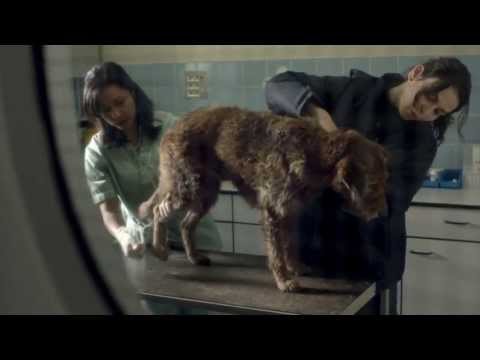
The execution uses a classic Problem-Solution framework, split into two distinct halves. The first 30 seconds establish the problem with gritty, desaturated visuals and a somber tone. We see a matted dog in a muddy, derelict yard, shivering in the rain. The owner is hostile, the environment bleak. Every element, from the 'bad food' in a dirty bowl to the 'bad bed' of wet cardboard, builds a case for intervention. The turning point is the rescue. The second half mirrors the first but reverses the narrative. The color palette warms, the music becomes hopeful, and the voiceover swaps 'Bad' for 'Good.' The 'Bad food' becomes a bowl of Pedigree ('Good food'), which is positioned as the first step in the dog's recovery. This is followed by a 'good bed,' 'good health,' and ultimately, a 'good owner' and a 'good home.' This direct parallel structure makes the message inescapable: Pedigree is the pivot point from a bad life to a good one. The final shot of the happy, healthy dog with its new family provides the emotional payoff, solidifying the brand's role as the hero of the story.
The debrief for any marketing team watching this is clear: purpose-driven advertising is most effective when it's rooted in a tangible, emotional story. Pedigree didn't just announce a donation; it dramatized the need for that donation. [6] The key learning is that linking a brand's product directly to the solution of a real-world problem—in this case, nutrition as the first step to a 'brighter future'—creates a far more compelling and memorable message than a generic CSR statement. [3] The ad successfully integrates the product into the narrative, making it an essential part of the happy outcome.
Theme Keywords
Brand Position
The champion of dog well-being, providing the foundational nutrition that enables a better life for all dogs, especially those in need.
Brand Archetype
The Caregiver
Creative Game Plan
Dramatize the transformative power of proper nutrition in a rescue dog's life to prove our commitment to making the world better for all dogs.
Diagnosis: Issues & Solutions
Primary Issue: Strategic Sense
The Problem:
The campaign's connection to a specific TV show sponsorship and celebrity ambassador (Paul O'Grady) isn't present in this standalone ad. [2] While the ad is powerful on its own, its full strategic impact as part of a larger, integrated campaign is lost when viewed in isolation.
The Solution:
For digital placements where the ad runs independently, consider adding a subtle on-screen graphic or end-card text that links to the broader 'Paul O'Grady: For The Love Of Dogs' partnership to leverage the full halo effect of the integrated campaign.
Secondary Issue: Clarity of "What's Next?"
The Problem:
The ad states Pedigree is donating one million meals, which is a great proof point but a passive call to action. It doesn't give the viewer a way to participate or amplify the effort, such as through a 'buy one, give one' mechanic mentioned in campaign articles. [6]
The Solution:
Incorporate a clearer, more direct call to action on the end card. A simple message like 'Join us. Buy a bag, and we'll donate a meal' would empower consumers to feel like active participants in the mission, potentially increasing sales lift.
Additional Notes
Related Links
Credits
Share this Analysis
More Pedigree ad breakdowns
- Pedigree: Vira-LataPedigree
- ABCDogs | Perfect Smile PEDIGREE® AlmapBBDOPedigree
- Pedigree – First Days OutPedigree
- Pedigree Gravy - Bhumi's Unconditional Love for BeauPedigree
- Pedigree - Small Dog, BIG WORLDPedigree
- Pedigree Gravy | Kriti's love language for BrunoPedigree
- Good Then, Better NowPedigree
- O grande dia chegou!!! O novo alimento da Seven Dogs Premium no sabor Frango com Batata Doce!Seven Dogs