शरीर की कमजोरी और थकान दूर करने का आयुर्वेदिक उपाय | Patanjali Shatavar Churna - Ad Analysis

AI Editor notes
Straight from the gut!!
“This feels less like an ad and more like a clip from a TV program, which is exactly the point. It’s a smart, if unoriginal, way to sell. Instead of a slick commercial, you get a direct endorsement from the one person the target audience trusts implicitly. It’s a bit long and repetitive, but for the millions of followers, Swami Ramdev’s word is gospel. The whole thing feels authentic to the brand, even if it's just a staged sales pitch disguised as a sermon.”
Quick Summary
This isn't a traditional advertisement; it's content marketing that masterfully blurs the lines between a guru's health advice and a direct product pitch. Patanjali leverages its most powerful and unique asset—the cultural authority of co-founder Swami Ramdev—to make a sales message feel like a trusted, organic recommendation. The strategy bypasses viewer skepticism by embedding the product directly into an educational, quasi-spiritual context.
Executive Summary
This piece from Patanjali is a textbook example of authority-based content marketing, disguised as a health discourse. It strategically chooses to forego the conventions of modern advertising—slick production, clever narratives, emotional storytelling—in favor of a much more direct and, for its audience, more powerful tool: the word of its founder, Swami Ramdev. The entire exercise is designed to seamlessly integrate a product pitch into a format that the target audience already trusts: the 'pravachan' or spiritual/health sermon, footage that appears to be from a broadcast on Aastha TV.
The Core Insight: The foundational insight is that for a significant segment of the Indian population, particularly those inclined towards traditional and Ayurvedic lifestyles, a recommendation from a trusted spiritual and wellness guru carries more weight than any conventional advertisement. This audience is often skeptical of modern, chemical-based products and seeks natural solutions. Patanjali understands that the messenger is more important than the message. Presenting a product as a secret shared during a yoga camp, rather than a commercial break, fundamentally changes its reception.
The Execution (Problem-Solution-Proof): The ad follows a simple, effective structure.
- Problem: Swami Ramdev opens by identifying a widespread, relatable issue: "Ladies ko kamzori bahut rehti hai" (Women often experience weakness). This immediately establishes relevance with the target demographic.
- Solution: He introduces an ancient, trusted Ayurvedic remedy, Shatavar, positioning it as the ideal solution. This frames the product category as something traditional and safe, not a new invention.
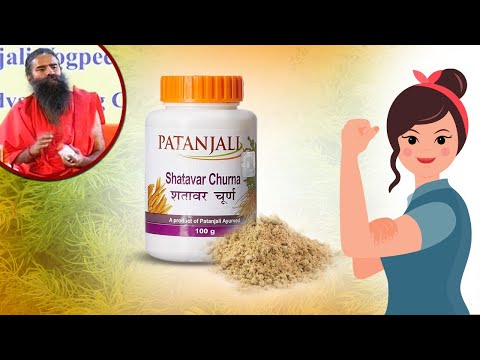
- Proof & Brand Link: The crucial turn comes when he is handed the Patanjali bottle. The proof offered isn't clinical data, but his personal endorsement. He holds the product, essentially giving it his blessing. He even adds a layer of competitive differentiation by mentioning the superiority of Patanjali's specific 'yellow' Shatavar, creating a reason to choose this brand over others. The visual proof is the large, attentive crowd, which acts as a powerful form of social proof, validating his authority and the importance of his words.
The Debrief: The key takeaway for the brand team is the continued power of leveraging their core, inimitable asset: Swami Ramdev. This format proves that for certain brands and audiences, authenticity (or the perception of it) and authority can be far more effective than high production values. The strategy successfully transforms a sales pitch into a piece of valuable health advice, building both brand equity and product consideration simultaneously. It demonstrates a deep understanding of the cultural context in which it operates, where the lines between spiritual guidance and daily life are often blurred.
Theme Keywords
Brand Position
The most trustworthy and authentic provider of traditional Ayurvedic wellness for modern India.
Brand Archetype
Sage
Creative Game Plan
Leverage our founder's immense cultural authority to directly endorse a product as an authentic solution to a common ailment.
Diagnosis: Issues & Solutions
Primary Issue: Emotional Connection
The Problem:
The ad relies exclusively on top-down authority from a male guru to solve a female health issue. While effective for many, it misses the opportunity to create a relatable, peer-to-peer connection by showing the actual experience of the women it aims to serve.
The Solution:
Incorporate a brief, 20-second testimonial from a woman in the audience. Have her speak directly about her struggles with fatigue and how the product helped her. This would add a layer of personal, emotional proof to complement Swami Ramdev's authoritative endorsement.
Secondary Issue: Strategic Sense
The Problem:
The long, single-format monologue is optimized for a captive TV or event audience but is less effective for the short attention spans of digital platforms. It risks losing viewers who are not already devoted followers of the brand.
The Solution:
Create a series of 15- and 30-second cut-downs specifically for social media and YouTube pre-roll. Isolate the core message—'Problem: Weakness. Solution: Patanjali Shatavar'—to make the key takeaway more accessible and shareable for a broader digital audience.
Additional Notes
Credits
Share this Analysis
More Patanjali Ayurved ad breakdowns
- जानें पतंजलि एलोवेरा जूस पीने का सही तरीका | Right way to use Patanjali Aloe Vera JuicePatanjali Ayurved
- पतंजलि वर्जिन कोकोनट ऑयल के अद्भुत फायदे | Health benefits of Patanjali Virgin Coconut OilPatanjali Ayurved
- बवासीर को जड़ से खत्म करने के लिए अपनाएं यह आसान उपाय | Patanjali Ashkalp VatiPatanjali Ayurved
- Dabur Chyawanprakash Sugarfree: Aapka AngrakshakDabur
- 1985: Zandu Special ChyavanprashZandu
- 1983: Dabur ChyawanprashDabur
- Dharmendra ChawanprashHimani Sona Chandi Kesar Chyawanprash