Fair Cancer Care - Ad Analysis

AI Editor notes
Straight from the gut!!
“This cuts deep. It sidesteps the standard soft-focus charity tropes and confronts the unglamorous isolation of diagnosis—the incomprehensible medical jargon, the panic over money stopping, the alienation when nobody in the clinic looks like you. The visual craft from Bradford Young elevates every frame. It does not feel like an institutional plea; it feels like an honest mirror held up to healthcare disparities.”
Quick Summary
Macmillan broadens its long-standing narrative from frontline nursing heroics to systemic equity, showing that cancer affects every demographic differently and requires a collective, multi-layered support ecosystem.
Executive Summary
Macmillan Cancer Support's 'Fair Cancer Care' campaign directly confronts a fundamental truth: cancer may be an equalizer in diagnosis, but the experience of navigating it is profoundly unequal. Where traditional charity advertising often defaults to either passive sentimentality or heroic medical interventions, AMV BBDO and director Child anchor this film in the quiet, structural friction points that real patients endure—socioeconomic anxiety, cultural alienation, and communication barriers.
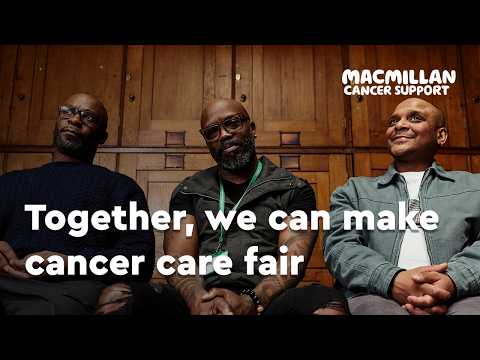
The film utilizes a classic Problem–Solution structure executed through a dual-movement narrative arc. In the first half (The Problem), the camera immerses the audience in authentic isolation. Through intimate close-ups framed by cinematographer Bradford Young, diverse patients voice vulnerabilities that rarely make it to healthcare brochures: 'No one else looked like me,' 'The language was way over my head,' and 'It's not what we hoped.' The film lingers on visceral, domestic moments—a loved one running clippers through thinning hair, a mother reassuring her child while concealing despair, and the crushing paperwork of a lost income. These vignettes establish the real friction: feeling alienated inside an overwhelmed system.
The pivot occurs at the midpoint with the introduction of Macmillan's multi-layered infrastructure (The Solution). As the graphic 'Whoever you are / Whatever you're going through / We're here' appears, the visual language shifts from confined spaces to expansive human connection. Crucially, the creative choices here resist portraying Macmillan as a singular savior in a uniform. Instead, the film demonstrates the breadth of modern care: phone operators tackling debt and benefit cuts, peer-to-peer digital buddies breaking loneliness, and community pharmacists delivering personalized guidance.
The payoff crystallizes in the final sequence. Returning to the support circle, a participant voices relief simply from being heard. The film then pulls back to reveal a unified phalanx of patients, nurses, pharmacists, and community advocates moving forward under the title: 'It takes us all, for better cancer care.'
For strategists and brand stewards, the key takeaway is the power of inclusive brand evolution. By modernizing their established 'Whatever It Takes' platform into an open rallying cry for healthcare equity, Macmillan protects its legacy trust while actively expanding relevance among younger, diverse, and marginalized communities.
Theme Keywords
Brand Position
The compassionate, practical ally ensuring equitable, comprehensive support for anyone living with cancer across every stage of the journey.
Brand Archetype
Caregiver / Ally (Empathetic, Resolute, Inclusive)
Creative Game Plan
Demonstrate the unequal realities of living with cancer and present a unified, community-powered ecosystem of care that ensures no one is left behind.
Diagnosis: Issues & Solutions
Primary Issue: Clarity of "What's Next?"
The Problem:
The closing message ('It takes us all, for better cancer care') functions powerfully as an emotional statement, but lacks an immediate, tangible functional directive for viewers who are motivated to help immediately.
The Solution:
Introduce a clearer digital destination or explicit dual pathway on the end card (e.g., 'Get Support | Join the Mission at macmillan.org.uk') to bridge the gap between emotional inspiration and direct civic or donor action.
Secondary Issue: Strategic Sense
The Problem:
The montage moves quickly through several specific services (financial support, virtual buddying, clinical care) in rapid succession, which may cause casual viewers to miss the full breadth of non-clinical aid available.
The Solution:
Pair the hero film with dedicated 15-second cutdowns focusing individually on financial advocacy and buddy programs to solidify specific service awareness.