Lipton Ice Tea Insurance with OG Ice-T - Ad Analysis

AI Editor notes
Straight from the gut!!
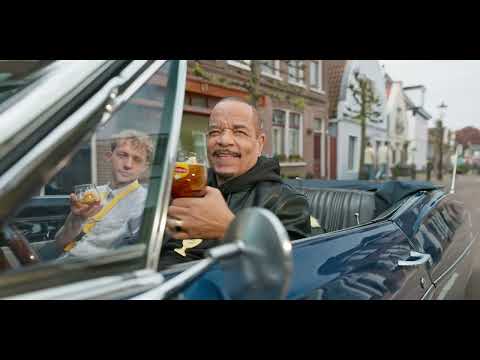
“This is smart. The pun is obvious, but they lean into it with total commitment. Using the 'Original Gangster' to call out 'fakers' is a direct and funny way to land the 'original' message. It feels a little weird seeing Ice-T, the quintessential American OG, cruising through a Dutch town, but that culture clash is part of the joke. The 'who's that boomer?' line is a nice touch of self-awareness. [4, 9, 10] It knows its audience is split.”
Quick Summary
Lipton is using the legendary rapper Ice-T in a clever, self-aware campaign to solve a real business problem in the Netherlands and Belgium: people order 'iced tea' expecting Lipton but get a generic substitute. [3, 7] By creating a fake 'Ice Tea Insurance' promotion, the brand playfully reinforces its status as 'The Original' and gives disappointed customers a reason to demand Lipton by name, turning a point of friction into a memorable brand interaction.
Executive Summary
This Lipton campaign is a smart piece of strategic creative, built on a foundation of solid consumer insight. It identifies a common, if minor, frustration—ordering a branded drink and receiving a generic substitute—and blows it up into a federal case with the help of an 'Original Gangster.' The campaign, specifically for the Dutch and Belgian markets, is based on YouGov research showing that 81% of consumers who order iced tea expect to receive Lipton. [3, 4] This isn't just fluff; it's a quantifiable business problem that the creative work is designed to solve.
The core of the execution follows a classic Problem-Solution structure, framed through a humorous, larger-than-life narrative. The Problem is established immediately: Ice-T and his sidekick Jeroen hate 'fakers' and 'posers.' This is visually demonstrated when Ice-T spots a man drinking a generic iced tea from a mason jar and verbally accosts him. The moment is absurd and funny, immediately framing the issue of off-brand substitutes as a violation of 'originality.' The Solution is the invention of 'Lipton Ice Tea Insurance.' This is the campaign's central gimmick, a promotional tool that gives consumers a tangible action to take when faced with the problem. It reframes their disappointment as an opportunity to get a free, 'original' Lipton. The Proof is embodied by Ice-T himself. His entire persona is built on being the 'OG,' which lends borrowed credibility to Lipton's claim of being 'The Original Ice Tea.' The ad doubles down on this with a clear Ask: a direct call-to-action to visit the promotional website. A particularly clever moment is the 'Who's that boomer?' gag, which shows the brand is self-aware enough to acknowledge that its chosen celebrity might not resonate with younger audiences, turning a potential weakness into a source of humor that bridges generational gaps. [9]
The debrief for the team here is about the power of a simple, potent insight. When you have a real, data-supported consumer truth, the creative doesn't need to be overly complex. The pun of 'Ice-T' for 'iced tea' has likely been sitting on a whiteboard for years, but it took the specific insight about customer expectations in the Netherlands and Belgium to unlock its strategic value. The work is effective because it's not just an awareness ad; it’s a tool designed to change behavior at the point of purchase by arming the consumer with a fun, slightly rebellious mission: to call out the fakes and claim their original.
Theme Keywords
Brand Position
The one and only Original Ice Tea.
Brand Archetype
The Ruler: setting the standard and imposing order on the category.
Creative Game Plan
Use the ultimate 'Original Gangster,' Ice-T, to humorously police the world against 'fake' iced tea and position Lipton as the one true original.
Diagnosis: Issues & Solutions
Primary Issue: Strategic Sense
The Problem:
The campaign's biggest missed opportunity is its limited geographic scope. The core insight—that a market-leading brand name becomes a generic term for a category—is a global phenomenon. While hyper-targeted to the Netherlands and Belgium based on specific data, the creative idea is strong enough to be adapted and scaled to other key markets where Lipton faces similar challenges from house brands and competitors.
The Solution:
Test the core 'Brand Insurance' concept in another major European market or a key region in North America. Commission local research to validate the 'genericization' insight and adapt the celebrity and cultural nuances accordingly, creating a scalable global campaign platform.
Secondary Issue: Clarity of "What's Next?"
The Problem:
The ad does an excellent job of driving to the microsite, but the 'insurance' is the entire idea. There's little effort to build a longer-term brand platform beyond this specific (and likely temporary) promotion. What happens after the summer campaign ends? The equity built around 'The Original' is strong but feels tied exclusively to this one-off execution.
The Solution:
Develop a follow-up content series featuring Ice-T as the 'Commissioner of Originality,' reviewing other 'fakes' in life. This would extend the campaign beyond the promotional window and build a more lasting brand platform around the 'original' concept.